Sport Management






What is Sport Management?
Find out at Elon University
Our sport management major prepares students for the business of sport, including professional sport, college athletics, recreation and sport-related agencies. Through extensive practical applications, students develop an understanding of community and global service, with an emphasis on leadership and professional skill development.
Sport management majors and minors develop the necessary knowledge and skills to thrive in careers related to professional and amateur sport, intercollegiate athletics, event management and programming, facilities and arena management, sport tourism, sport agencies and beyond.
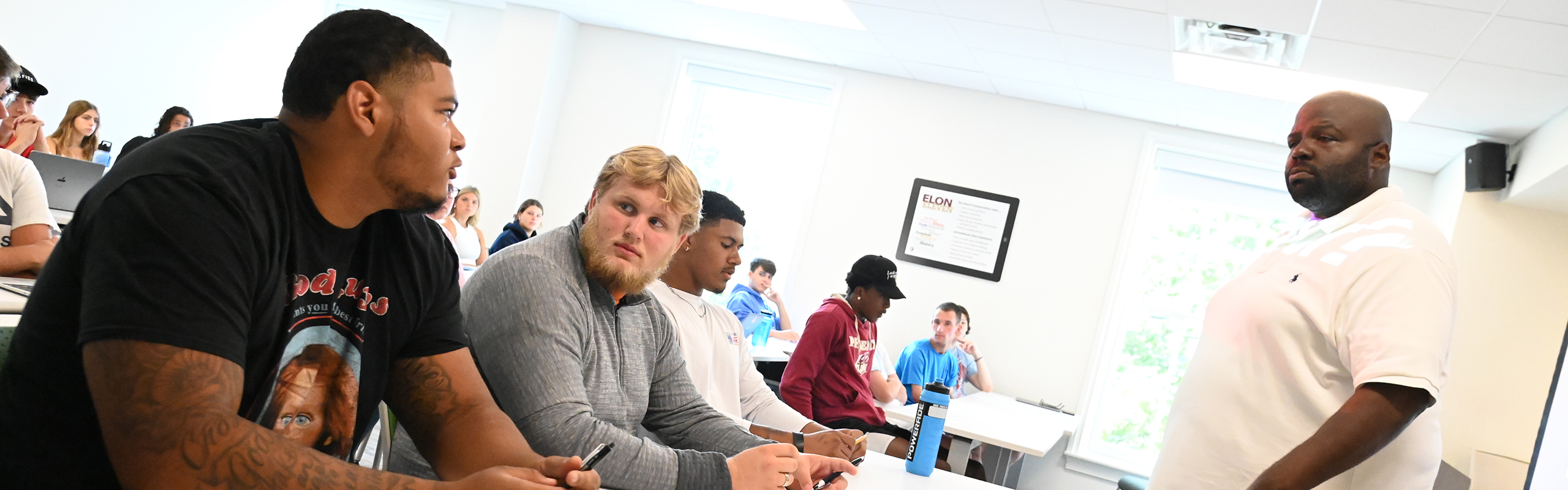
Classes are led by faculty with years of varied, professional experience, and are dedicated to teaching and seeing students thrive. They are eager to help students identify their professional path, or to offer assistance with course work. These mentor-mentee relationships often last long after graduation.
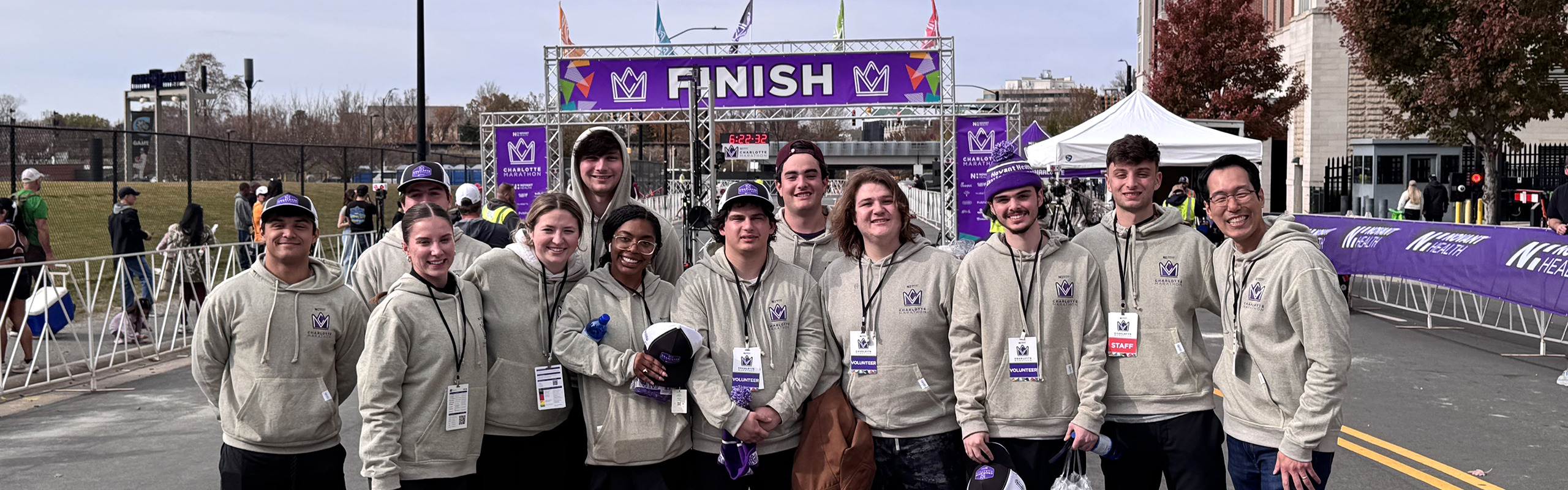
Beyond the classroom, our majors are required to complete an internship to further their professional experience and prepare them for the job market. Students have previously interned with professional sports teams, league offices, media companies, college athletic departments, agencies and non-profit organizations. This list includes the Boston Red Sox, New York Jets, Carolina Panthers, Carolina Hurricanes, NASCAR, PGA Tour, ESPN, FOX and NBC.
The department is one of 36 programs in the United States formally accredited by the Commission on Sport Management Accreditation (COSMA).
Why Study Sport Management at Elon?
Through the Department of Sport Management’s rigorous curriculum and student-center initiatives, our undergraduates develop the complex skills needed to manage sport organizations, events, facilities and promotions.
Elon is one of a few institutions nationwide to effectively combine sport, event management and recreation, providing a unique and comprehensive career preparation. Through a curriculum infused with Elon Learning Experiences (Internship, Leadership, Service, Study Abroad and Undergraduate Research), students learn about the business of sport, a multi-billion dollar industry.
To learn more about our degree requirements and courses, see below.
Major
Sport Management B.S.
Sport is a multi-billion dollar industry that has significant influence and reach in today’s society. Develop the complex skills needed to manage sport organizations, events, facilities and promotions.
Sport Management Degree Requirements & Courses
Minor
Sport Management Minor
Sport Management Minor Requirements & Courses
News