Mathematics & Statistics

Welcome to the Department of Mathematics and Statistics
Mathematics and statistics are found in almost every sector of work, academia and everyday life. Math and statistics majors develop many transferable skills including critical thinking, problem diagnosis and solving, computer skills, and quantitative skills.
The department offers the following majors:
- Bachelor of Arts in Data Analytics
- Bachelor of Arts in Applied Mathematics
- Bachelor of Arts in Mathematics
- Mathematics A.B. with Teacher Licensure
- Bachelor of Arts in Statistics
- Bachelor of Science in Mathematics
- Bachelor of Science in Mathematics with Teacher Licensure
- Bachelor of Science in Applied Mathematics
- Bachelor of Science in Statistics
- Actuarial Science
- Biostatistics
- Data Analytics
- Mathematical Statistics
- Bachelor of Science in Engineering Mathematics
Minors are available in mathematics and statistics for students majoring in another discipline.
Mathematicians work as analysts, research associates, technical consultants, computer scientists, or systems engineers, to name a few. Earning a graduate degree in a related area such as statistics, computer science, science, or engineering combined with an undergraduate math background could lead to interesting careers such as bioinformatics, digital imaging, climatology, or financial mathematics.
Data scientists saw a 56% increase in job openings in the US over the past year, according to LinkedIn.
Statistics is the science of learning from data and of measuring, controlling, and communicating uncertainty as an essential factor in scientific and societal advances. Statistics is critical as academia, businesses, and governments increasingly demand expertise in making data-driven decisions.Statistics is becoming more important in modern society in providing succinct information for making decisions. Statistics is used in a wide variety of fields including science, technology, business, health, and social sciences.
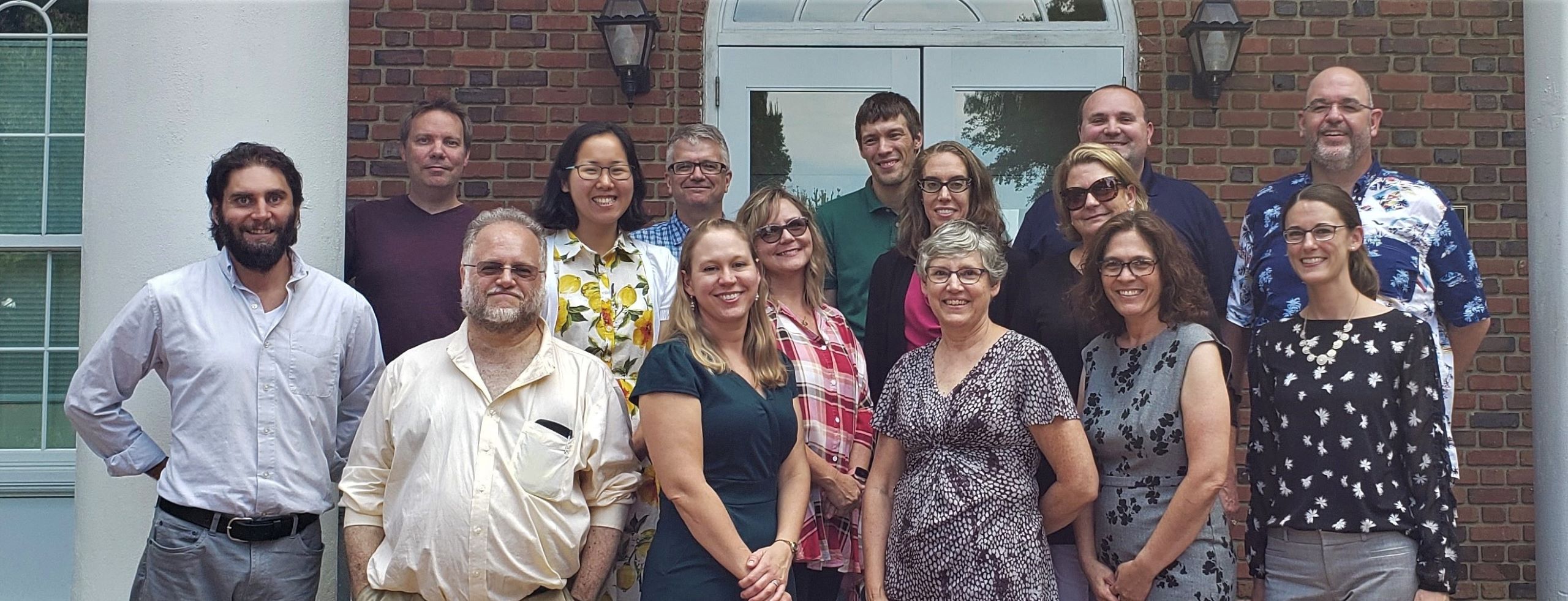
The department has 19 full-time faculty. Our faculty members have wonderfully diverse research interests and a commitment to quality teaching. Within our faculty, we have 6 members of Project NExT.