Elon University Home

The fusion of music and technology

Elon’s music technology program is designed to nurture the fundamental skills of musicianship while teaching students how to apply the tools of technology to performance, recording, songwriting, music production and promotion. Experienced faculty take a hands-on approach to learning, giving students the tools that they need to be competitive in a field that is undergoing significant changes. 

Elon’s emphasis on liberal arts and sciences education provides music technology majors with the ability to think critically and communicate persuasively. By the time you graduate, you will have established an impressive résumé of challenging coursework and real-life experiences that will help you succeed in professional and academic settings.

“The fastest-growing segment of the music industry is in technology. ... An instructional focus that gives someone the direct knowledge they need to be one step ahead in this competitive environment is invaluable.”

Jim Boitnott ’98

Vice President of Business Development, Notion Music


Recording Studio

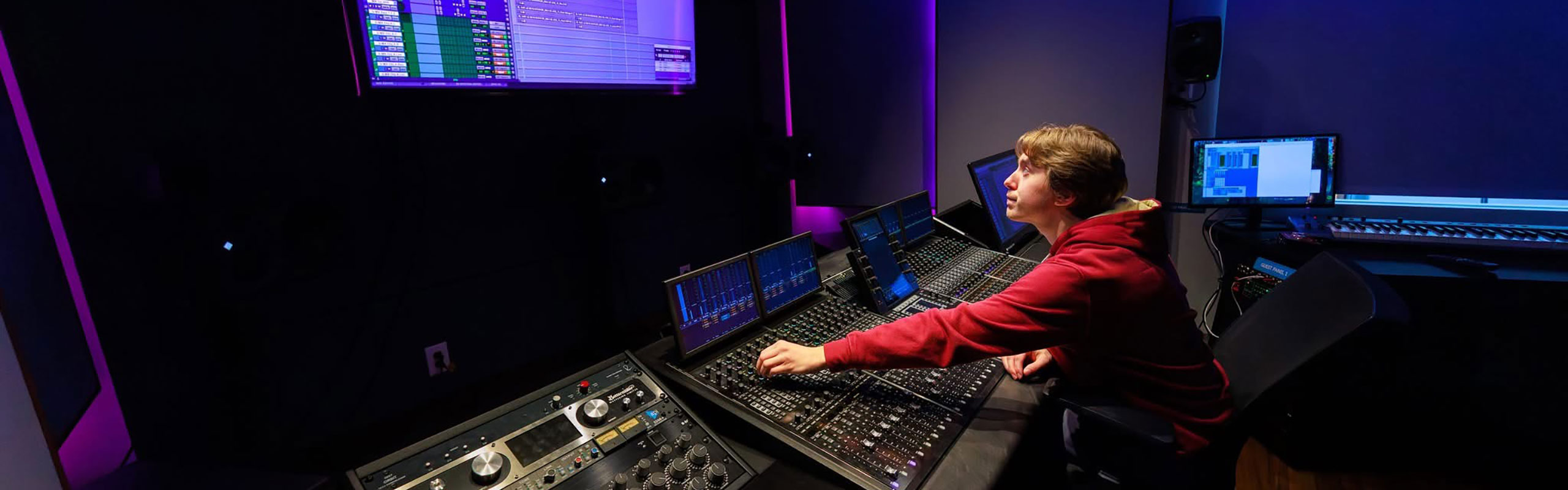
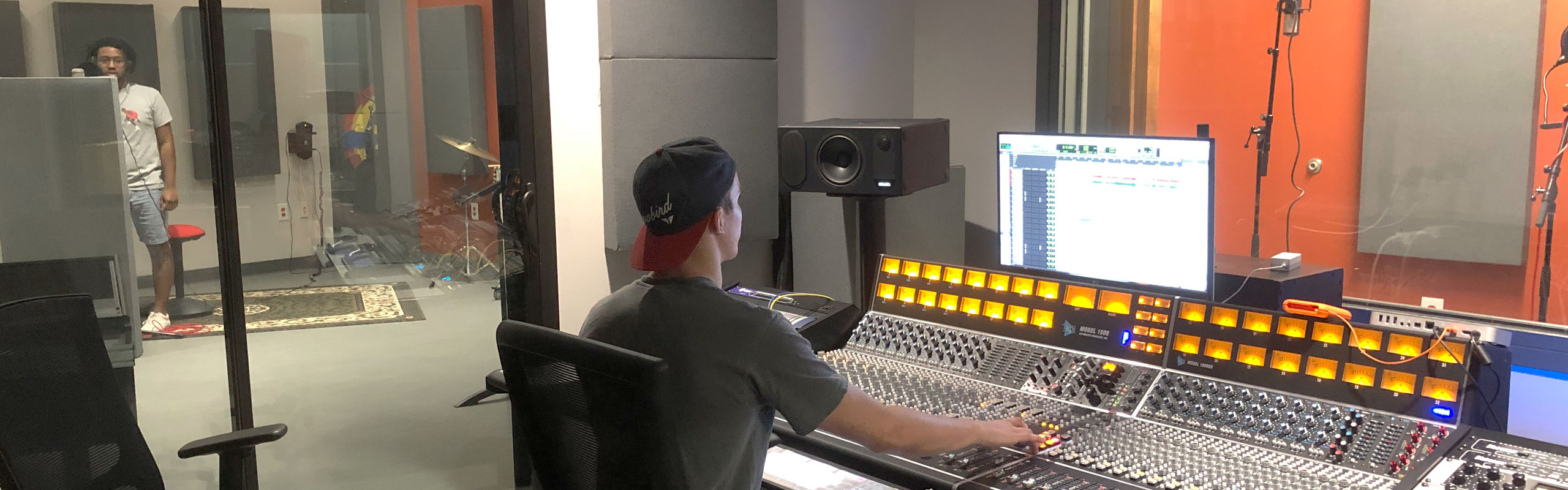
The Music Technology program's primary recording studio features a Pro Tools HD|2 Accel system with a Euphonix 24 channel mixing control surface. The Avid Pro Tools HD system includes a 192 I/O and a 96 I/O for a total of 32 input channels with studio mic preamps including world-class models from Solid State Logic (SSL), Universal Audio, Vintech (built after the Neve 1073 design), and the EMI Abbey Road replica TG2. The mic locker contains a wide array of choices ranging from common work-horses to premium mics by Neumann, AKG, Audio-Technica and Avantone.


Additional Facilities

Elon’s Department of Music is housed in the Center for the Arts, a 75,000-square-foot facility boasting numerous concert Steinway grand pianos; McCrary Theatre, a large, fully equipped theatre and concert hall; Yeager Recital Hall; and modular practice rooms and studios. Historic Whitley Auditorium houses a new Casavant pipe organ and a Steinway grand piano.

The department also has a fully equipped music technology lab featuring new 88-key semi-weighted keyboards and a sound isolation booth. The lab also houses 18 Quad Core Mac Pro digital audio workstations with dual 22-inch flat-panel monitors, Oxygen 49 MIDI Controllers, M-Audio USB MobilePre preamp/audio interfaces and ShuttlePro. The stations run Pro Tools, Logic Express, Digital Performer, Sibelius, Garage Band, Auralia and other software tools relating to audio production, ear training and music theory.  

The music technology program also partners with the School of Communications, giving students access to additional recording and production facilities for larger ensemble recordings. 

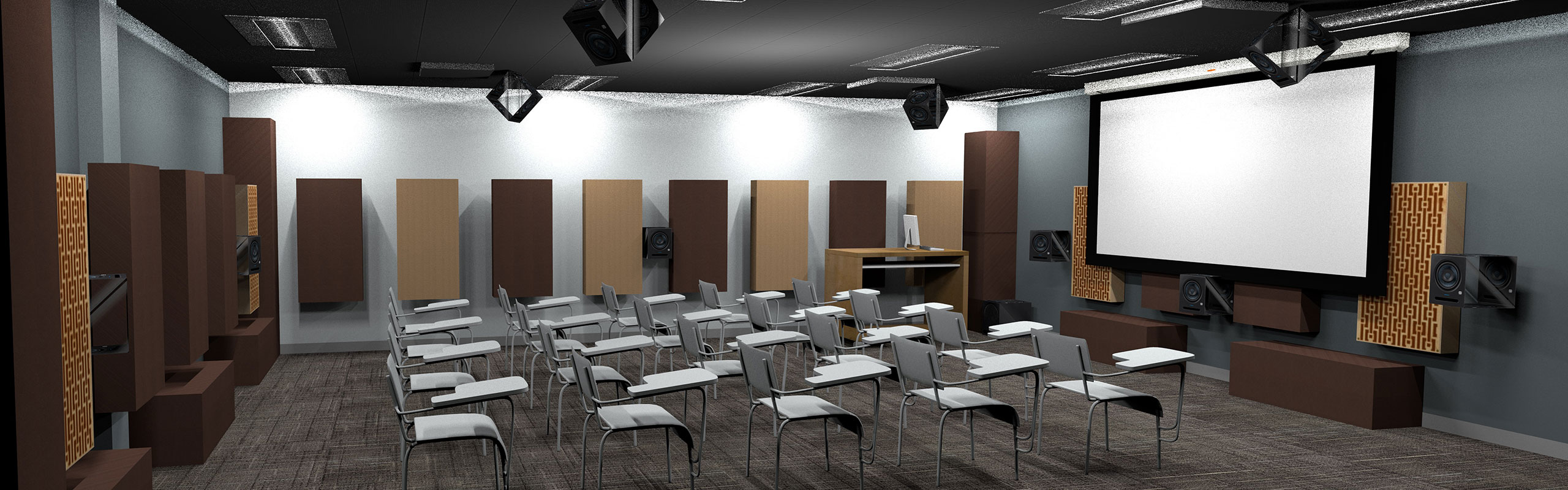
Due to significant growth and development in the Music Technology program at Elon, the university is planning to expand Music Department facilities. This may include renovation of the Elon West campus, relocation to another location on campus, or a new purpose-built facility. 

View Plans for New Music Technology Facility. (JPG)


Performance Opportunities

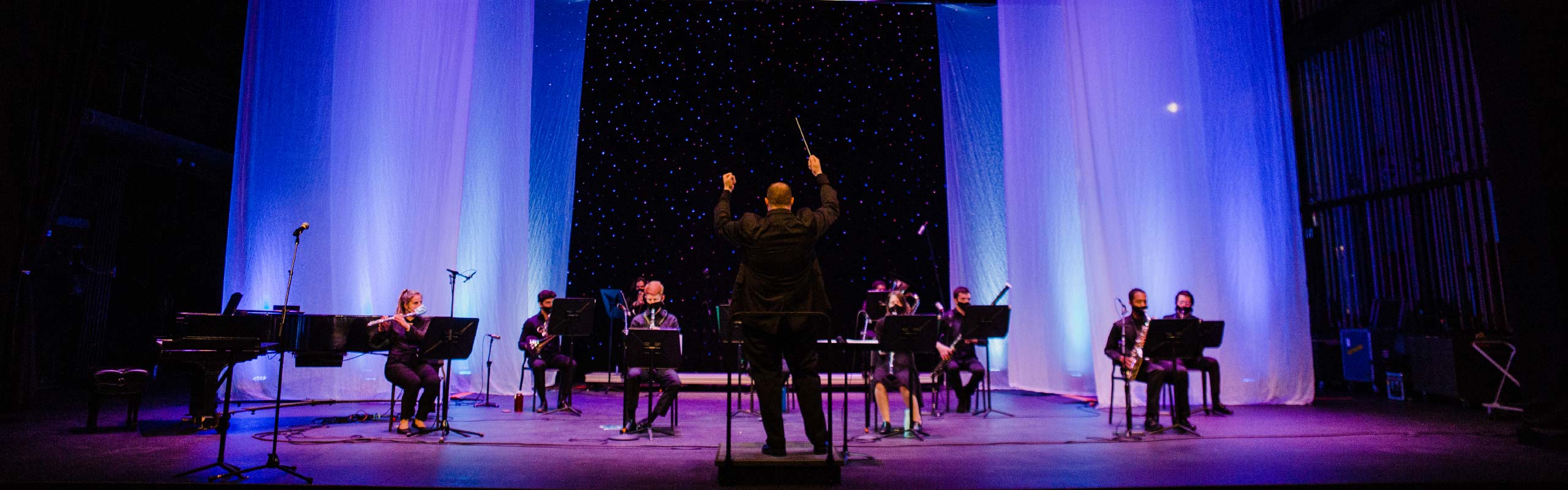
An important aspect of a musician's training is live performance. Elon's Music Department offers a variety of ensembles ranging from classical to commercial music. These performing groups give students the opportunity to put into practice their instrumental, vocal, and songwriting skills learned in private lessons and also learn other crucial aspects of music production. The ensembles include:

Commercial Music

Elon Electric Ensemble (rock, pop, funk, electronic, blues, dance, etc.), Techtronica (electronic dance music, sampling, dj, hip hop, etc.), élan (vocal jazz, a cappella)

Classical Music

Orchestra, Chorale, Camerata, Wind Ensemble, Marching Band, Percussion Ensemble

World Music

World Percussion Ensemble

Jazz

Jazz Ensemble (big band), Jazz Combo


Experienced Faculty & Staff

The Department of Music faculty combine a passion for teaching with a vast range of composing, performing, production, and audio engineering experience. 

Todd Coleman is the Coordinator of Music Technology at Elon University. He is a composer and bass player (contra bass and bass guitar). His music has been performed by the Minnesota Orchestra, Buffalo Philharmonic Orchestra, Civic Orchestra of Chicago and university ensembles throughout the United States, with commissions for orchestra, wind ensemble, chamber music and electronic music. He earned his M.M. and D.M.A. in composition at the Eastman School of Music studying with Joseph Schwantner, Christopher Rouse and Augusta Read Thomas. Much of Coleman’s creative work blurs the boundaries between artistic disciplines, exploiting the intersection of technology and the arts. He is currently serving a five-year term on the Board of Advisors for the Barlow Endowment for Music Composition.

Clay Stevenson is a songwriter, composer, audio engineer, and producer specializing in pop, pop/rock, and electronic music.  His music has gained notoriety in feature films including Escapee (Voltage Pictures) and Standing Ovation (Kenilworth Film Productions).  Additionally, while in Los Angeles, Stevenson worked for a number of years in commercial music, extensively with Vision Film and Television Productions composing and designing sound for commercials and corporate videos.  Under the producer name daade, he has collaborated with such artists as DACAV5, El Prezidino, TRev, M:O.R., NPA, and T3.  As daade, Stevenson also presented music in the iStandard Producer's Showcase at the ASCAP Expo.  Currently, he is writing and composing for Cobel Music and two music production libraries, K.A.P. Music and NOMA Music.  Stevenson has recently designed an innovative course in the study and production of musical mashups.  The course encourages creative art expression through the use of music software to edit and manipulate existing music.

Rick Earl (live sound, technical director for cultural programs) worked as a live sound engineer for many national touring acts during the 1980's and 90's mixing monitors and front of house. Rick joined the Elon University staff in 2006 as Technical Director of Cultural & Special Programs. He works closely as a mentor with Music Technology majors interested in audio engineering and live sound production, sharing his years of experience one-on-one and in small group settings, including supervising live sound student work-study staff.

Tony Sawyer is Director of Bands at Elon University. In 1993, Mr. Sawyer received his Bachelor of Music degree in Music Education from Kennesaw State University and in 1995 he earned the Master of Music degree in Percussion Performance from Northern Arizona University. He has performed in Arizona with the Flagstaff Symphony and Flagstaff Festival of the Arts Orchestra, in Georgia with the Macon Symphony, Columbus Symphony, Cobb Symphony, Rialto Orchestra, the Atlanta Ballet Orchestra, and in North Carolina with the Elon Chamber Orchestra and the Durham Choral Society. Mr. Sawyer was a member of the Spirit of Atlanta Drum and Bugle Corps where he was a bass line member (1981) and a member of the snare line (1982-1985). He also served as the front ensemble (pit) arranger and instructor for the Southwind Drum and Bugle Corps in 1993.

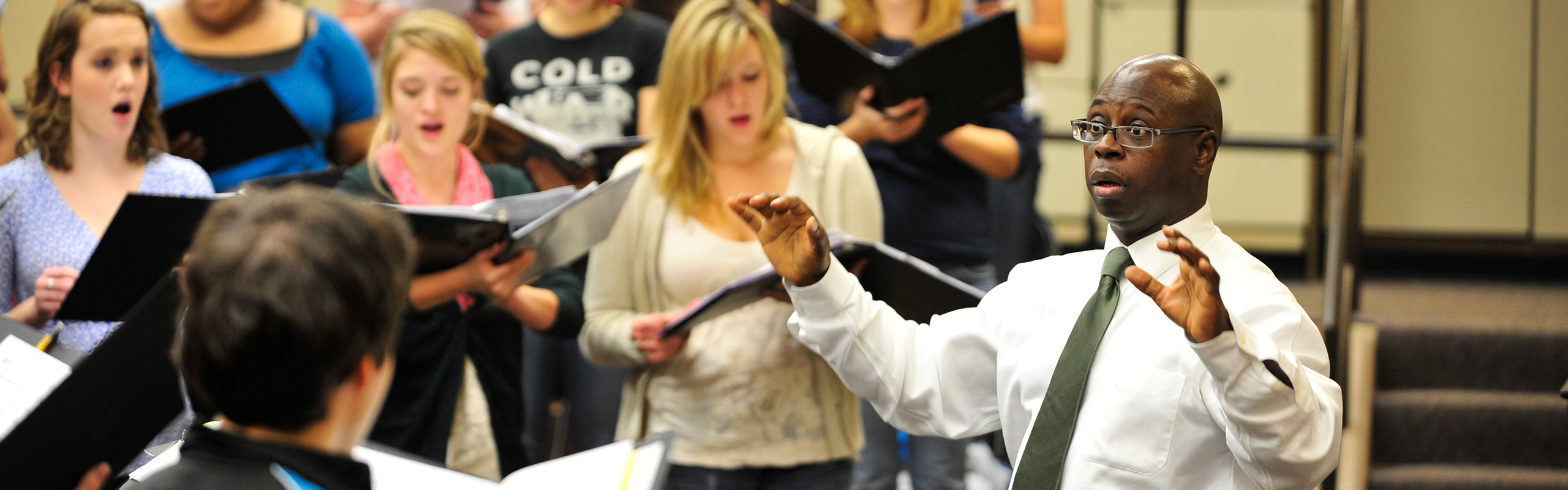
Stephen Futrell (choral, music technology) has appeared throughout the United States and Europe as a vocalist, trumpeter, writer, arranger, producer and on-screen talent. His experience includes being a featured vocalist at Carnegie Hall and Lincoln Center, as well as serving as a music producer for DreamWorks Animation SKG. He also recently discovered, edited and had published three choral works by Anna Amalia von Sachsen. Dr. Futrell is the Director of Choral Activities at Elon and conducts the department's a cappella vocal jazz/pop ensemble élan.


Curriculum 

For information on the University's General Studies requirements, visit the General Studies home page.


After graduation

A degree in music technology can prepare you for a variety of careers that combine the art of music with the application of technology. Examples of careers include:

  • Composer of Theater Music
  • Composer of Film and Television Music
  • Composer of Video Game Music
  • Composer of Church Music
  • Composer of Classical Music
  • Professional Songwriter
  • Lyricist
  • Arranger
  • Orchestrator
  • Music Copyist
  • Live Sound Engineer
  • Studio Engineer
  • Music Editor
  • Record Producer
  • Music Supervisor for Film/Video
  • Singer/Instrumentalist in Commercial Music
  • Music Publishing
  • Disc Jockey
  • Music Retail
  • Manager/Agent
  • Music Critic/Editor
  • Radio Station Music Director
  • Music Librarian
  • Manufacturer Representative
  • Music Instrument Manufacturing
  • Multimedia developer