SOC 111. INTRODUCTORY SOCIOLOGY 4 sh
This course provides an introduction to basic theoretical principles and research methods of modern sociology, including such issues as the relationship between culture, personality and society; the fundamental forms of social structure; social institutions such as religion and the family; and social processes such as deviance and social change. Offered fall and spring.
SOC 131. SOCIOLOGY THROUGH FILM 4 sh
This course explores sociological principles, concepts, theories, ideas, themes and issues as they may be illustrated in cinema, television and commercials. Relevant sociological readings are assigned to accompany the specifi c sociological content being illustrated in each session.
SOC 215. QUALITATIVE RESEARCH METHODS 4 sh
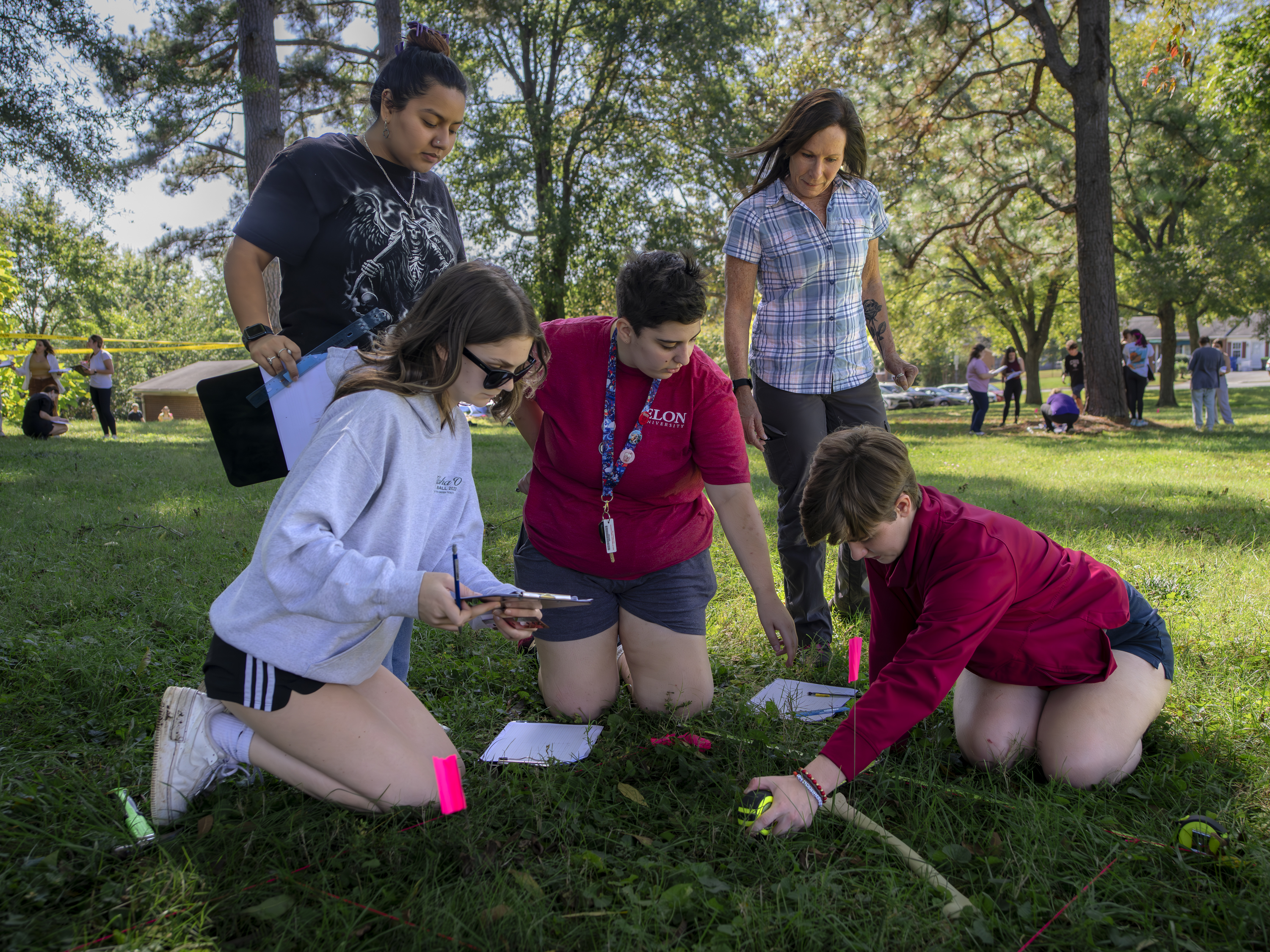
This course examines the ways qualitative analyses (non-numerical data) help social scientists explore questions of meaning within specific social and cultural contexts, and historical moments. Specific topics include: participant observation, focus groups, open-ended interviewing, thematic coding, archival research and data analysis with a qualitative computer software program. The complementary relationship between qualitative and quantitative research methods will be considered, with a sustained focus on the particular strengths and weaknesses of qualitative research design. Prerequisite: SOC 111 or ANT 112. Cross-listed with ANT 215.
SOC 216. QUANTITATIVE RESEARCH METHODS 4 sh
This course examines the ways quantitative analyses (numerical data) help social scientists investigate issues, problems, and relationships within social and cultural contexts. Specifi c topics include: discussion of the scientific method, survey methodology, sampling techniques, hypothesis testing, aggregate level analyses, and issues of reliability, validity and generalizability, as well as data analysis with SPSS. The complementary relationship between quantitative and qualitative research designs will be considered, with a focus on the strengths and weaknesses of quantitative research design. Prerequisite: SOC 111 or ANT 112. Offered spring semester. Cross-listed with ANT 216.
SOC 241. SOCIAL ISSUES AND PROBLEMS 4 sh
Students investigate social issues pertaining to institutions and use a sociological framework to discover the interconnections between national and global problems. Study focuses on causes, consequences and policies concerning such problems as racism, sexism, poverty, war, overpopulation and issues pertaining to institutions of the family, economy, government, medicine, religion and others.
SOC 245. NONVIOLENCE OF THE BRAVE: FROM GANDHI TO KING 4 sh
Students are exposed to the ideas and personalities of political philosophers and leaders who have influenced major nonviolent social and political movements in the 20th century. Common themes appearing in the philosophies and action plans of Thoreau, Gandhi, King and others are explored and compared to the philosophies and action plans of leaders such as Mao Tse-tung, Malcolm X and others. The course includes readings, feature films and documentaries.
SOC 253. INDIGENOUS AUSTRALIA 4 sh
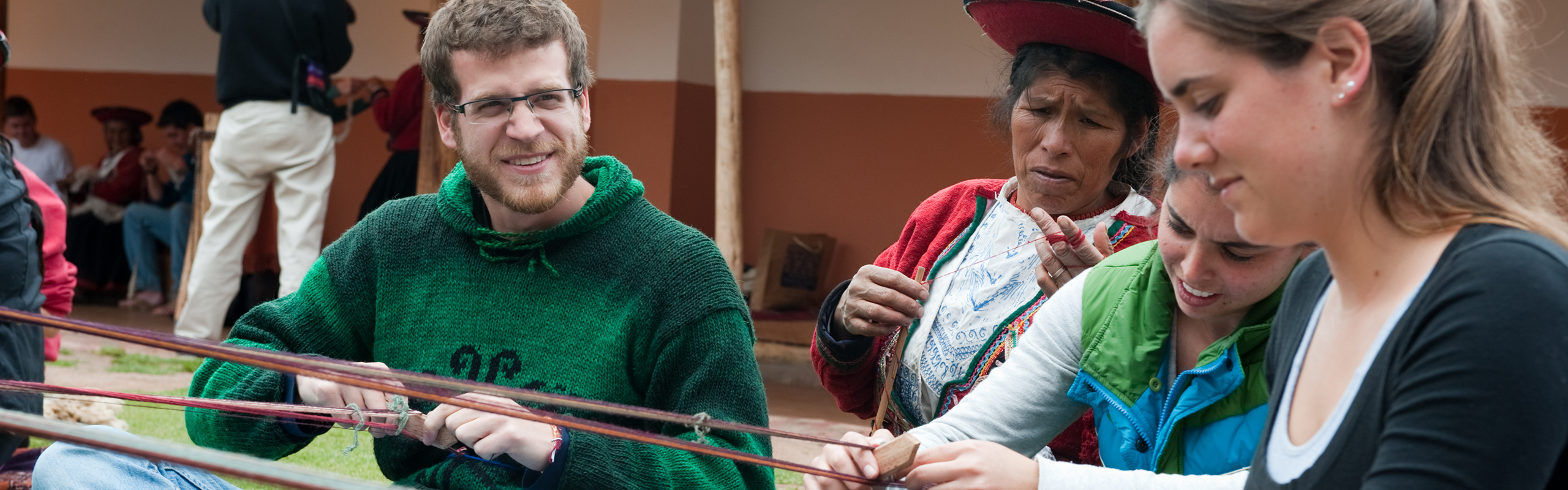
Students experience western Australia through anthropological and sociological perspectives. The influence of Aboriginal, European and Pacific migrants on Australian culture is examined. A predominant focus of the course is an exploration of Aboriginal peoples in relation to Euro-Australian interests. Students are exposed to a rich cultural milieu through orientation prior to departure, participant-observation, focused observations, field trips, lectures and directed self learning. Offered winter.
SOC 261. CLASSICAL SOCIOLOGICAL THEORY 4 sh
In sociological theory, students explore conceptualization and model-building in modern sociology and consider the emergence of sociological traditions or perspectives. Topics include underlying assumptions, historical and intellectual background and the logical consequences of these positions. This course is a writing intensive course, meaning at least 70 percent of the grade comes from writing assignments during the course. Prerequisite: SOC 111. Offered spring.
SOC 262. CONTEMPORARY SOCIAL THEORY 4 sh
This course will explore how current social conditions and new social movements have prompted a rich, lively process of critical re-engagement and even rejection of the “classics” of sociological theory. Students will consider how contemporary politics of identity and difference as well as scientific challenges to the nature-culture dichotomy catalyze deep reflection on the perennial issues of social theory: the possibility of social order, the dynamics of social change and the relationship between the individual and society. Consequently, limitations of the classics to explain contemporary social realities will be uncovered. Furthermore, course materials will challenge students to identify the alternative axes of theoretical dispute in sociology as well as to question the contributions and consequences of social scientific knowledge. This course is writing and reading intensive. Prerequisite: SOC 111.
SOC 311. SOCIOLOGY OF FAMILIES 4 sh
This course provides an investigation of the family as an institution in societies, focusing on the development and current patterns of the American family. Specific topics include social class differences, racial and ethnic variations, premarital patterns, marital interaction, family problems and the future prospects for the family. Prerequisite: SOC 111.
SOC 314. SOCIOLOGY OF SPORT 4 sh
This course focuses on sport as a major social institution in American society. Topics
include the social organization of sport, the relationship of sport to other aspects of
American life such as politics and education, the experiences of African-Americans,
women and youth in sport, and the effects of sport on culture, personality and society.
Prerequisite: SOC 111.
SOC 316. SOCIOLOGY OF RELIGION 4 sh
The goal of this course is to examine the critical importance and functions of religion in
human societies. Also, it explores the social characteristics of world religions and religious
organizations. In addition, this course will investigate religious behaviors such as beliefs,
rituals and experiences.
SOC 327. ENCOUNTERING THE SACRED 4 sh
Students develop an understanding of non-Western views of the world through intellectual
and experiential study of Native American perspectives. Anthropological concepts are
used in conjunction with non-Western methods of understanding. The course emphasizes
the power of the oral tradition as a learning tool and explores the continuities and diversities of the Native American belief systems. Experiential activities include conversations with Native American healers and leaders, participation in powwows and a variety of outdoor activities designed to help the students develop an animistic perspective. Prerequisite: SOC 111 or ANT 112.
SOC 331. THE SELF AND SOCIETY 4 sh
Self and society involves the ways individuals are influenced by social interaction with
others, with attention to the interaction processes of socialization, developing an identity
and individual identities affecting interactions. Other topics include the impact of social
change, increased technological developments in everyday life and postmodernism on
the self, and the sociological perspectives of symbolic interactionism and dramaturgy.
Prerequisite: SOC 111.
SOC 333. SOCIAL STRATIFICATION 4 sh
This study of societal patterns of inequality includes consideration of differences in
wealth, power, prestige and knowledge. Students examine the access levels groups have to
these resources and the subsequent effects of their access level on educational opportunity,
housing, health care, justice before the law, self-esteem and life satisfaction. The stratification systems of the different societies are studied, but the primary focus is on institutionalized inequality in the U.S. Prerequisite: SOC 111.
SOC 341. ETHNIC AND RACE RELATIONS 4 sh
Students examine the meaning of minority group status in terms of the general patterns
and problems confronting all minorities as well as the specific issues facing individual
minority groups such as African-Americans, Jews, European-Americans and Asian-
Americans. Discussion emphasizes the nature of prejudice and discrimination, the structure of minority-majority relations and strategies toward social equality. Prerequisite: SOC 111.
SOC 342. SOCIAL DEVIANCE 4 sh
This course considers deviance and social control in societal context. Emphasis is placed
on the ways in which deviance is defined cross-culturally and on the different ways in
which deviants are labeled and treated. The course focuses on sociocultural explanations
of deviance within such areas as mental and physical health, drug use, sexual expression,
aggression and personal identity. The relationship between deviance and social stratification is examined. Prerequisite: SOC 111.
SOC 343. SOCIAL AND CULTURAL CHANGE 4 sh
Concern for the nature and direction of modernization provides a foundation in this course
as students analyze patterns of social and cultural change (especially in technologically
advanced societies such as the U.S.). Topics include innovation, diffusion, evolution, revolution, collective behavior and social movements with emphasis on the causes of patterns and their effects on individual and public life. Prerequisite: SOC 111.
SOC 345. SOCIOCULTURAL PERSPECTIVES ON GENDER 4 sh
Students use sociological and anthropological perspectives, theories and concepts to
analyze the meaning of being female and male in American society. Discussion emphasizes the inequities based upon gender, particularly the problems faced by women. Prerequisite: SOC 111 or ANT 112.
SOC 351. SOCIOLOGY OF POPULAR CULTURE 4 sh
This course studies the nature and significance of culture as this is presented to the public
through movies, magazines, newspapers, television, music, radio, popular fiction, spectator
events and mass-produced consumer goods. The course will focus on patterns of production, distribution and consumption of popular culture, thematic issues and effects on behavior. A special concern will be the relationship of popular culture images to “visions of the good life” in the modern U.S. Prerequisite: SOC 111.
SOC 355. CRIMINOLOGY 4 sh
This course provides a sociological explanation of crime with a focus on the relationship between social structure and criminal behavior. Included in this approach are studies of individual criminal behavior. Both classic and contemporary theories of crime are explored; emphasis is placed upon the American context.
SOC 370-379. SPECIAL TOPICS IN SOCIOLOGY 2-4 sh
This series of courses reflecting new contributions in sociology or sociological issues. Prerequisite: to be determined by instructor.
SOC 461. SENIOR SEMINAR IN SOCIOLOGY 4 sh
This capstone course reviews major areas of sociology and provides further opportunity to share research on these topics. Students conduct research ranging from how sociological knowledge can be applied occupationally and politically to more basic, academic topics. Prerequisites: senior sociology major, SOC 215, 216 and either SOC 261 or 262.
SOC 471. SEMINAR: SPECIAL TOPICS 2-4 sh
SOC 481. INTERNSHIP IN SOCIOLOGY 1-4 sh
Teaching, research, service and occupational internships are offered. Limited to four semester hours credit applicable to sociology major or minor. Prerequisites: department permission and at least sophomore standing.