


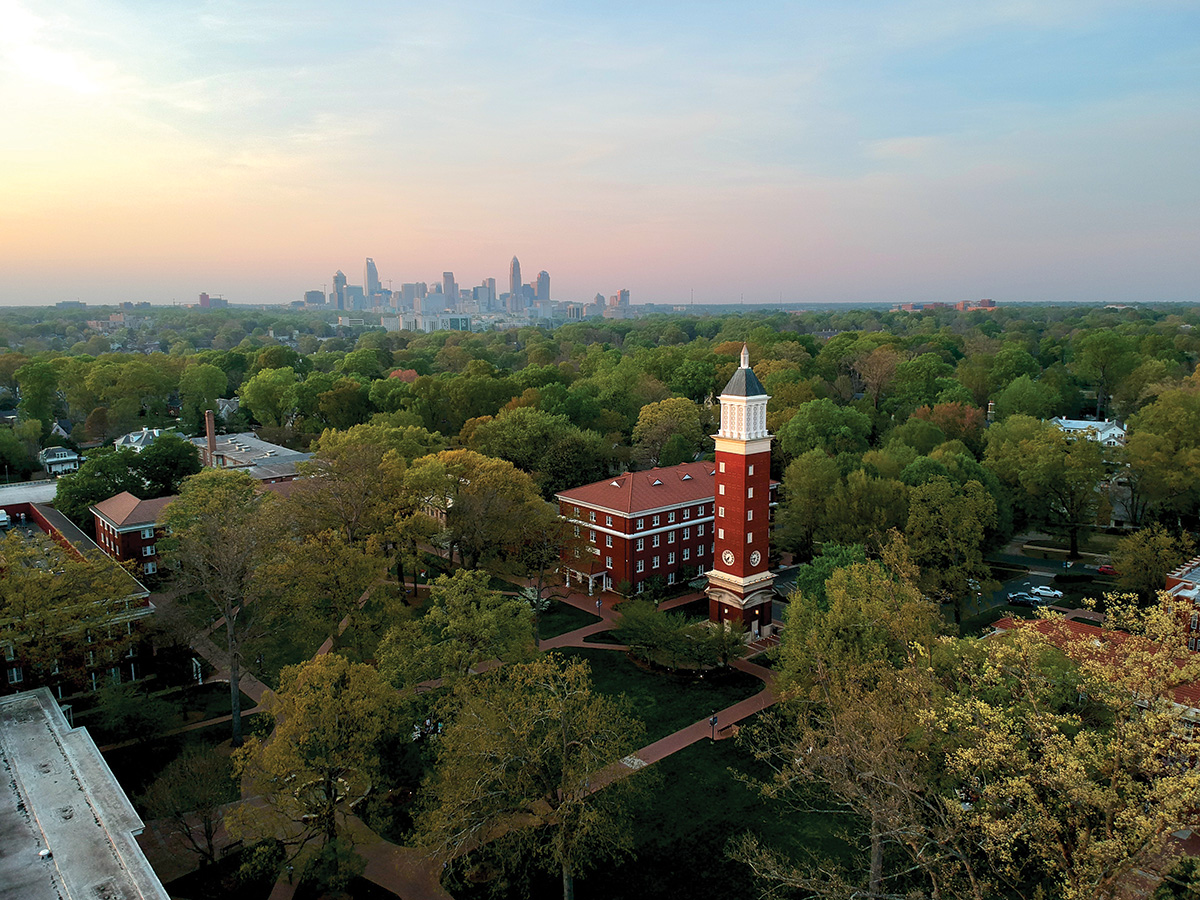
As work continues toward a proposed merger between Elon University and Queens University of Charlotte, get to know more about Queens and how the two universities are aligned in values and mission.
When Elon University and Queens University of Charlotte announced in September an intent to merge, the message conveyed by leaders of both institutions was simple and powerful: We are two institutions with aligned purposes and a singular vision to enhance educational opportunities for students.
Founded in 1889 and 1857, respectively, both Elon and Queens have histories that emphasize engaged learning, community service and student-centered innovation. With a merger, Elon’s national reputation for experiential education and undergraduate teaching excellence will meet Queens’ nearly 170-year legacy in Charlotte’s civic and academic ecosystem. The merger is described as “combining complementary strengths, shared values and a deep commitment to Charlotte.”
At the conclusion of the merger, Elon University will operate Queens. For students, the benefits are tangible. A combined institution promises expanded academic pathways, enhanced connections with regional employers and deeper integration of hands-on learning with real-world impact. And for Charlotte, the union signals a bold investment in local higher education, anchoring both campuses in a vibrant metropolitan region that is expected to grow in population by more than 50% by 2050.
The combined vision will preserve the traditions of both institutions while advancing a modern model of scale, opportunity and regional engagement.
A Landmark Meeting
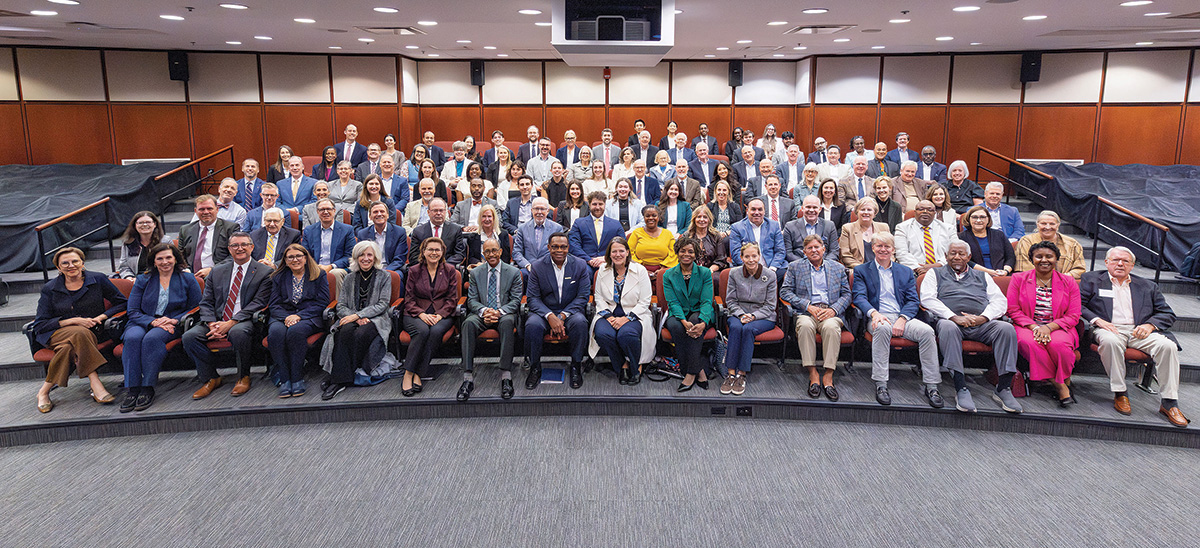
In a historic gathering and a major step forward in the intended merger between Elon and Queens, the Boards of Trustees of both institutions — joined by dozens of faculty and senior leaders — gathered in October on the Elon campus for a daylong review of progress and collaborative planning.
The working session marked a significant milestone in the shared vision to create a merged institution positioned for academic excellence, operational strength and exceptional student outcomes.
During the session, leaders outlined a timeline for key regulatory and legal steps. The gathering included an Elon University campus tour for the guests from Queens as well as a series of roundtable discussions in which board members provided feedback on each of the core integration areas.
Prominent Queens Alumni
Vi Lyles ’73
Mayor of Charlotte (2017-present)
Shirley Fulton MBA ’88
First African American woman to serve as a judge in the Superior Court of North Carolina
Malek Jandali ’97
Composer and pianist, founder of Pianos for Peace
Conrad Ricamora ’01
Actor
JB Brown MBA ’03
President of Hendrick Automotive Group
Maxwell Millington ’16
Entertainment reporter for Axios
Meg Rosenthal ’19
Author of “The Wingman” and “The Right Words”
Hannah Aspden ’22
Paralympic Gold Medalist
Dillon Lewis ’25
Drafted by the New York Yankees (currently at Hudson Valley Renegades)
Quick Facts About Queens
Campus
- 30 acres in the Myers Park neighborhood of Charlotte
Students
- Nearly 1,600 combined enrollment (undergraduate and graduate)
- 44 states and 50 countries represented
Academics
- 51 undergraduate majors
- 9 pre-professional programs and 9 master’s programs
Athletics
- 23 Division i NCAA Teams
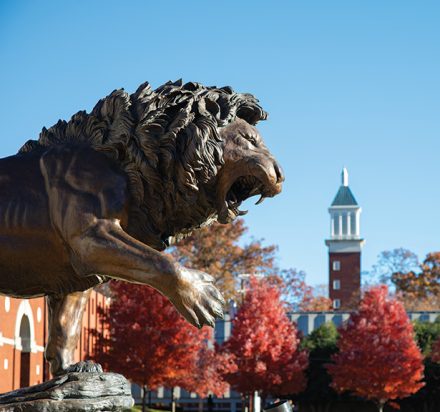
- Mascot: Rex the Lion
- Name: The Royals
Timline

Queens University
1857: Founded as Charlotte Female Institute in uptown Charlotte
1891: Renamed Seminary for Girls
1896: Renamed Presbyterian Female College, located at North College & Ninth streets
1912: Renamed Queens College and moves to Myers Park
1930: Merges with Chicora College for Women to become Queens– Chicora College
1948: Begins admitting men to new co-ed evening college
1987: Becomes fully coeducational
2001-02: Trustees approve (2001) and implement (2002) the name Queens University of Charlotte
2025: Gains full NCAA Division I status and championship eligibility; Queens and Elon University announce intent to merge

Elon University
1889: Elon College founded by the Christian Church (now the United Church of Christ) as a co-ed institution
1890: First classes held; original administrative and academic buildings constructed
1920: Toshio Sato, Elon’s first international student, graduates
1923: A fire destroys Elon’s main building, sparking a campus rebuild
1963: Elon admits its first Black student, Glenda Phillips Hightower, marking a major shift toward racial integration
2000: Official name changes to Elon University, signaling a rising national identity and expanded academic scope
2019: Named a Top-100 National University by U.S. News & World Report for the first time
2023: Announces expansion of national campus program to Charlotte, joining established initiatives in Los Angeles and New York
2025: Queens University of Charlotte and Elon University announce intent to merge
To learn more about the merger, visit elonandqueens.org.