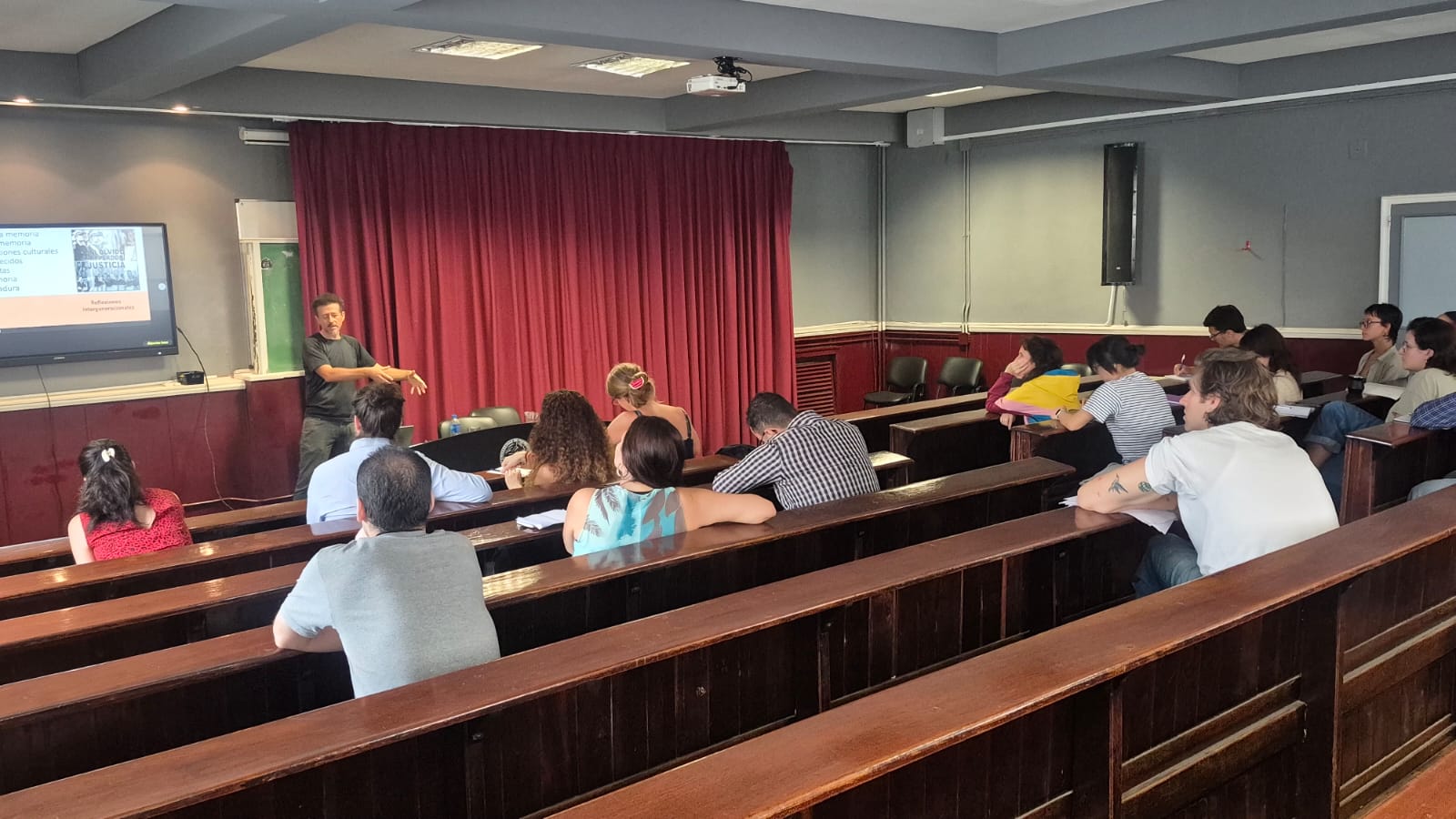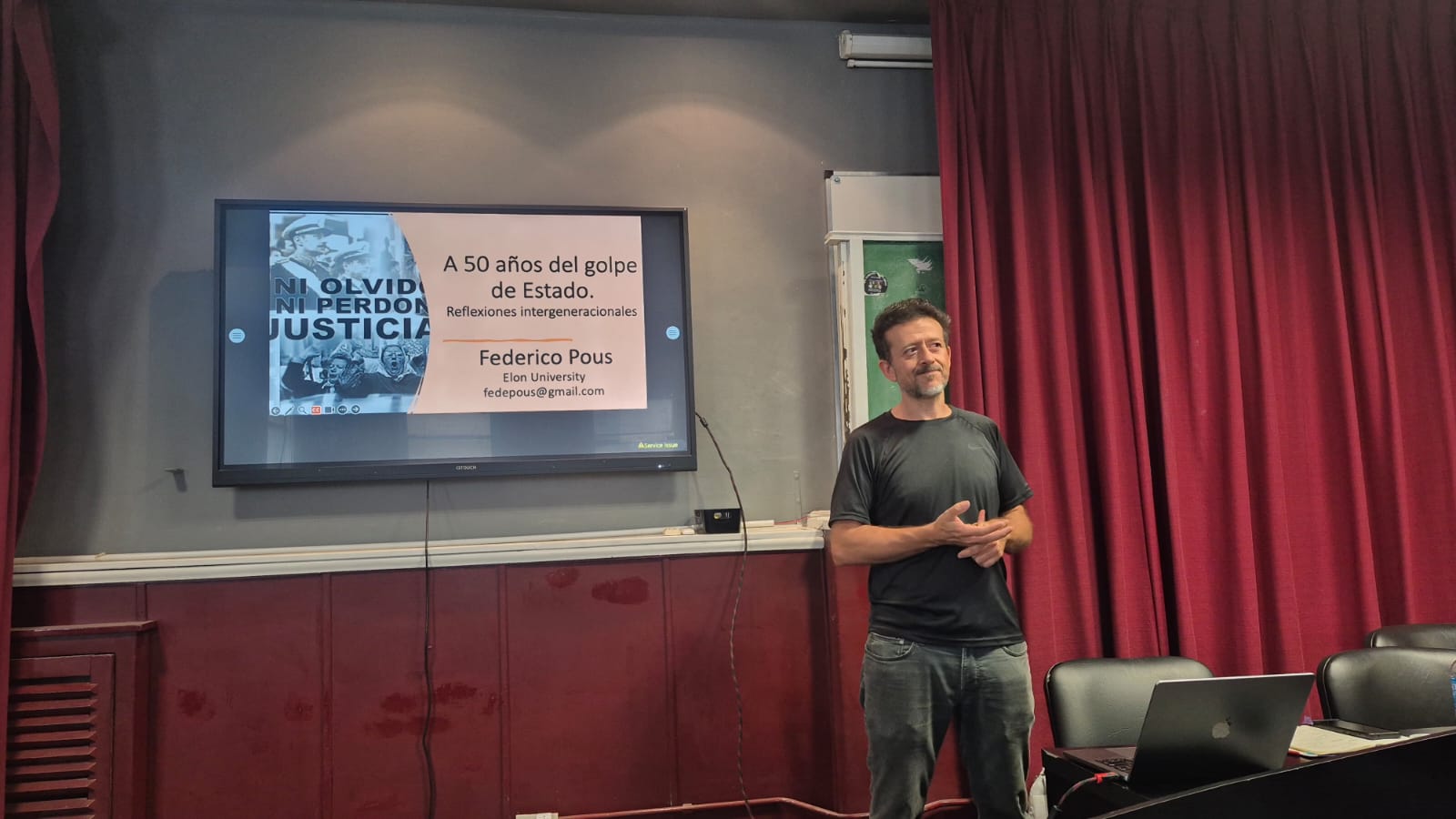
Associate Professor of Spanish Federico Pous delivered two talks in Buenos Aires in commemoration of the 50 years of the Coup d’etat that marked the beginning of the last dictatorship (1976-83) in Argentina.
On Friday, March 27, Associate Professor of Spanish Federico Pous addressed graduate students and professors from the College of Social Sciences at the University of Buenos Aires. He inaugurated the Master in Latin American Social Sciences, and gave another talk at the University of El Salvador, both located in downtown Buenos Aires.
Pous’s talk was part of a much larger week of events that included other research presentations, cultural events, and public talks, with an epicenter in a huge street demonstration that took place on March 24 throughout the country. The massive mobilization commemorates the day on which the dictatorship started in 1976, and brought together political activists and groups, as well as cultural spectacles and common citizens, to remember the dark years of the dictatorship, so as not to repeat them again. Under the cry of Nunca Mas! (Never again), the people maintain a culture of memory despite the attempt of the current government to dismantle the human rights platform that makes it possible.
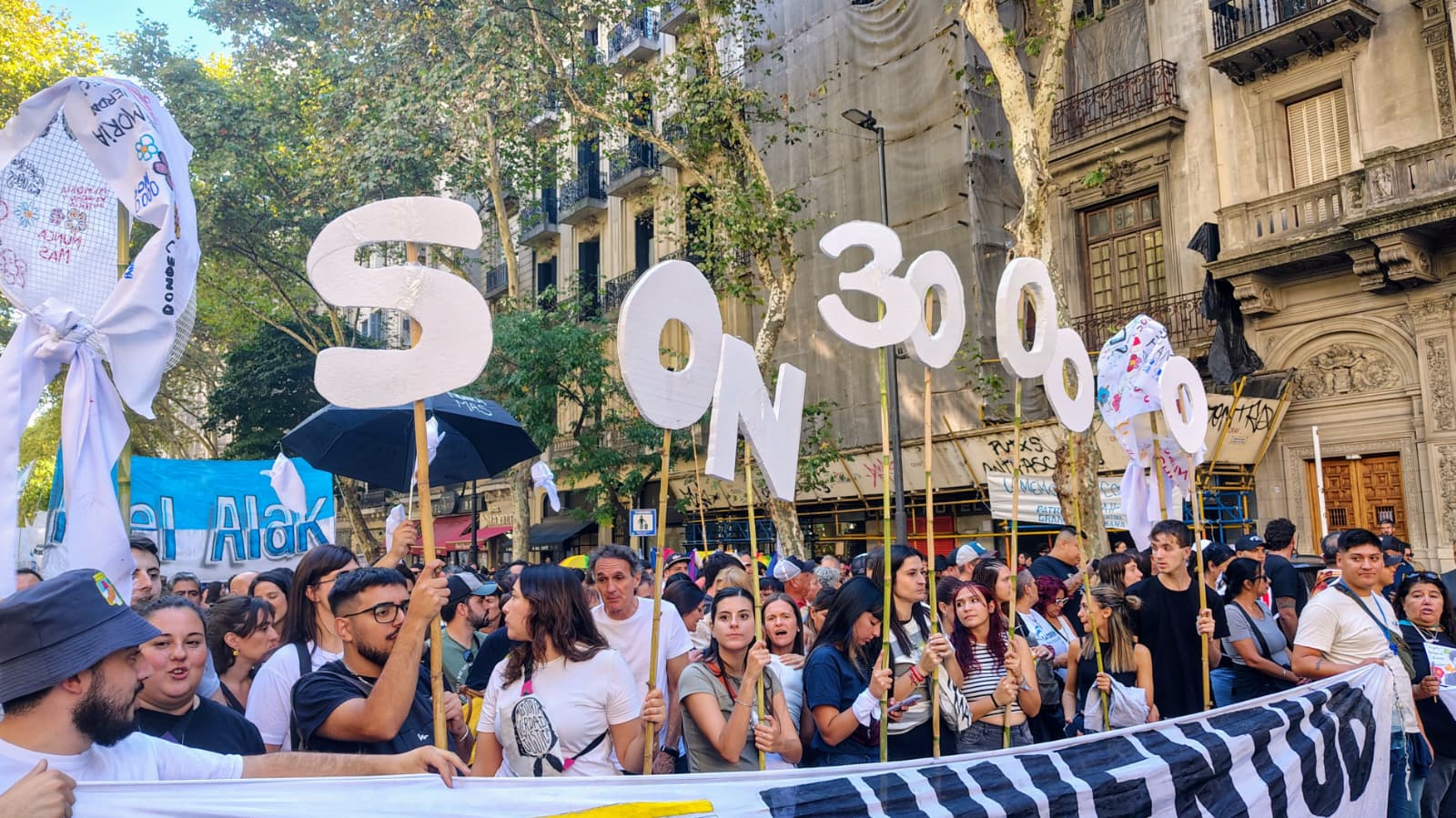
In the context of the Cold War, Argentina, like most Latin American countries during the 60s, 70s and 80s, went through a period of military dictatorships that targeted political opponents with the financial and political support from the U.S. From 1976 to 1983, Argentina was under a military dictatorship that utilized irregular methods of repression against its own population. Following the lesson learned at the School of the Americas, the military regime created a system of clandestine centers of detention in which political opponents were brought after being kidnapped in the streets, their workplaces or in their homes. Once in these clandestine prisons, they were tortured, treated with minimum care, uncommunicated from their family members, and most of them were killed and their bodies disappeared. It is calculated that 30,000 people disappeared under this system of repression.
Since the return of democracy in 1983, there has been a grassroots collective effort to recompose the social link by fomenting a culture of memory in the country under the banner of Not forget, not forgive (Ni Olvido ni Perdón). Throughout the years, different human rights organizations worked along with state officials, international support groups, and local community organizations to persecute the criminal legally (over 1000 were already condemned), build and maintain several sites of memory, and provide retribution to the people affected directly and indirectly by it.
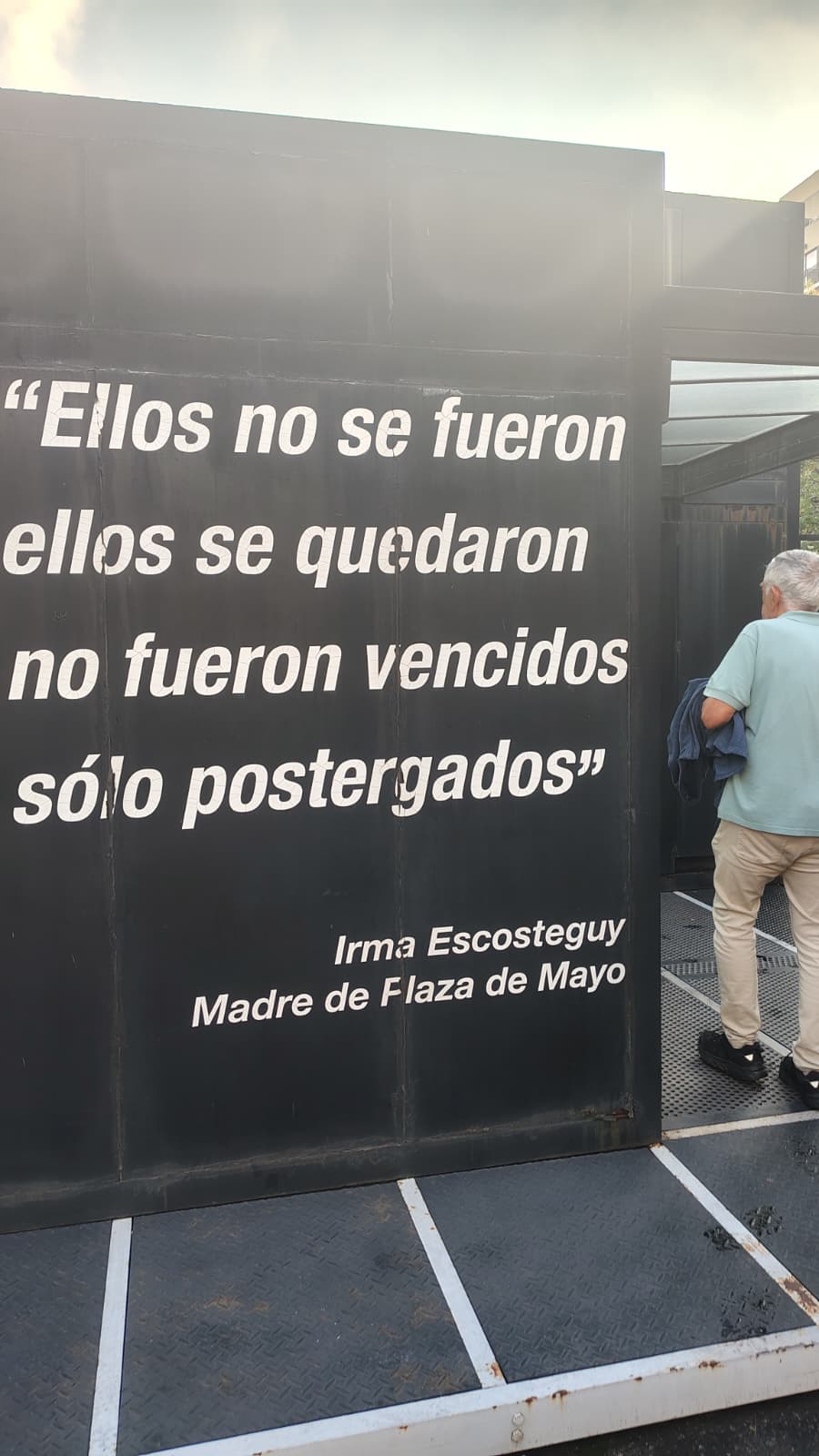
Pous’s talk emphasized this collective effort to cultivate a culture of memory across different generations. For Pous, “the task of memory today is an intergenerational endeavor that requires to be open ot listen to the questions and concerns of the new generations.” In his talk, he focused on key cultural products like the films “The Official History” (1985) and “Argentina 1985” (2022) as well as the fiction books “La casa de los conejos” (2006) and “Diario de una princesita Montonera” (2012) to highlight the public debates around postdictatorship democracy that have fed the culture of memory in the country.
Earlier in the week, Pous presented his book, Eventos Carcelarios (UNC Press, 2022), at the University of El Salvador for an audience of professors and graduate students. He delivered a talk about the novel “El beso de la mujer araña” (Puig 1976) in conjunction with a historical analysis of the liberation of political prisoners in 1973, at the return of a seven-year dictatorship that preluded the most horrific one mentioned above. His talk focused on the “connection between an historical event that was lived as if it was the revolution, but it turned out to be the beginning of the defeat of the revolutionary project”. For Pous, the prison cell became “a singular place of reflection and self-critique” that the novel depicts in detail to reimagine the possibility of a radical imagination today.