


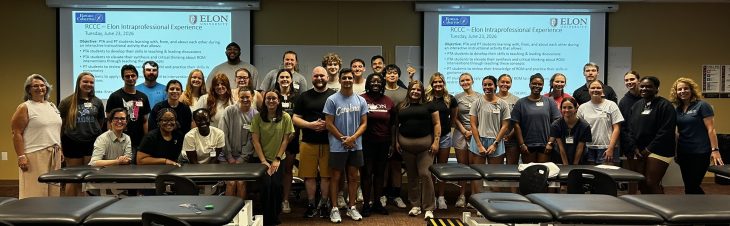
First-year Doctor of Physical Therapy (DPT) students from Elon University recently joined second-year Physical Therapist Assistant (PTA) students from Rowan Cabarrus Community College (RCCC) for an intensive, hands-on learning activity.
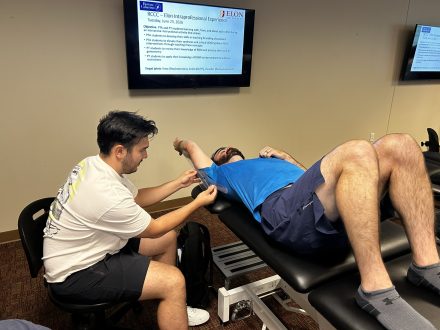
In an inaugural collaboration, first-year Doctor of Physical Therapy (DPT) students from Elon University recently joined with second-year Physical Therapist Assistant (PTA) students from Rowan Cabarrus Community College (RCCC) for an intensive, hands-on learning activity.
The session was facilitated by Elon faculty members Melissa Scales and Megan Kim, alongside Program Director Anna Marie Prado and RCCC Director of Clinical Education Karey M. Martin.
A Peer-led approach
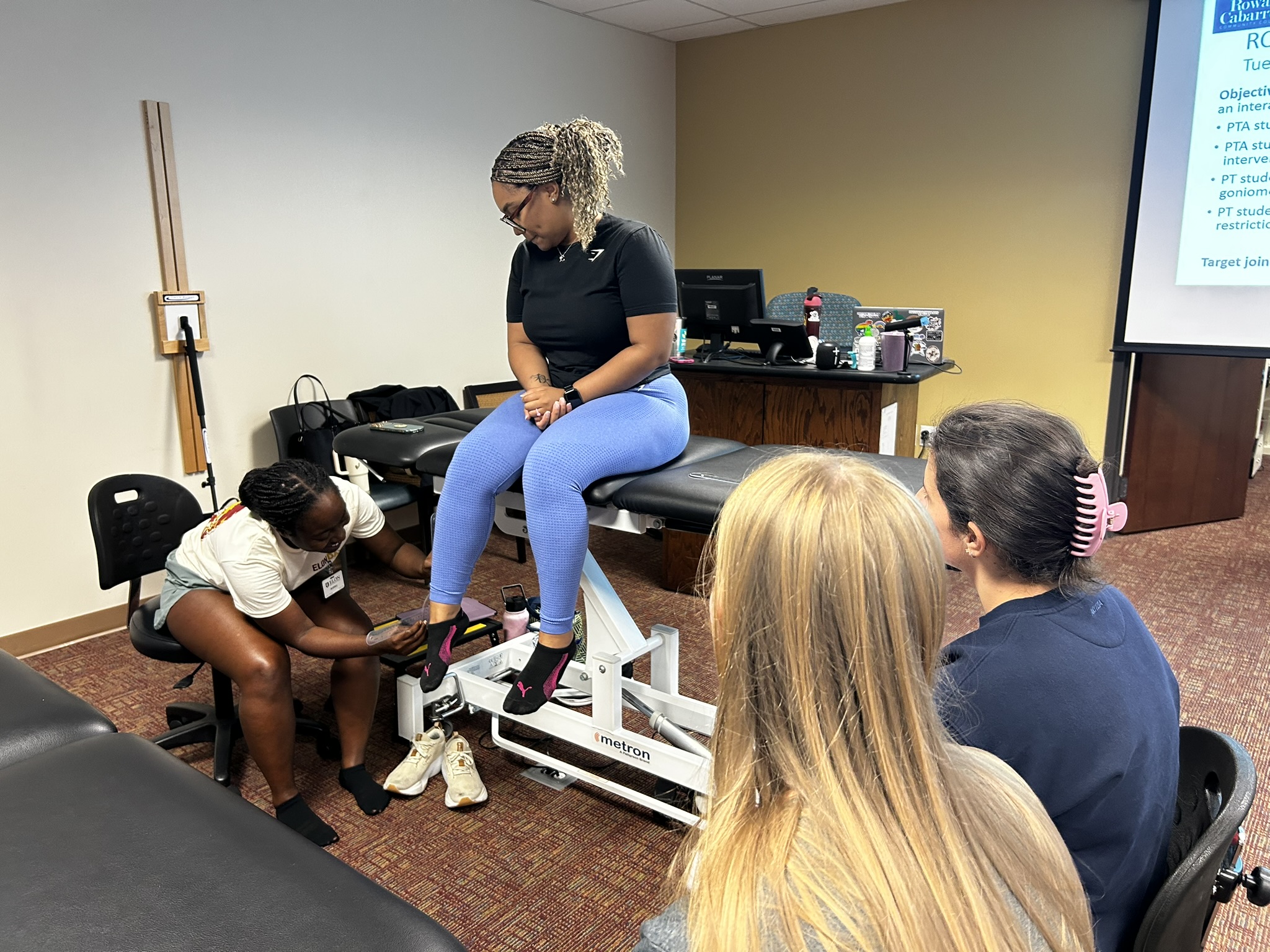
The session was uniquely structured to allow the second-year PTA students to take the lead, leveraging their clinical rotation experience to mentor the first-year DPT students. The activity focused on Range of Motion (ROM) goniometric measurements of three target areas: the knee, ankle, and shoulder.
The RCCC students initiated the learning by leading small-group discussions and providing handouts on foundational ROM concepts, normal ranges, and potential reasons why a patient may present with abnormal ROM. Following these presentations, the Elon DPT students acted as clinicians, using their goniometers to measure the ROM of the PTA students, who served as the “patients.”
Synthesizing theory and practice
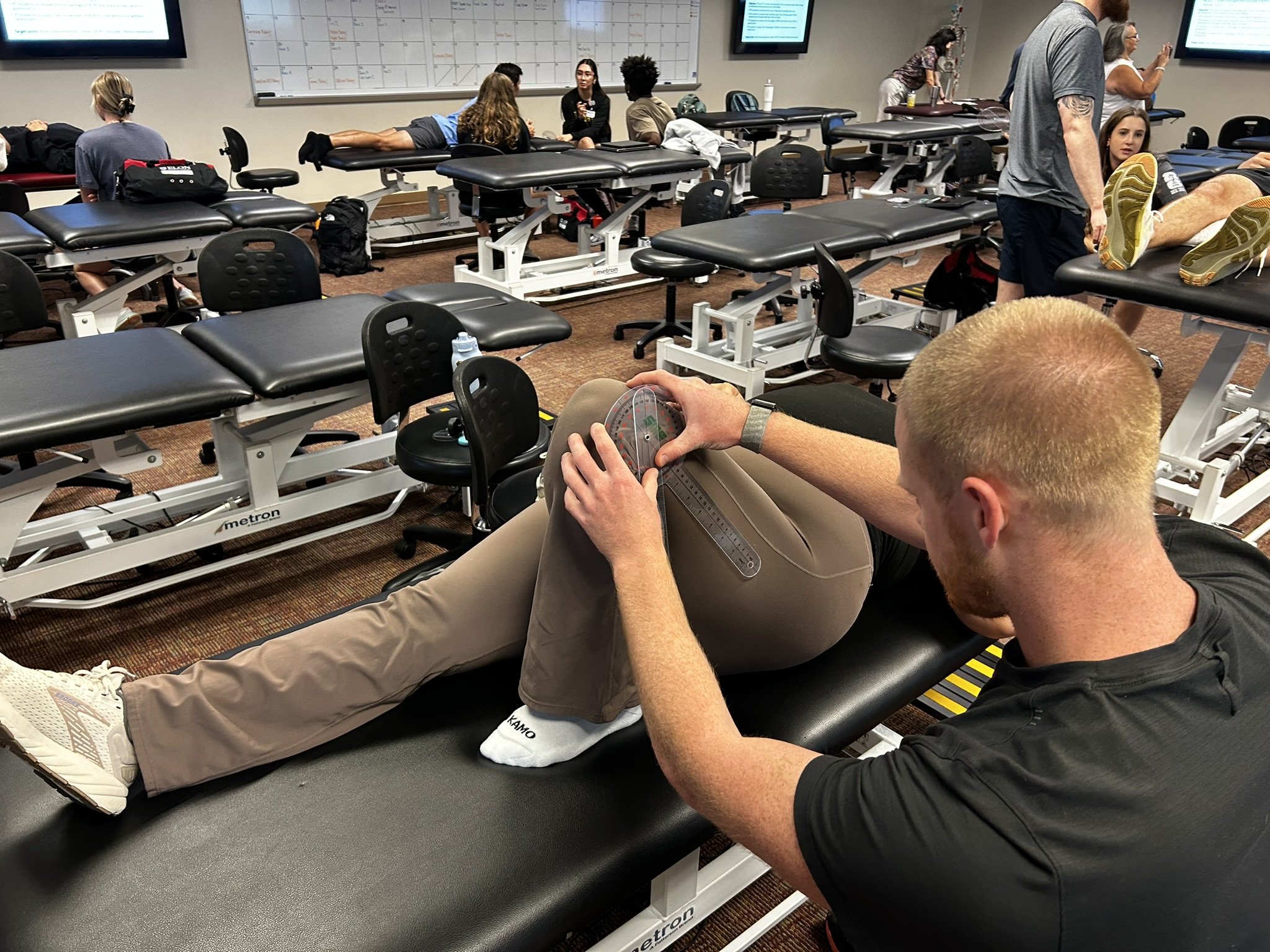
This activity went beyond simple measurement. After recording their results, the groups compared data and discussed discrepancies, exploring alternative positioning and various goniometric techniques. The PTA students provided critical feedback on the DPT students’ hand placement and technique, fostering an environment of mutual respect.
A vital component of the day involved discussing intervention ideas to increase ROM. Students explored how a Physical Therapist’s Plan of Care provides the framework for a PTA to use their clinical judgment to choose and progress interventions, as well as when a PTA should consult the supervising PT.
One DPT student reflected on the value of this exchange, stating: “I enjoyed the opportunity to collaborate intraprofessionally (sic) with other students and hear new perspectives about clinical scenarios.”
Building the future of the profession
The timing of this collaboration was particularly impactful. While the Elon DPT students are preparing for their first clinical rotations in January, the RCCC PTA students are set to graduate in Dec. 2026.
This means that when the DPT students head into the clinic early next year, they may find themselves working alongside and learning from these newly licensed PTAs.The engagement between the groups was high, highlighted by a serendipitous moment when a PTA student discovered he had just finished a rotation at the exact site where an Elon student is headed in January.
By learning with, from, and about each other, these future professionals are gaining a deeper understanding of their respective scopes of practice. This connection is essential for fulfilling accreditation standards for intraprofessional education and ensuring the highest quality of collaborative patient care.