


In the latest episode of “Elon Beyond the Bricks,” the six-time regional Emmy Award-winning journalist joins President Connie Book to reflect on his path from Elon student media to anchoring morning news in Minneapolis–St. Paul.
Matt Belanger ’05 begins most weekdays when much of the Twin Cities is still asleep.
His alarm sounds at 2 a.m. By 4:30, he is on the air at KSTP-TV, anchoring three hours of live morning news for viewers across Minneapolis and St. Paul.
The schedule requires discipline, but for Belanger, the responsibility is also a privilege. In the latest episode of “Elon Beyond the Bricks,” he tells President Connie Ledoux Book that thousands of people rely on his newsroom to explain what happened overnight, prepare them for the weather and commute ahead, and provide the information they need to begin their day.
“We set people up for success every morning,” Belanger said. “That commitment to serving the public is really what it’s all about.”
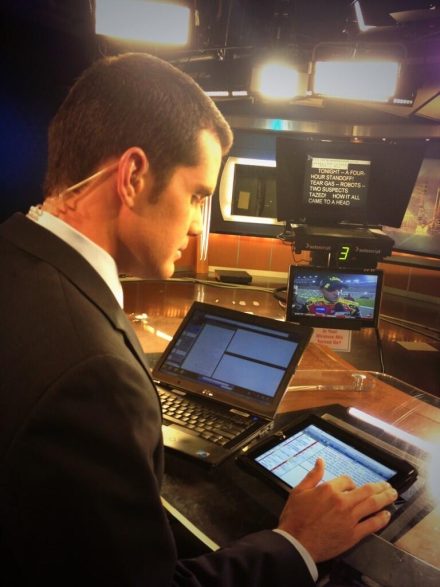
Belanger’s commitment to journalism began at Elon, where the promise of hands-on learning helped convince him that he had found the right university. He knew he learned best through experience and was drawn to the opportunity to work with cameras and begin developing his skills from the start of college.
As a student, Belanger worked across both television and print journalism through ESTV and The Pendulum. That crossover experience taught him that a strong story begins with the same essential facts, even when it is adapted for television, print, web or social media.
“I just thought a good story was a good story,” Belanger said. “It turns out that’s actually true.”
Elon also provided the supportive environment and direct feedback he needed to grow. Belanger remains connected with former faculty members, including Professor Tom Nelson, and credits those relationships with giving students a foundation that extends well beyond graduation.
After Elon, Nelson encouraged Belanger to begin his career at KELOLAND Media Group in Sioux Falls, South Dakota. At the smaller-market station, Belanger reported, filmed stories, worked on the assignment desk and produced weekend newscasts. The ability to experience nearly every role in the newsroom gave him what he describes as a strong foundation for his television career.
That foundation later supported his investigative work in Pennsylvania.
While waiting for an interview on the floor of the Pennsylvania House of Representatives, Belanger and a photographer noticed paper clips and folded pieces of paper wedged into lawmakers’ electronic voting buttons. The discovery led to months of reporting on “ghost voting,” a practice through which some lawmakers could appear in the official record as present and participating even when they had not traveled to Harrisburg. Because attendance records could be tied to taxpayer-funded travel reimbursements, the reporting raised broader questions about accountability and public trust.
Belanger compared investigative journalism to building a legal case: reporters must gather enough evidence and research to feel confident in what they present to the public. That deeper work, he said, distinguishes investigative journalism from the basic updates audiences can find throughout the day on their phones.
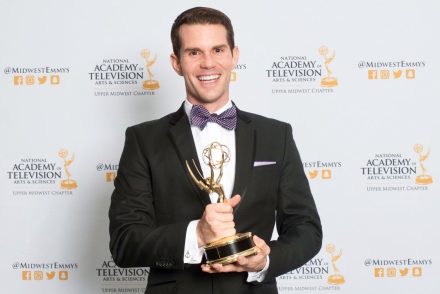
Today, Belanger continues to bring that same sense of responsibility to his work in the Twin Cities, where he has reported through some of the region’s most difficult and consequential moments. He said the work requires journalists to remain authentic, approach painful stories with care and never lose sight of the people whose lives are affected by the news.
Near the end of the conversation, Belanger recalled another lesson from Elon—and from President Book, who taught him as a communications professor.
“You have to do the work in life,” he said. “You have to put in the time. You have to do the research. You’ve got to do the work in order to succeed.”
For Belanger, that work now begins at 2 a.m., helping ensure his community is informed and prepared when a new day begins.