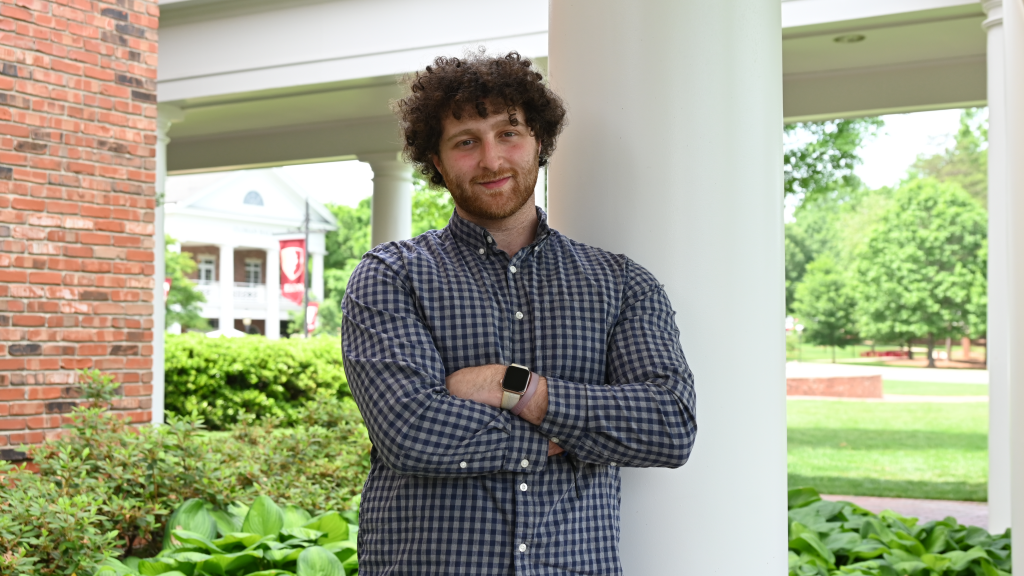
Rafi Dahdal Elon Graduate 2024, a business analytics major

Rafi Dahdal '24 G'24

Rafi Dahdal ’24 graduated with a bachelor’s degree and a master’s degree in business analytics as part of the 3+1 program. “I’m passionate about analytics and have a job with Lennar in Raleigh as a division business analyst,” Dahdal said.

Dahdal’s journey at Elon was characterized by a relentless pursuit of excellence and a deep commitment to his studies and extracurricular activities. He balanced four jobs on campus: serving on the Graduate Advisory Board as the MSBA Representative, working at the mail center, being a student advisor and tutor, and acting as a teaching assistant for physiology.

His academic experiences were enriched by the integration of AI and machine learning into his coursework. “Professor Long Xia was phenomenal in teaching machine learning and deep learning,” Dahdal said. “We used various machine learning models in our projects, which gave me a solid understanding of AI’s back-end processes.

Dahdal sees AI as an essential tool for businesses. He predicts that within the next five years business analytics will likely focus on validating AI rather than just implementing code. Business domain knowledge combined with AI will be crucial.

Dahdal noted the significant impact of faculty mentors. “I worked with Professor Hyunuk Kim on identity recognition models and network graphs,” Dahdal said. “His guidance was invaluable in my academic and professional development.”

Dahdal aspires to attend medical school and eventually own a medical clinic where he can apply his knowledge of data analytics. “I want to improve patient satisfaction through data-driven insights,” he said. “Combining my medical and analytics knowledge will enable me to make informed decisions and enhance healthcare outcomes.”
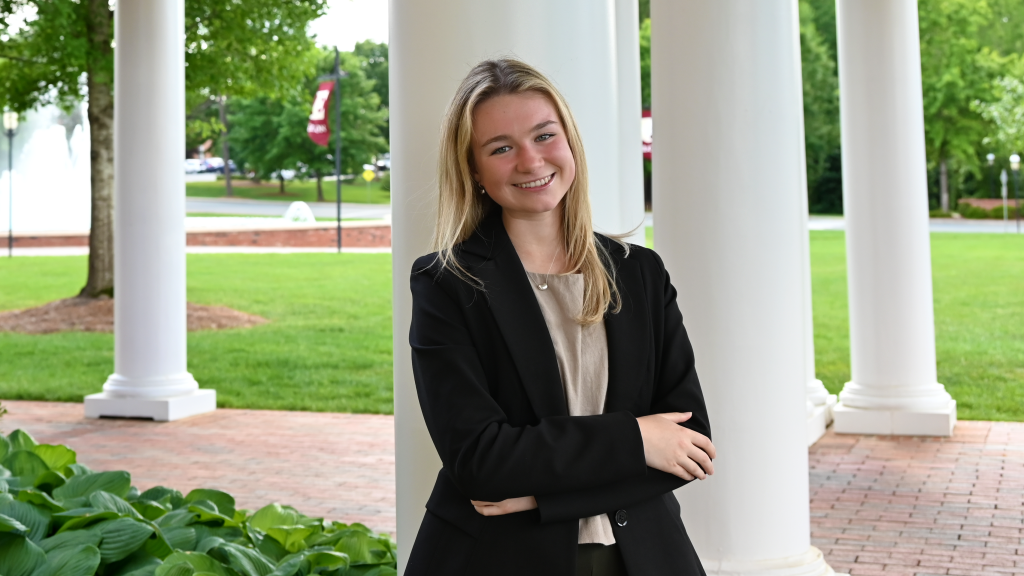
Mackenzie Demming, a business analytics major

Mackenzie Deming '25 G'25

Mackenzie Deming, a finance major in the Class of 2025 pursuing a master’s in business analytics, is part of Elon University’s innovative 3+1 program that allows students to complete their bachelor’s and master’s degrees in four years. “The 3+1 program is intense but rewarding,” Deming said. “It has given me a head start on my career.”

This past summer, Deming completed an internship with J.P. Morgan’s investment bank in New York where her work focused on structured residential finance. The role involved working with mortgage-backed securities, blending investment banking with capital markets, and it required a deep understanding of statistical and cash flow models.

A significant aspect of Deming’s education was the integration of AI and technology into her coursework. “Mustafa Akben’s class was a key point in my journey with AI,” Deming said “He really brought it to life for us.”

From generative AI to machine learning, Deming saw how tools could enhance efficiency and drive innovation. “In every class, there was some element of AI or information technology,” she said. “It became an essential part of how we learned.”

The Love School of Business rapidly adapts to technological advancements. Classes routinely incorporate AI tools and programming languages like Python, equipping students with the skills needed to thrive in an evolving business landscape. Deming said her experiences in her finance classes underscored the importance of AI in automating processes and fostering deeper data analysis. “Professor Adam Aiken’s passion for teaching was so inspiring,” she said. “It made me realize how much I enjoyed finance and analytics.” Aiken, whose enthusiasm for finance education was contagious, encouraged Deming to participate in international competitions and pursue further studies. “I was fortunate to have such incredible mentors,” Deming said. “They really shaped my experience here.”

Joshua Mason, financial technology major

Joshua Mason '25

Joshua Mason ‘25, a financial technology major from Fort Bragg, N.C., brings to his studies a sense of discipline and perseverance rooted in his family’s military background. “My dad served 20 years in the Army, and my brother is in the Air Force. It’s a significant part of who I am,” Mason said.

Mason secured a prestigious internship in 2024 with the Department of Homeland Security’s Cybersecurity and Infrastructure Security Agency where he completed tasks that helped assess how AI was used across the government, and he helped to create guidelines to mitigate risks.

Mason’s academic journey at Elon was marked by a strong emphasis on cutting-edge technologies. “FinTech is always evolving, and understanding how algorithms work is crucial,” he said. “My professors, especially Professor Mustafa Akben and Professor Thibaut Morillon, were instrumental in this. They guided me through the complexities of AI and blockchain technology.”

Mason’s involvement in the revitalization of the blockchain club on campus highlighted his proactive approach to learning and leadership. He today aspires to work at the forefront of regulating emerging technologies, possibly by shaping policies that ensure ethical and effective use of AI and blockchain.

“Elon is a school of opportunities,” he said. “The connections with faculty members and the resources available, like the AI image generation contest and various machine learning competitions, were invaluable.”

Students Ericka Link and Becca Chase utilizing AI system

Ericka Link & Becca Chase '24

Assistant Professor Chris Nelson’s sales classes are harnessing the power of AI to give students hands-on, practical experience that prepares them for real-world sales scenarios.

Ericka Link ‘24 and Becca Chase ‘24 experienced the benefits of using Second Nature AI software in their coursework. “Professor Nelson introduced us to Second Nature AI to help us practice for our final role plays,” Link said. “The AI acts as a realistic client, answering questions and providing rebuttals, making the practice sessions feel authentic.”

For Chase, who used the system in her sales management class, the AI tool has been transformative. “It simulates real-life conversational scenarios, which is incredibly helpful,” she said “The AI’s responses feel genuine, preparing us for actual client interactions.” The responsible use of AI is a recurring theme among students. “AI can be a facilitator, not a replacement for actual work,” Chase said.

“It’s helpful for brainstorming and refining ideas, but it’s essential to maintain authenticity in our communications.” Link adds, “Clients prefer personalized work, and AI should complement, not replace, our efforts.”