Athlete relationships with their schools and compensation
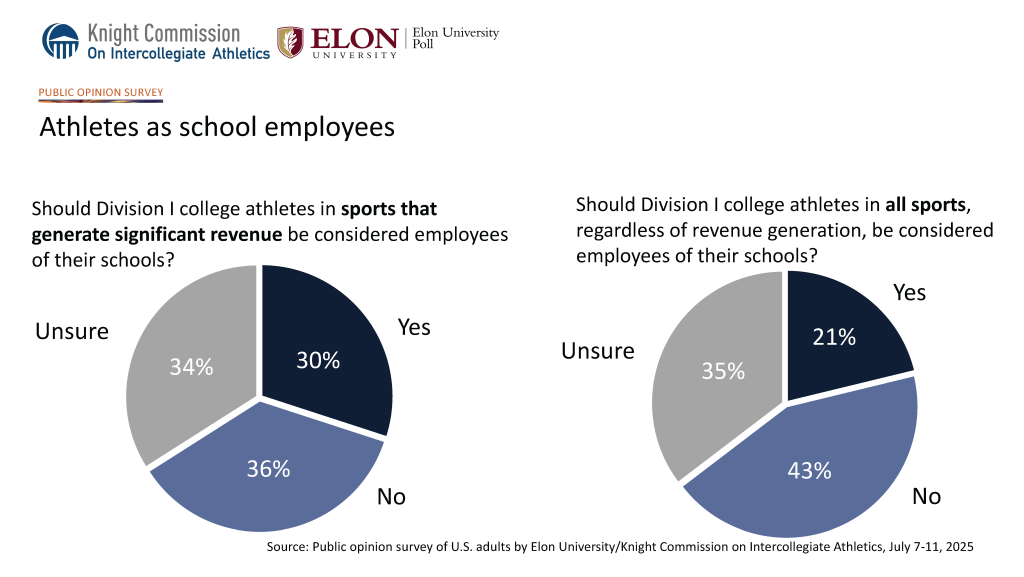
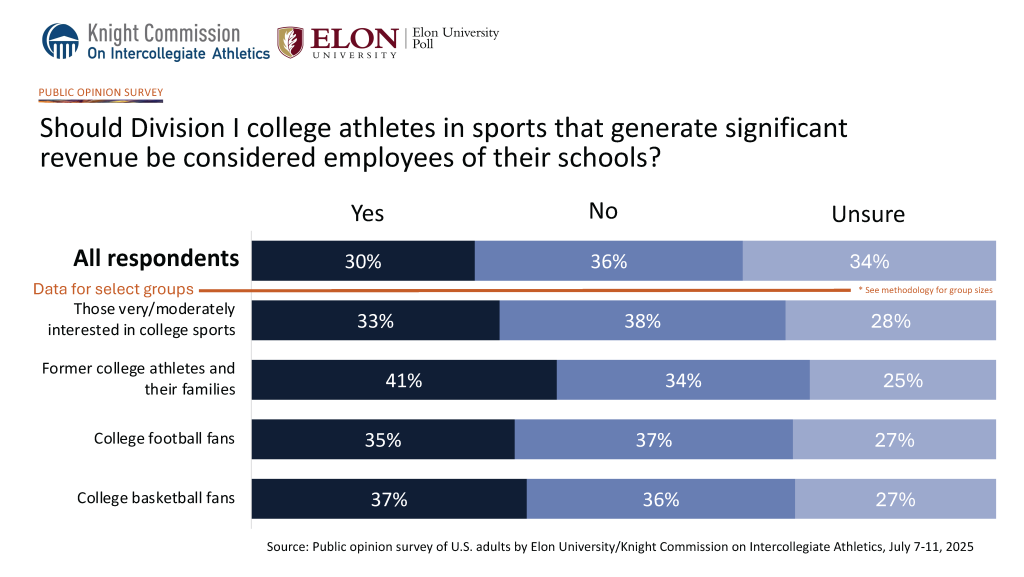
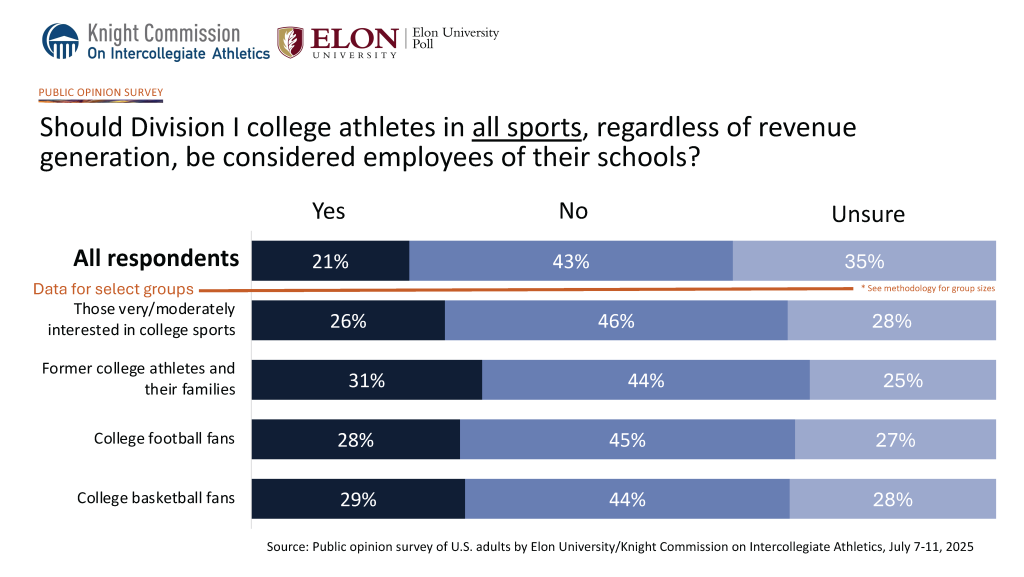
Most Americans do not support classifying Division I athletes as employees of their schools, although support is higher among respondents who identified as “former college athletes and their families.” Even for revenue-producing sports (like football and basketball), 36% of Americans opposed classifying athletes as employees compared with 30% who supported employee classification. Public opposition to classifying all college athletes as employees, regardless of revenue generation, was higher (43%), with only a fifth of the public (21%) saying that athletes in all sports should be classified as employees.
Respondents with more personal experience with college athletics were more likely to support employee status for Division I athletes in revenue sports. Those who identified as “former college athletes and their families” supported the employment arrangement for revenue sports by a 7% margin, with 41% in support and 34% opposed.
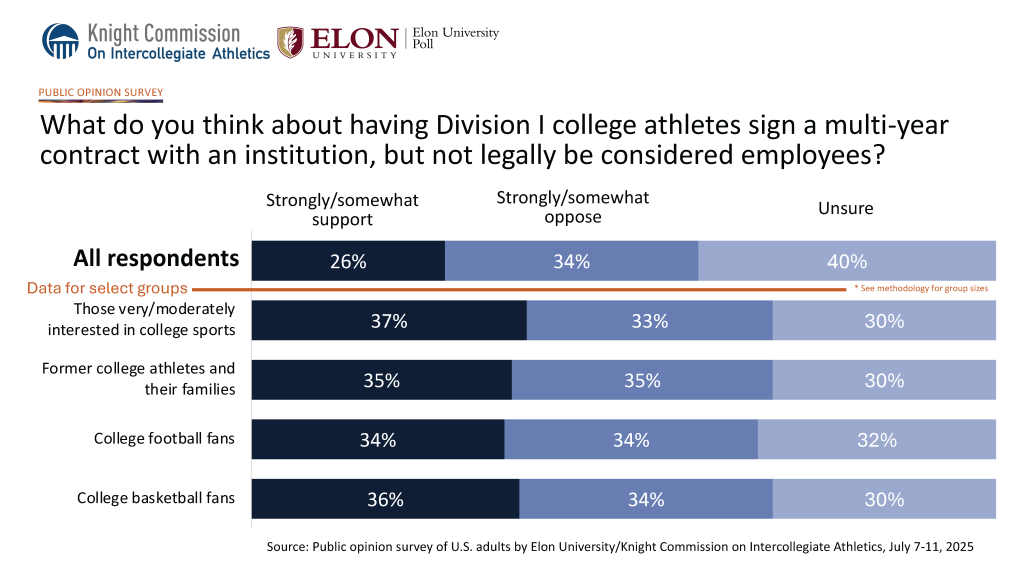
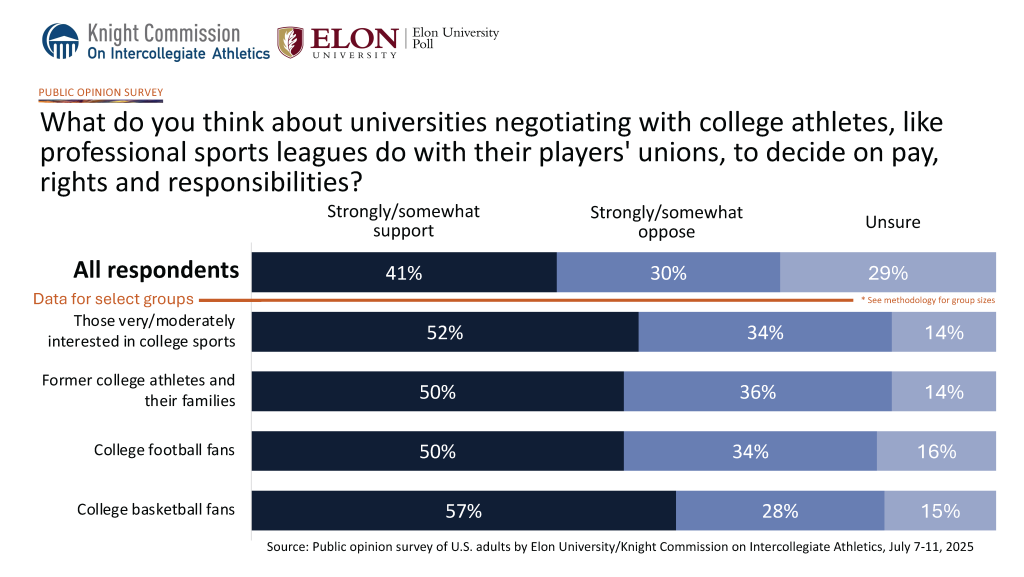
The American public is much more receptive to universities negotiating with athletes on pay, rights and responsibilities, much in the way that professional sports leagues do with players’ unions. Overall, 41% of Americans supported athlete negotiations with their schools, compared with 30% who opposed that idea. Among those interested in college sports, 52% favored player negotiations. Support for player negotiations was similar for former college athletes and their families and college football fans, with 50% holding that view, and higher among college basketball fans, with 57% expressing support.
Athlete transfer rules
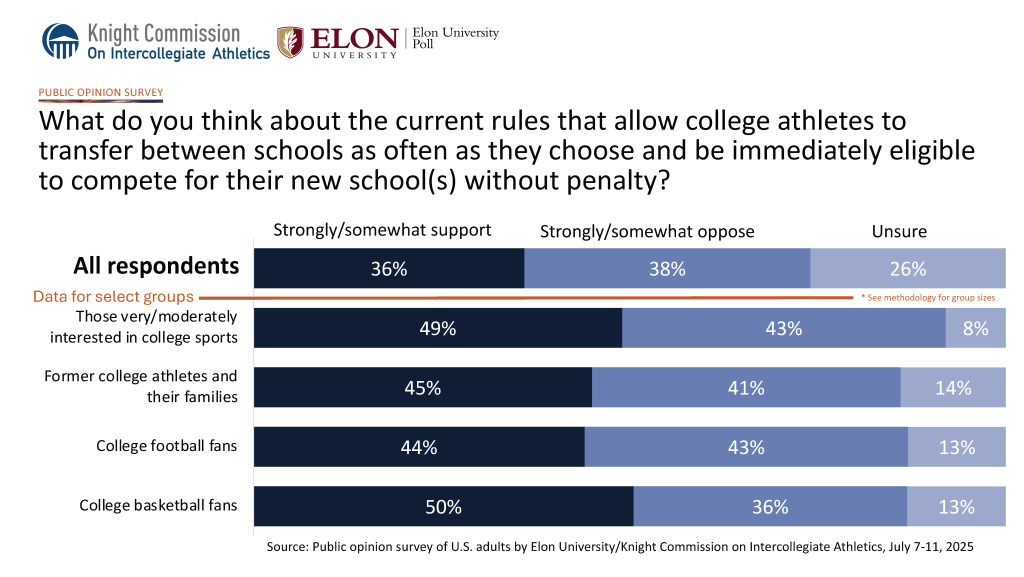
Americans were equally divided about the new transfer rules that allow Division I college athletes to move between schools as often as they choose, without penalty. Overall, 38% of Americans opposed the new transfer policy, compared with 36% who supported it. Among those interested in college sports, 49% supported the transfer rules and 43% opposed them.
Compensating college athletes
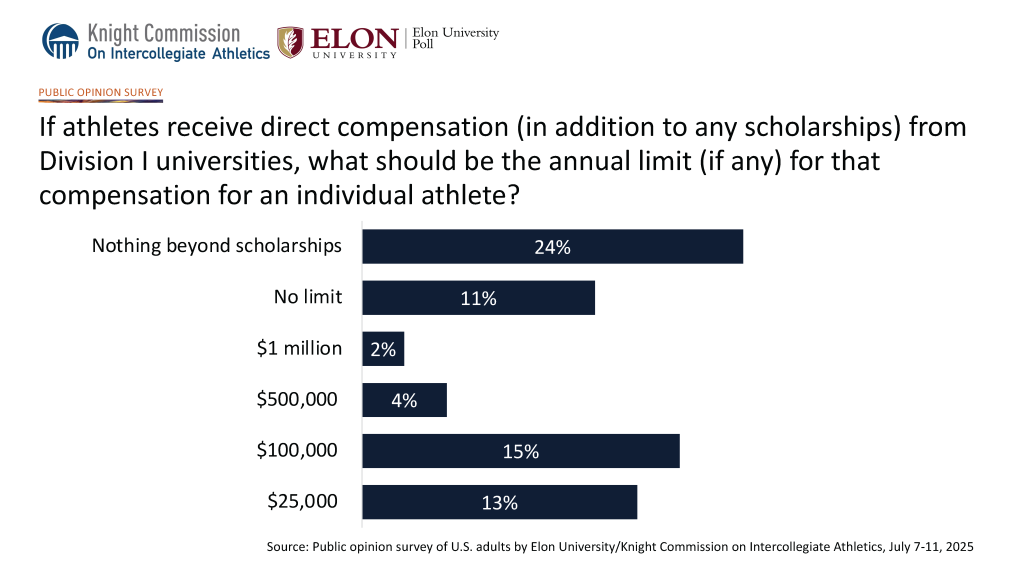
With universities now allowed to provide direct NIL compensation and other financial payments to individual athletes, in addition to athletics scholarships, Americans were asked about their views on the appropriate compensation limits, if any, for these direct university payments. Responses varied widely. While 24% believed an athlete should receive nothing beyond an athletics scholarship, a plurality of Americans (45%) supported the idea of athletes receiving at least some compensation beyond their athletics scholarships:
- 15% supported athlete compensation limit up to $100,000
- 13% supported athlete compensation limit up to $25,000
- 11% supported no limits on athlete compensation
- 4% supported athlete compensation limit up to $500,000
- 2% supported athlete compensation limit up to $1 million
[Note: Current rules under the new settlement terms do not have team or individual limits, only an institutional cap for such athlete compensation that includes athletes in all sports.]
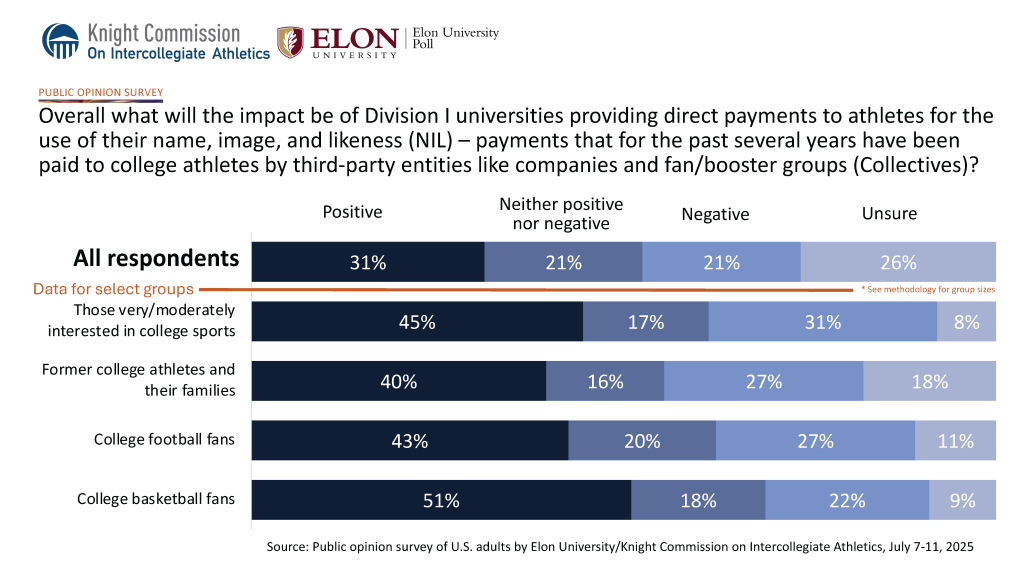
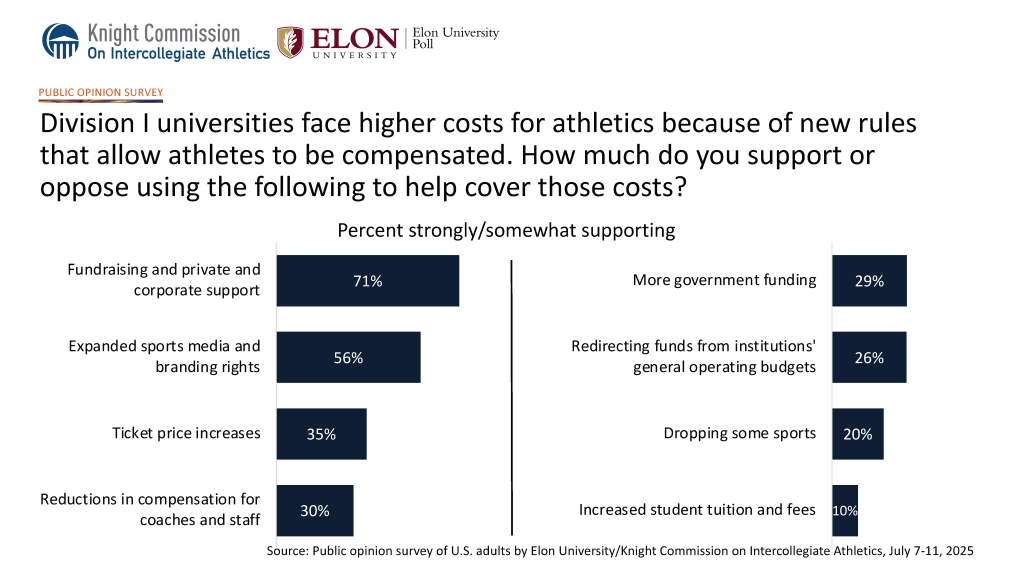
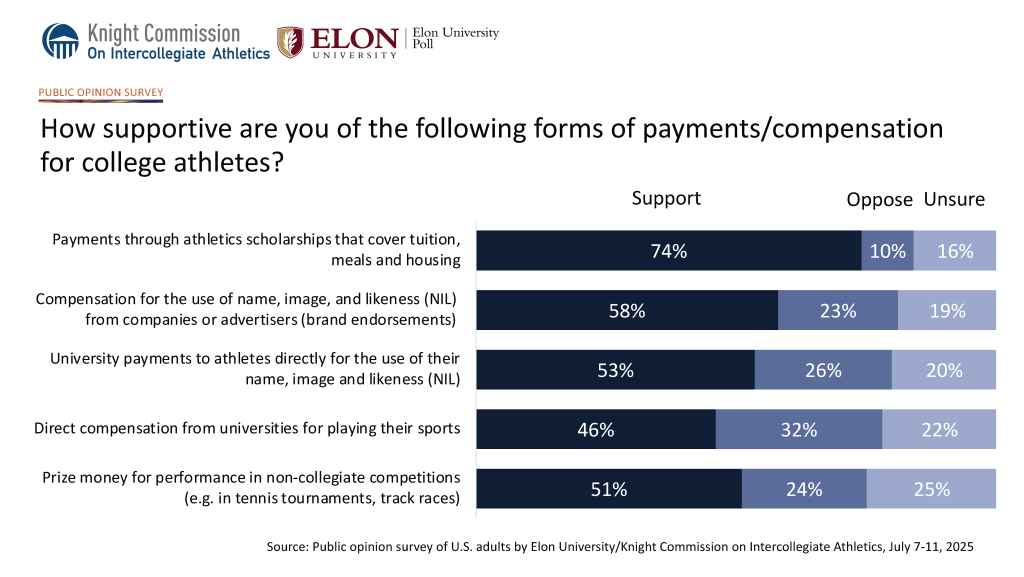 Americans had definite opinions about the funding sources for this new athlete compensation from universities. They favored raising money from private and corporate support and media contracts and there was little support for increasing student tuition and fees and dropping non-revenue sports. More specifically:
- 71% favored greater fundraising and private and corporate support
- 56% favored expanded sports media and branding rights
- 35% favored increased ticket prices
- 30% favored reductions in coach and athletics staff salaries
- 29% favored more government funding
- 26% favored reallocating funds from a university’s general operating budget
- 20% favored dropping some sports
- 10% favored increased student tuition and fees
(*See methodology page for comparison group sizes)
Text-only screen reader version of all charts in this report