College sports governnance and coach credentials
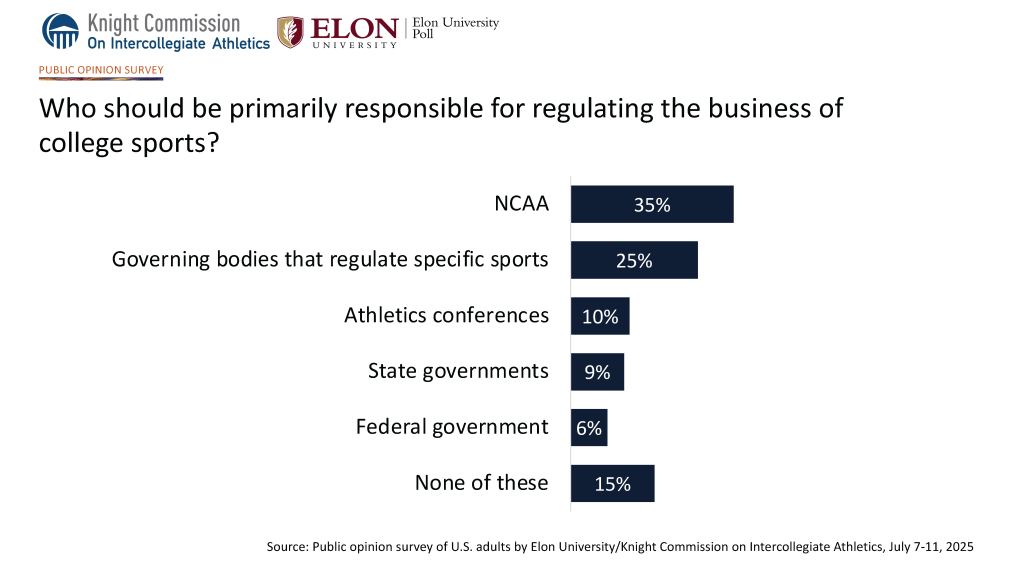
The survey found no public consensus on the organization or entity that should be primarily responsible for regulating the business of college sports. The NCAA remains the top choice, but with only 35% support. The next most popular option was “governing bodies that regulate specific sports” (25%), followed by athletics conferences (10%), state governments (9%) and the federal government (6%). Fifteen percent (15%) chose none of these.
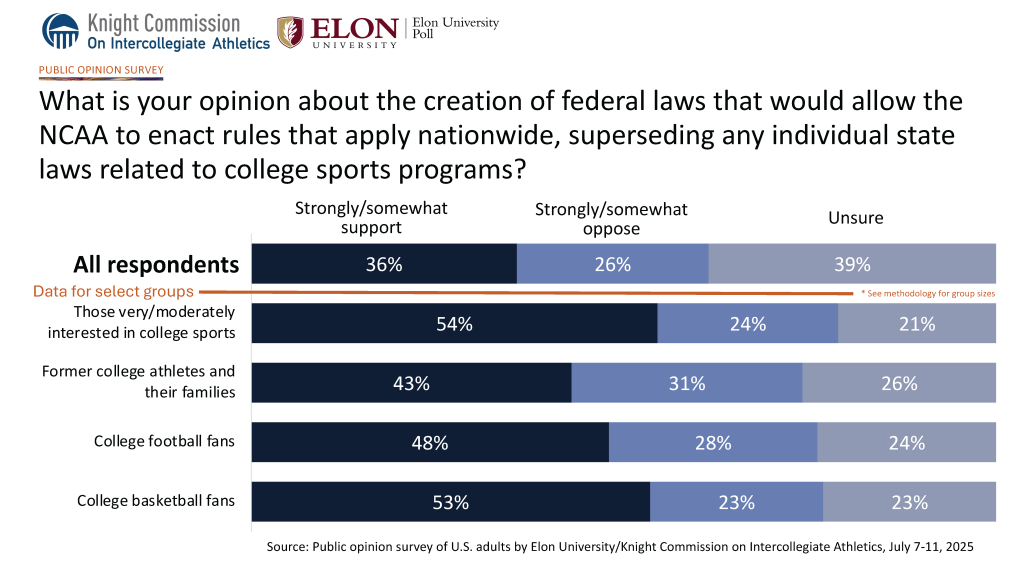
Similarly, most Americans are either skeptical or unsure that Congress should enact legislation to regulate college sports. Only 36% supported the creation of federal legislation to supersede state laws and to allow the NCAA to enact uniform, nationwide rules, while 26% were opposed and 39% were unsure. However, support for new federal legislation was much higher among those respondents who identified as being interested in college sports, with 54% favoring national laws compared with 24% who opposed such legislation.
Knowledge and views about the College Football Playoff and football governance
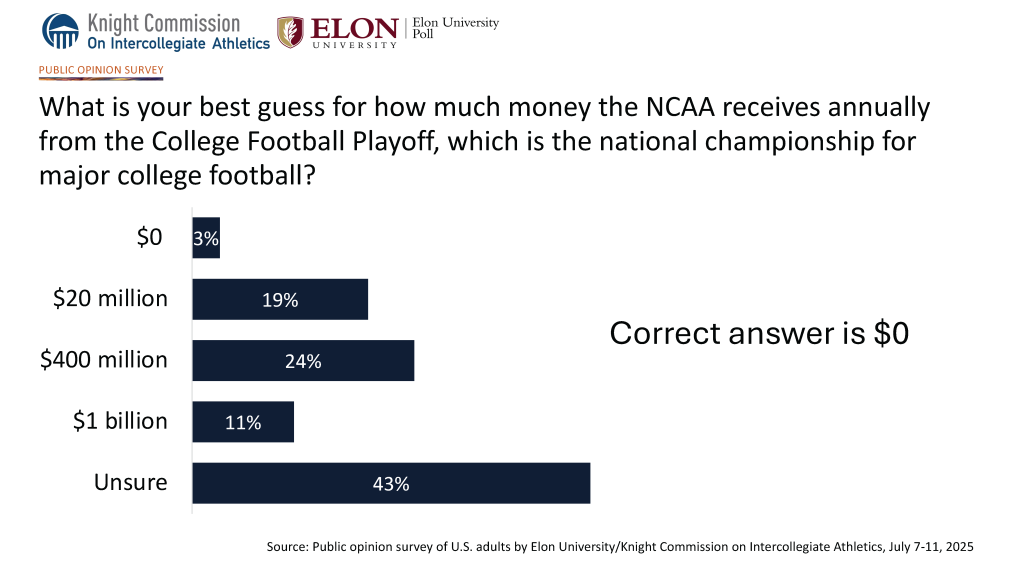
Survey findings revealed that the public lacks a fundamental understanding about the independent business structure of the College Football Playoff (CFP), which operates the FBS football national championship independent of the NCAA. When asked how much money the NCAA receives annually from the CFP, only 3% of the respondents selected the correct answer of $0. More than half (54%) selected options from $20 million to $1 billion, and 43% of the public said they were unsure.
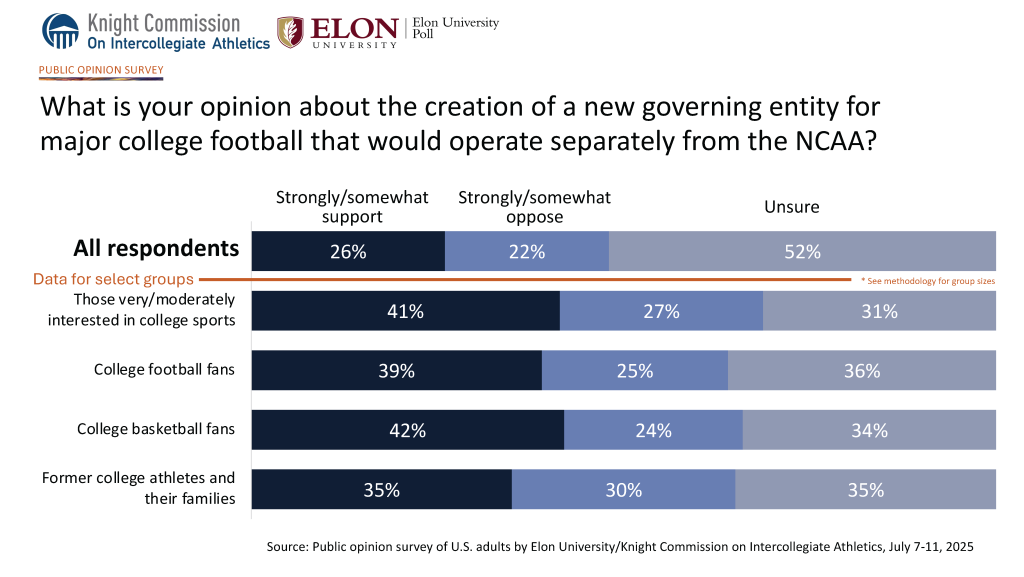
A majority of Americans (52%) were unsure about creating a new FBS football governing body that would operate separately from the NCAA, while the other views were nearly split with 26% supporting the idea and 22% opposing it. College football fans were much more favorable to a new football governing body with 39% supporting, while 36% were unsure and 25% opposed the idea.
Role and expertise of coaches
Another area of broad support was requiring college sport coaches to have a “coach credential” that certifies their knowledge and training in athlete development, mental and physical health and safety, with more than 7 in 10 (74%) Americans supporting such a credential with only 6% opposed. Support for a “coach credential” was even stronger (80%) among former college athletes and their families. College coaches are currently not required to earn such a credential.
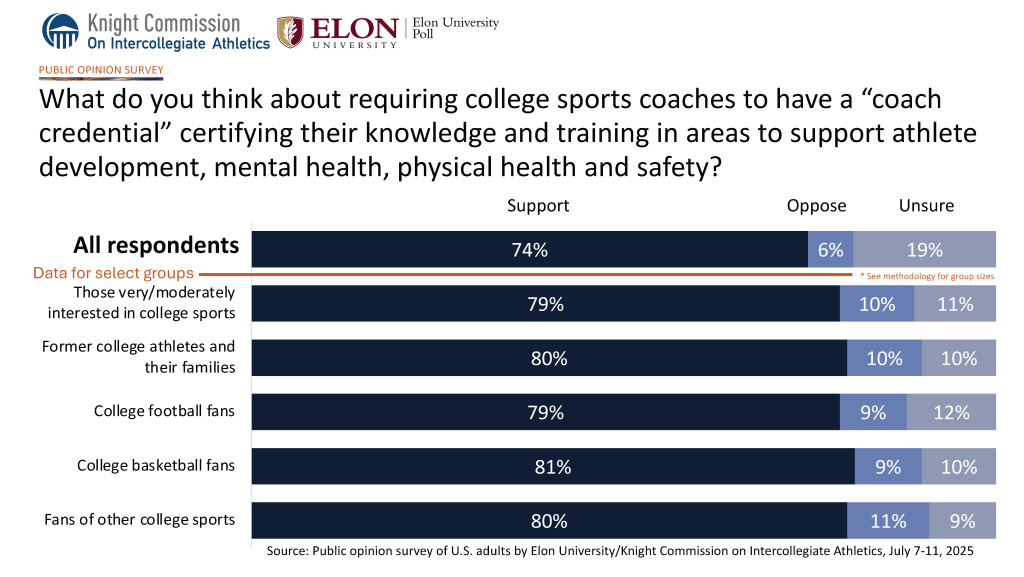
(*See methodology page for comparison group sizes)
Text-only screen reader version of all charts in this report