


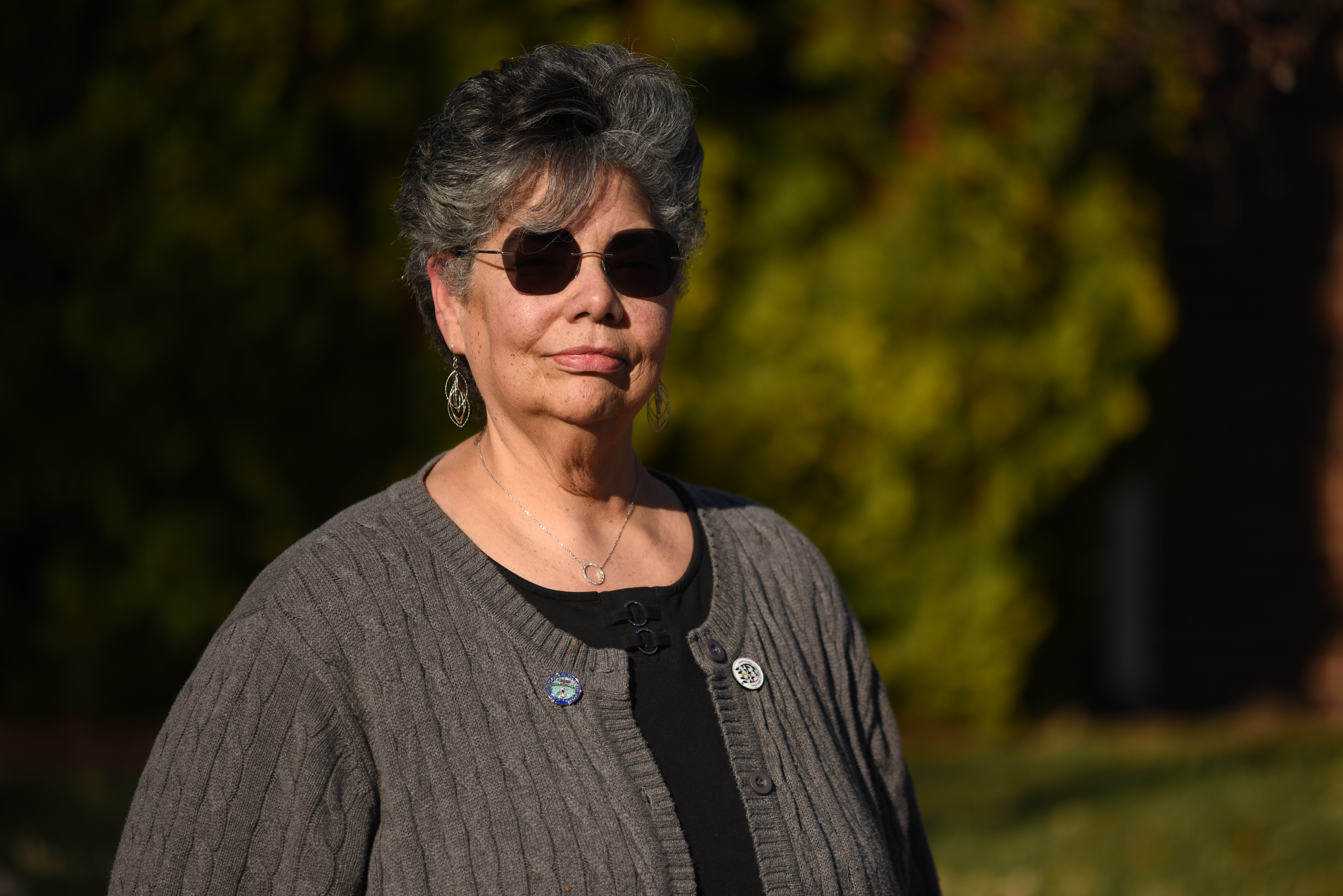
For one Elon employee, strengthening her tribe’s recognition is a lifelong learning experience and mission.
Tammy Hill grew up in Little Texas in Pleasant Grove Township, a small farming community in Alamance County, North Carolina. She was unfamiliar with the origins of her heritage but aware that the land around her held great significance to her family and neighbors.
“Growing up, my mom would state things like ‘anything you need for healing can be found in the woods’ or share things like the importance of storytelling about family traditions and culture,” said Hill. “But truly, people in our community were just coming to know their Native American heritage, and that’s what’s so special about the Occaneechi Band of the Saponi Nation.”
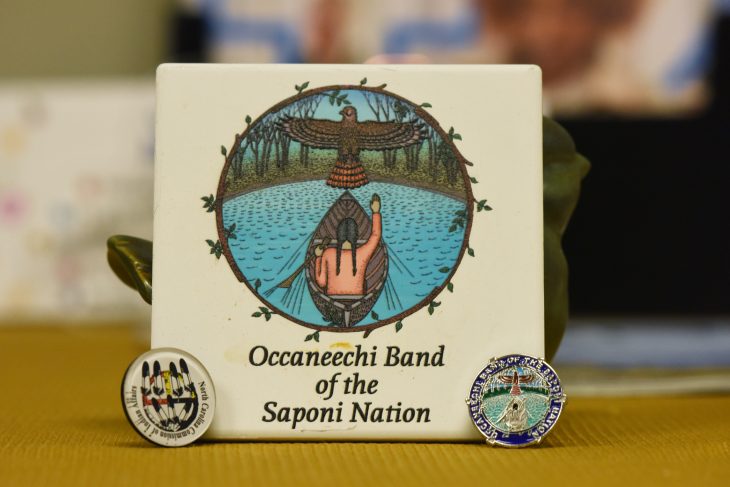
Research on nearby graveyards began in the 1980s and continued through the 1990s, leading to the discovery of the Occaneechi’s deep continuous history living on and using the land in the Piedmont of North Carolina into the Virginias. This work resulted in tribal recognition by the state of North Carolina in 2002.
“It’s so important for any person to know who and where they came from,” Hill said. She shared that the Occaneechi were largely wiped out by Europeans in the 1600s and is now the smallest of the officially state-recognized tribes with 1100+ members, according to the North Carolina Department of Administration.
“We were already so well interconnected as a community,” said Hill. “It’s just so important for my family and community to share that connected understanding of who we are and where we come from.”
Hill currently serves as the university’s student health insurance and immunization compliance project manager, located in the Ellington Center for Health & Wellness. She said that her upbringing taught her the value of respectfulness and shaped her into being a connector and nurturer, values she brings to work every day.
Because of this background, Hill believes it is the role of every employee at Elon to make the best experience possible for Elon parents and students. She said she strives to leave every place she goes better than she found it, whether at work or within the tribal council.
“If student workers leave their experience doing things better than I can, that means I did my job,” said Hill.
Similarly, she wants to see the Occaneechi Band of the Saponi Nation thrive and will do anything in her power to realize this vision. At age 55, she pursued a degree in American history to deepen her understanding of Western expansion and the many successes of other tribes in the United States.
She also serves as the acting secretary of the Tribal Council and is self-taught in skills needed to manage the OBSN website and web store.
“The OBSN tribe is small but progressive,” said Hill. “There may be just a handful of people doing things, but they certainly do it to their best ability and with the best intentions.”
Hill said that playing a role in any capacity to acknowledge the tribe is important and matters. Hill expressed gratitude for Elon University that, years ago, hosted a conference for the major tribes of North Carolina. She said that the historical marker placed outside of Schar Hall, as well as the university’s land acknowledgment of the first peoples of Alamance County, is important.
“The people native to this area respect the land and the earth so much. To be acknowledged as the first people here just means everything.”
-Tammy Hill
For those interested in learning more about the OBSN, Hill recommends a few activities:
- Learn the history and culture on the official website.
- Explore and learn the history of Occoneechee State Park.
- Visit the Occaneechi Tribal Center located at 4902 Dailey Store Road, Burlington, NC 27217.
- ·The Occaneechi Pow Wow is held annually the second weekend of October.
Elon honors Native American Heritage Month
As part of Native American Heritage Month, Elon University is sharing stories that honor the histories, cultures and contributions of Native and Indigenous peoples in the university community. This month recognizes the enduring strength, traditions and knowledge of Indigenous communities, while highlighting the ways these legacies continue to shape and enrich our shared experience. It is a time to celebrate Native and Indigenous heritage, but also an invitation for all members of the university community to learn, reflect and engage in meaningful ways that honor these vibrant cultures and their lasting impact.