


After Crystal Moyer '11 saw Kat Wallace '05 sharing her search for a living kidney donor, a local news report became another way for the Elon network to carry Wallace's message.
The message on the back window of Kat Wallace’s SUV begins with a question: “Are you my type?” Underneath it, she explains what each mile is helping her search for: “Kidney needed.” Her side mirrors carry a second appeal: “Share your spare, please?”
Kat Wallace ’05 has turned her car into a moving message across Jacksonville, Florida. At red lights, in parking lots and in drive-thru lines, it gives strangers a chance to learn about kidney disease and living donation without forcing Wallace to make a direct request she has never felt comfortable making.
“I work better when I kind of throw the idea out there, let people consider it and mull it over themselves,” Wallace said. “I hope that it reaches someone who really feels a calling to donate a kidney, whether it’s to me or someone else.”
The message eventually reached Crystal Moyer ’11, a First Coast News journalist and fellow Elon alumna. Moyer saw Wallace’s story on social media while she was at work and recognized a personal appeal that could also open a wider conversation about kidney disease and organ donation.
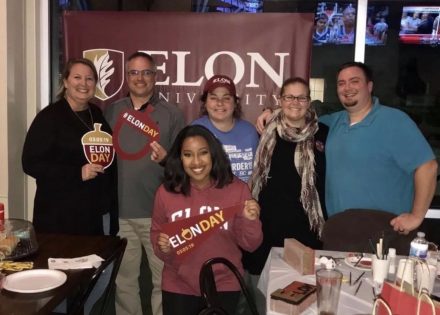
Neither initially realized how much history they already shared. The two had met years earlier at an Elon alumni event in Jacksonville. They rediscovered that connection while reporting the story.
“It gave me a sense of community knowing that I’m not only trying to help her but also extending that conversation out to people here in Jacksonville and, if the story gets out digitally, to everyone,” Moyer said.
For Wallace, the search began with routine blood work in November 2020. The next day, her doctor told her to go immediately to the emergency room. She had not felt well, but she had no idea how serious the problem had become. After a week in the hospital, she left with a kidney-failure diagnosis, a catheter and an urgent start to peritoneal dialysis.
Dialysis has reshaped her days. Wallace says she connects to a cycler for 13 hours each night and completes another manual treatment during the day. Before her diagnosis, she worked as a special education teacher. The demands of treatment forced her to leave the classroom and made traveling to see family difficult.
Wallace was adopted when she was two days old and does not know any blood relatives who could potentially be a close match. She is on the transplant list, but her care team also stressed the benefits of finding a living donor. According to the National Kidney Foundation, a kidney from a living donor may last longer and is more likely to begin working immediately than one from a deceased donor. A donor does not have to be a direct match; paired donation can connect incompatible donor-recipient pairs so each recipient receives a compatible kidney.
The scale of the need extends far beyond one car window. The American Kidney Fund reports that about 131,000 Americans were newly diagnosed with kidney failure in 2023, the most recent year for which data is available, and more than 90,000 people are on the kidney transplant waiting list.
Wallace’s approach began with writing on her car, a social media page and cards explaining her story. Because handing a card directly to someone still felt too much like asking for a kidney, she began leaving the cards with small rubber ducks or positive messages, hoping the objects would catch someone’s attention and encourage that person to read, share or begin the donor-screening process.
The reactions have often been unexpected. A woman in the Starbucks line behind Wallace bought her coffee and wished her luck. Another stranger approached her in a parking lot, asked to pray with her and shared that someone in her family had also experienced kidney disease. Drivers have honked, rolled down their windows and asked questions about the writing on her car.
“I don’t want people to feel sorry for me,” Wallace said. “I want them to feel inspired to take action.”
That attitude guided Moyer’s reporting. Rather than treating Wallace only as someone waiting for help, Moyer followed the way Wallace had chosen to advocate for herself. She let Wallace steer the conversation and explain what dialysis looked like, why asking felt uncomfortable and what she hoped her campaign could do for other people.
“She’s advocating for herself in a way that she feels comfortable,” Moyer said. “To see Kat doing this for something so important and starting a conversation through it, that really inspired me.”
Moyer’s First Coast News report aired Sept. 3. Soon afterward, viewers began asking how donor testing works and what they could do even if their blood type did not match Wallace’s. One message carried a different kind of impact. A woman in Lake City, Florida, who had just begun dialysis and the transplant process told Wallace she did not have a support system and asked if they could talk.
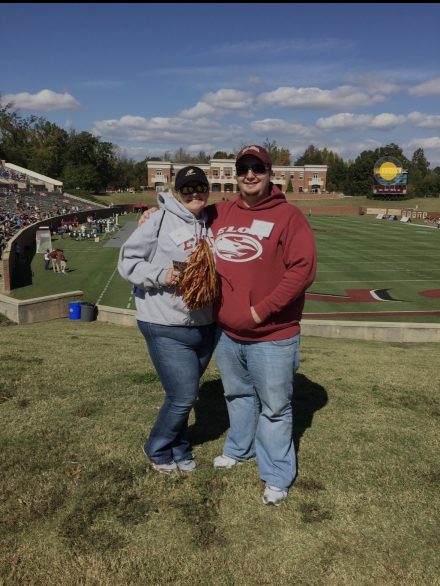
Wallace responded. The search for her own kidney had already helped someone else feel less alone.
She is also planning for what comes after a transplant. When her father experienced a stroke in late 2024 and entered rehabilitation, Wallace learned about recreational therapy. She is now enrolled in a program to become a certified recreational therapist, preparing to return to work centered on helping others when her health allows.
The connection to Elon has continued to widen the audience. Members of the Jacksonville Elon Alumni Network shared Moyer’s report, and Wallace hopes alumni will keep passing it through their own communities. Wallace, originally from Maryland, also met her husband, Chris, through their shared Elon connection. They graduated a semester apart, and nearly two decades later, Elon remains part of the network supporting their family.
“Elon has such a vast network, not just nationally, but internationally,” Moyer said. “Maybe some people who see it at Elon will spread it to their groups. We just want this to get out as far as possible.”
Wallace said every share matters because no one can know which person, group or conversation might lead to a match. The same act could also reach another person living with kidney failure, introduce someone to living donation or remind a patient that support exists.
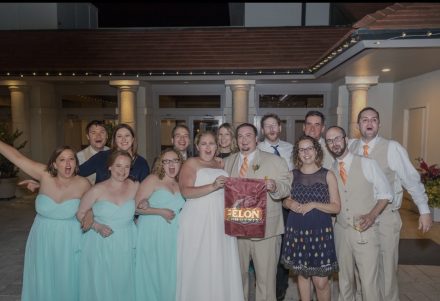
When asked what the Elon community would have done if its reach ultimately helped bring her to a transplant, Wallace paused.
“You saved my life,” she said. “Every single person who took two seconds to share that story or pass it along took part in saving my life. It’s a lifetime of appreciation.”
Learn more and help share Kat Wallace’s story
Read Kat Wallace’s National Kidney Registry profile to learn about her story, living donation and the confidential donor-screening process; watch and read Crystal Moyer’s First Coast News report about Wallace’s car-window campaign; and find updates through Kat’s Kidney Journey on Facebook.