


A look back at the evolution of Elon’s athletics identity
Elon Athletics’ new visual identity marks the latest chapter in a story more than a century in the making. While graphics, mascots and traditions have evolved alongside the university itself, each generation has reflected the same enduring spirit of pride, resilience and belonging that defines Elon.
Legions of Elon fans know the Phoenix and the Fightin’ Christian, but devotion to Elon Athletics predates those mascots. The school had multiple names for its football team in its early years, including the Elon Eleven, the Maroon and Gold Machine and the Bear Cats. The Fightin’ Christian identity was first used in 1921 during a football game against Guilford College, whose mascot is the Quakers. The game was billed as “Christians vs. Quakers” because of Elon’s ties to the Christian Church denomination, today the United Church of Christ.
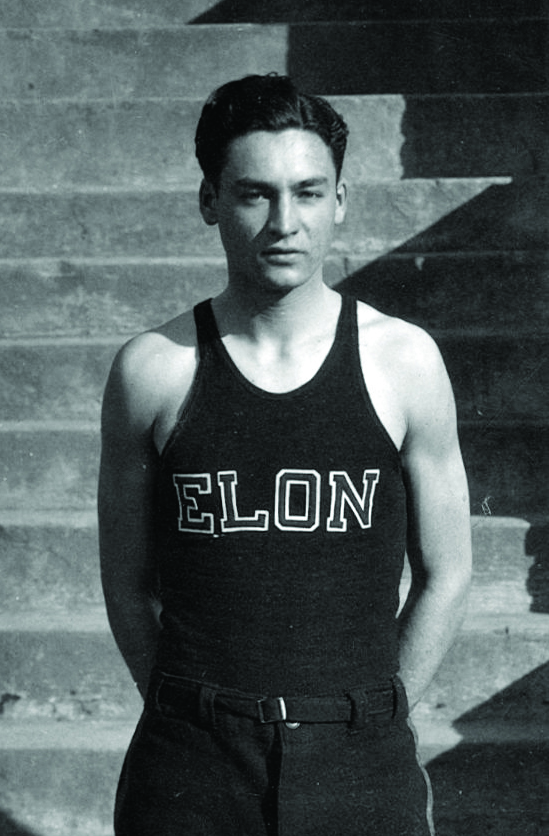
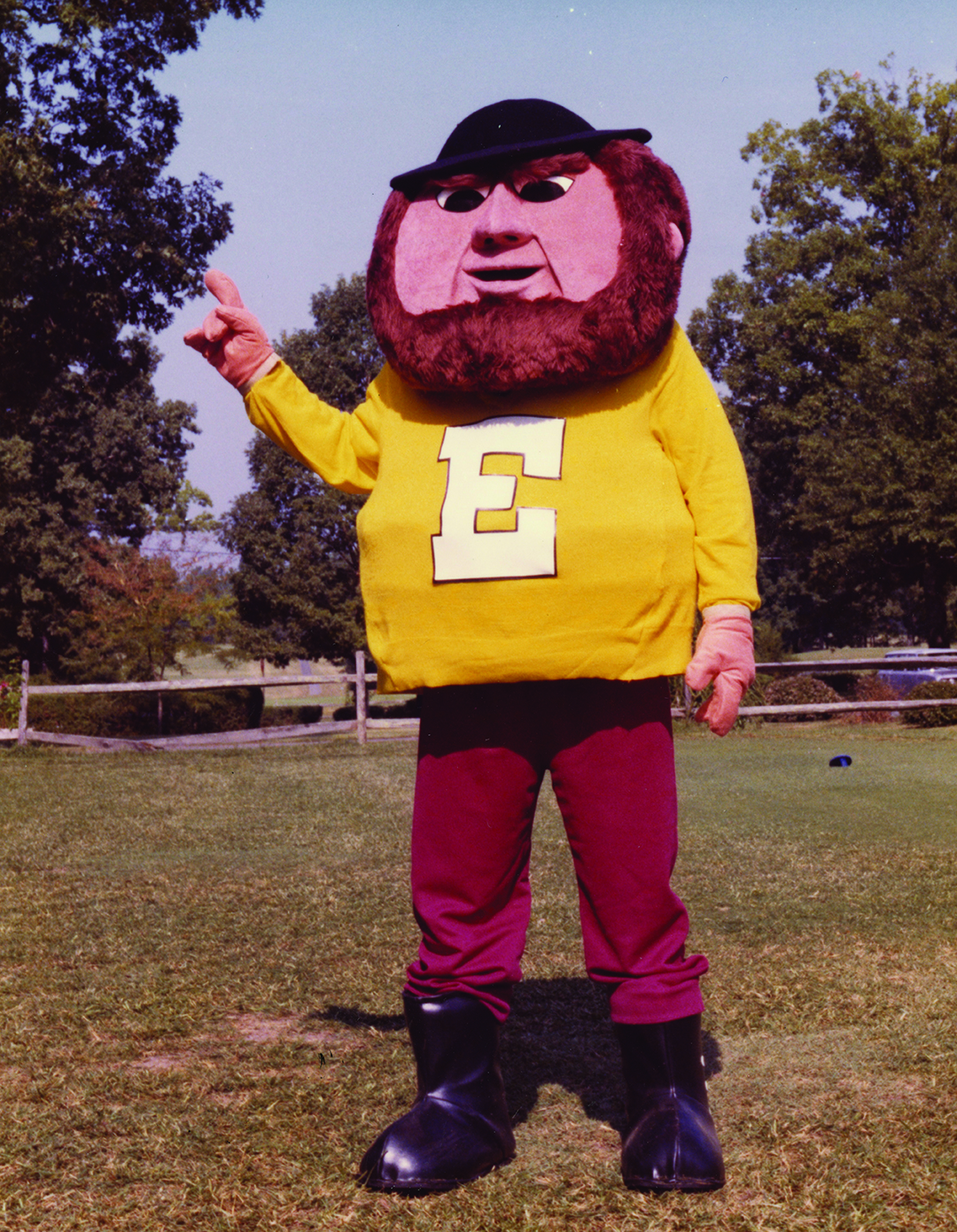
The identity was first used on an ongoing basis during the 1922-23 season and became the customary name for all Elon athletics teams beyond football even though it was never officially adopted by the college or the trustees at the time. The Fightin’ Christian mascot was introduced in the early 1970s, during which time the women’s athletics teams were referred to as the “Golden Girls” in the early years of organized women’s basketball.
But by the late 1990s, as Elon rose in national prominence and the school gained NCAA Division I status, some constituents grew concerned that the Fightin’ Christian identity would be misunderstood and misinterpreted by a broader audience that didn’t have the same direct knowledge of the institution and its history as local and regional audiences. The Board of Trustees voted to adopt a new athletics identity in October 1999.
President Leo M. Lambert appointed a 15-member Athletics Brand Identity Committee to establish a new identity for the fall 2000 season in partnership with SFX Sports Group, a New York-based sports marketing firm. According to an FAQ document from May 2000, more than 200 members of the Elon community suggested more than 125 new names that “ranged from the unusual (such as aardvarks, fat-tailed geckos, angry apes, rancorous existentialists and lyme ticks) to the common (such as lions, tigers and bears).”
The elegant and brilliant Phoenix described by ancient scholars was sleek, swift and one-of-a-kind. I can think of no better description for Elon’s outstanding athletics programs. — Leo M. Lambert
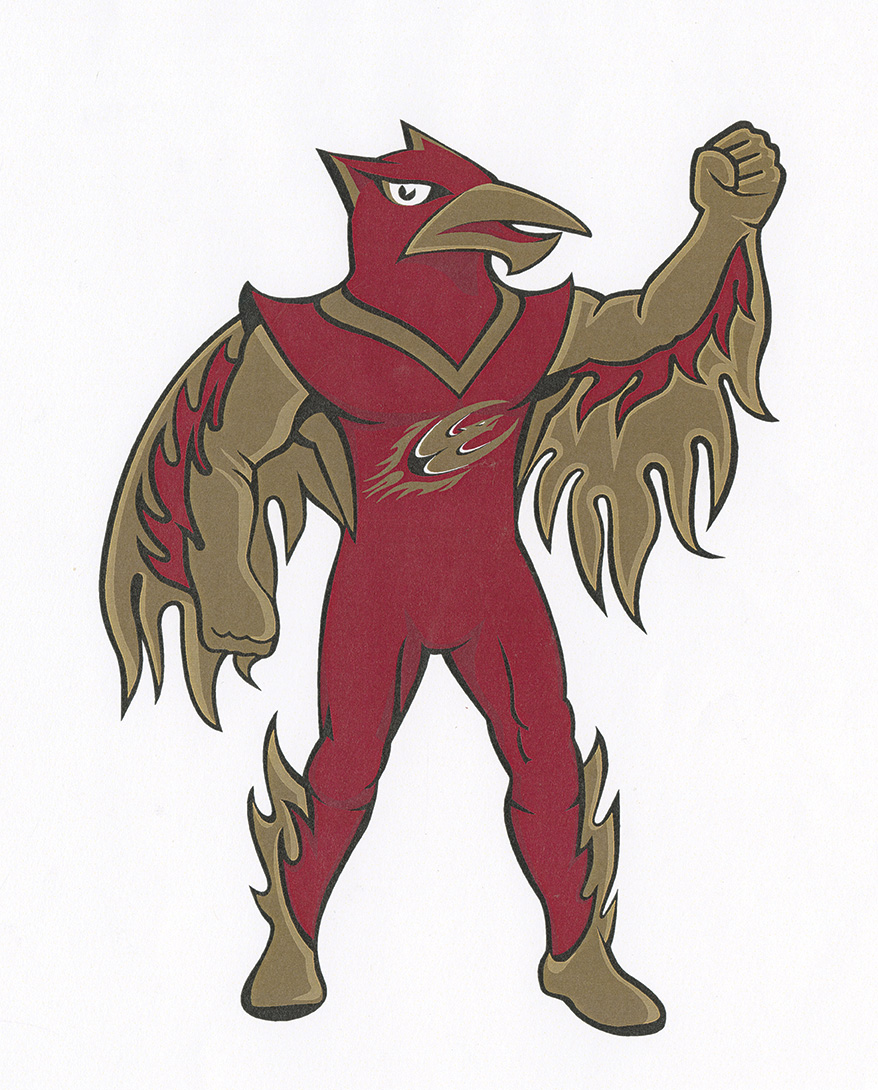
The committee conducted focus groups and surveys with more than 120 students, trustees, alumni, faculty and staff before homing in on four of the highest-rated suggestions — the Phoenix, the Mighty Oaks, the Express and the Golden Eagles. SFX created 61 different graphics for the top four names before the final Phoenix identity was selected, with a flying Phoenix formed in the shape of the letter E.
Constituents were drawn to the Phoenix’s many ties to Elon’s history. The Phoenix is a mythological bird with crimson and gold plumage associated with light and knowledge. At the end of its life, it builds a nest in an oak tree and bursts into flame before being reborn from its own ashes — much like Elon rebuilt after the 1923 fire.
“Like the legendary Phoenix, which rises from its own ashes with new life and vigor, Elon College was shaped by the fire, emerging as a stronger institution,” Lambert said at the time. “The elegant and brilliant Phoenix described by ancient scholars was sleek, swift and one-of-a-kind. I can think of no better description for Elon’s outstanding athletics programs.”
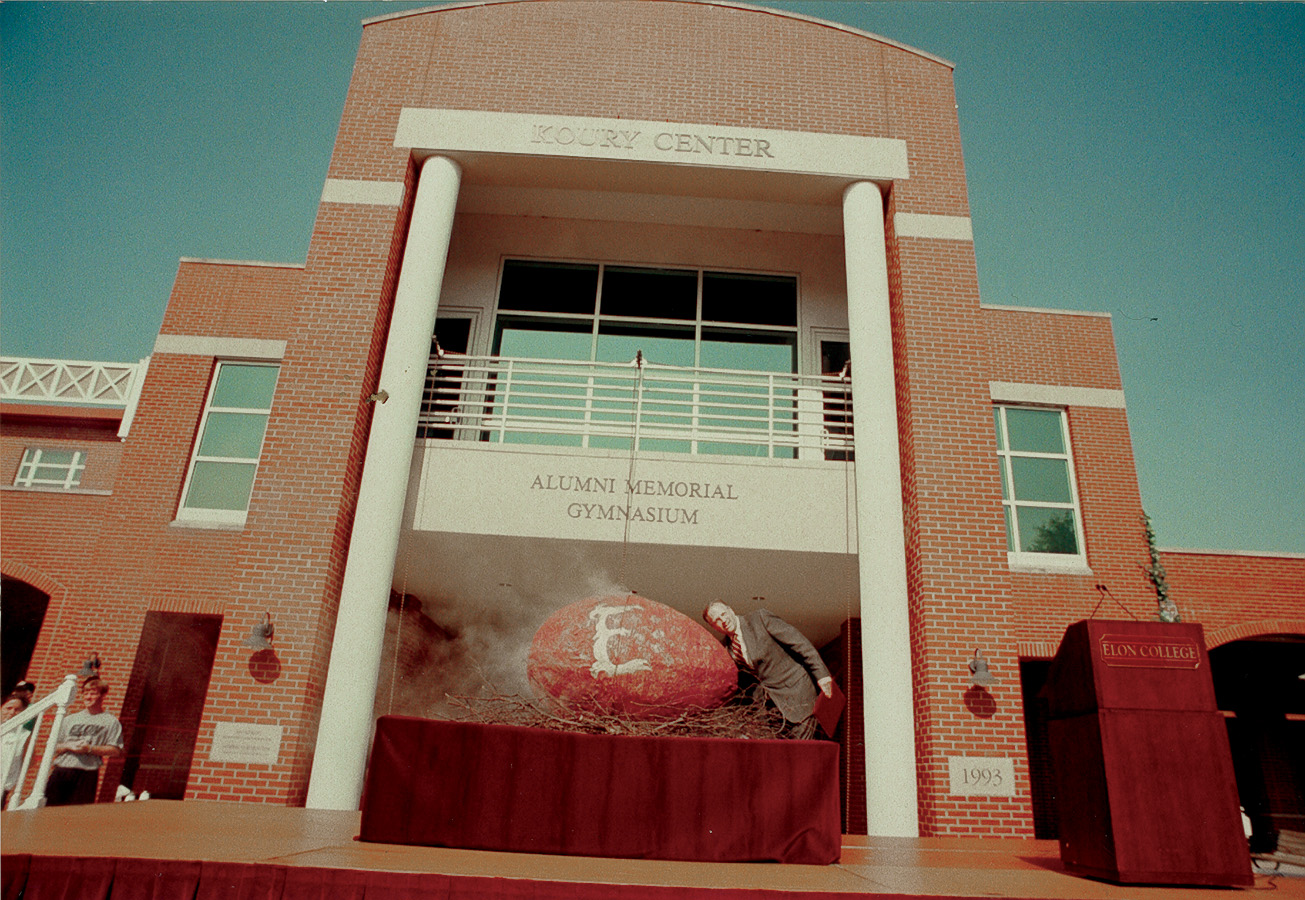
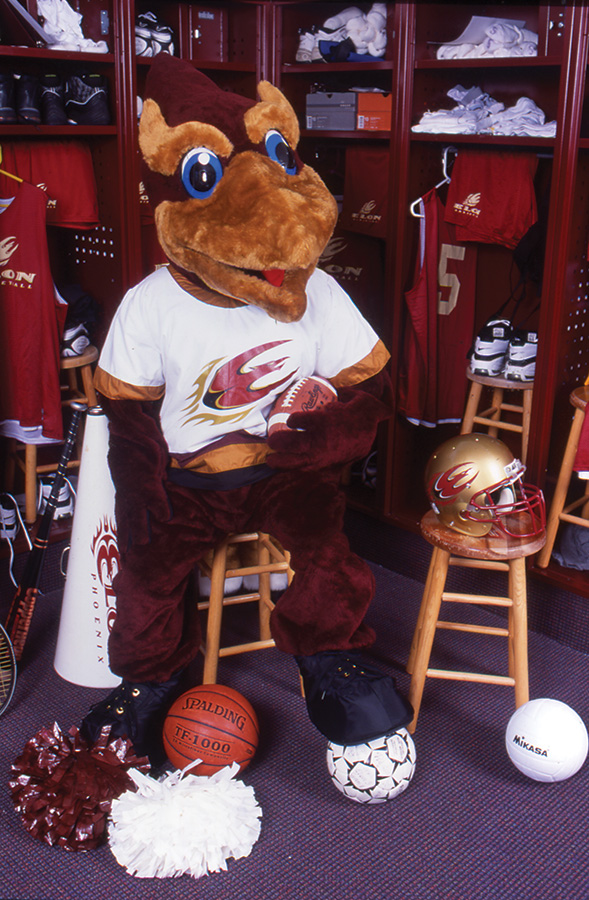
The Phoenix identity was officially unveiled on May 9, 2000, during a campus-wide celebration featuring a massive maroon egg that cracked open to reveal pillars of smoke. The mascot costume debuted Nov. 4, 2000, during the homecoming football game.
According to a handout card from the launch event, the Phoenix is “a perfect symbol for a school that is constantly renewing and re-creating itself.” Twenty-six years later, its newest evolution reflects a university that continues to grow while staying true to its identity.