

How can we engineer sustainable solutions for everyday life?
Across disciplines and experiences, students learn to turn environmental insight into action — designing practical, community-centered solutions that make sustainability part of everyday life.
At the EcoVillage at Loy Farm, students live and learn in a fully sustainable community that integrates green building, regenerative agriculture and renewable energy systems.
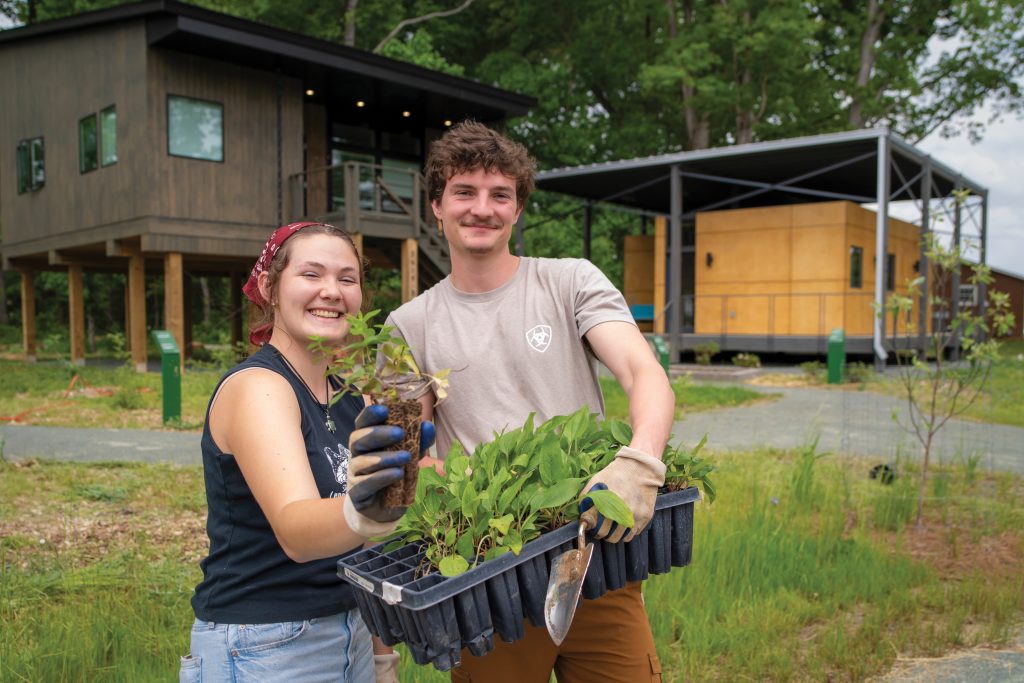
Students plant seedlings at the EcoVillage at Loy Farm
As part of the living–learning experience, students plant and harvest crops, maintain the edible landscape and monitor the performance of the built environment as part of an expanding network of sustainable houses and shared spaces. They also engage in complex systems thinking, exploring sustainable natural resource management and regional environmental justice issues.
Beyond Loy Farm, Elon advances sustainable solutions through engineering, environmental science and applied learning experiences that link technical innovation to real-world needs. Through coursework, undergraduate research and community-based partnerships, students address sustainability-related challenges across energy, water, food systems, the built environment and other interconnected systems. Projects such as soil testing, stormwater management and environmental communications connect classroom learning with real environmental challenges in surrounding communities.
These efforts align with Elon’s Sustainability Master Plan 2025, further embedding sustainability across campus systems and culture while preparing students to lead thoughtfully and contribute to a more sustainable future.
Sustainability becomes real when students can connect theory to their lived experiences.
FACULTY PERSPECTIVE
Mapping a More Sustainable Future
Associate Professor Ryan Kirk equips students with the geospatial tools needed to address complex environmental challenges. His research uses geographic information systems mapping and spatial analysis to guide land-use planning, watershed protection and natural resource management. By engaging students in local and regional projects — from flood mitigation to urban development — Kirk shows how data-driven insight supports sustainable, community-centered decision-making. His teaching reinforces that building a sustainable future begins with understanding how people, landscapes and ecosystems interact.
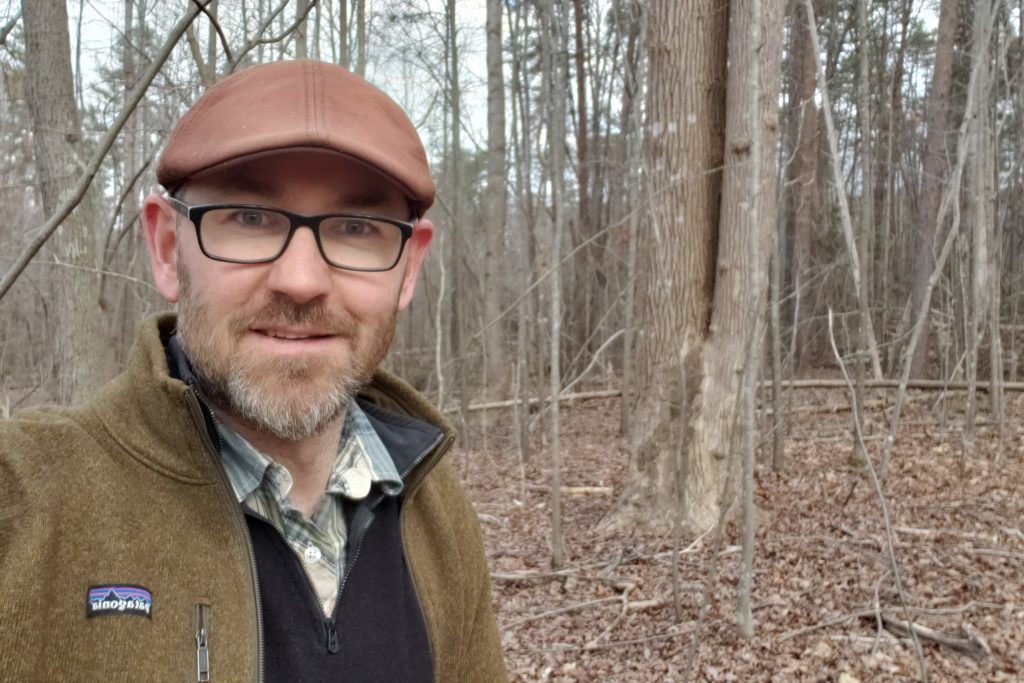
Ryan Kirk, associate professor of environmental studies and geography
Good environmental decisions start with good information.
ALUMNI IN ACTION
Sustainability in Practice

Hannah Greenfader ’19
As a sustainability professional, Hannah Greenfader ’19 works at the intersection of climate policy, systems thinking and cross-sector collaboration. In her role as a program officer at the World Wildlife Fund, she supported federal climate resilience and environmental policy initiatives, helping coordinate efforts across national and local stakeholders to align research, public policy and community impact. Across her career, Greenfader has contributed to coordinated, data-informed strategies that turn environmental priorities into measurable results.
STUDENT SPOTLIGHT
Engineering Sustainability
Jacob Karty ’26, a Goldwater and Lumen Scholar, is developing agricultural robotics designed to make food production more efficient and sustainable. His research focuses on autonomous systems that help farmers monitor crops more precisely, reduce labor demands and optimize the use of water and other resources. By combining engineering, computer science and field-based research, Karty is creating innovative tools that support farmers while advancing more resilient and sustainable food systems.
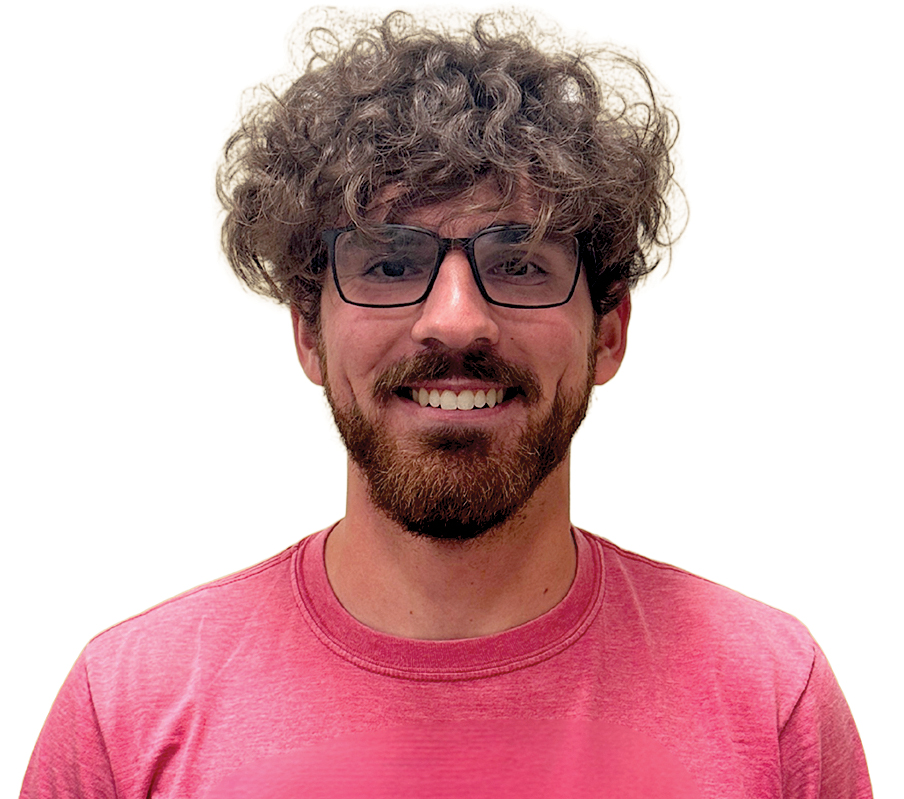
Goldwater and Lumen Scholar Jacob Karty ’26