

‘Who, Me?’: Inspiring Students to Reach Their Own Potential
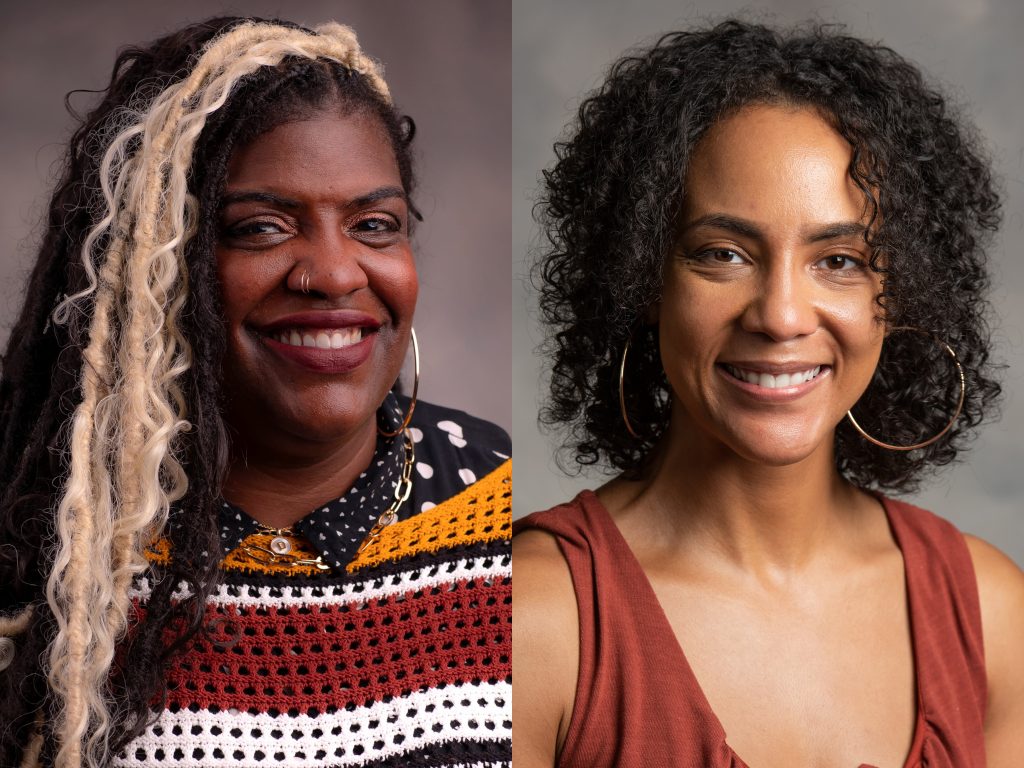
Associate Professor Vanessa Drew-Branch and Assistant Professor Keshia Wall Gee, co-directors of the Renaissance Scholars Program at Elon University
For many students, the path to undergraduate research begins with an invitation into a community where they discover they belong and see themselves as researchers.
Associate Professor Vanessa Drew-Branch and Assistant Professor Keshia Wall Gee have found that recruiting students who may not envision themselves participating in research experiences requires three elements: encouragement, support, and — most importantly — community.
The duo uses a community of practice framework to mentor teams of undergraduates connected by subject matter and community-based research. In partnership, they develop research skills, advance independent inquiry and celebrate success.
Both professors recognize that there are students who have had fewer opportunities to engage in advanced coursework or extracurricular research while in high school. They watch for students who ask insightful questions in class but may lack the confidence to take those questions further.
“They probably don’t think of themselves as researchers and wouldn’t consider undergraduate research opportunities if not prompted,” said Drew-Branch, a faculty member in the Department of Human Service Studies. Having experienced this herself, she understands the importance of direct encouragement.
Simply creating space for conversations about research — whether in class or informal settings — builds students’ confidence, Gee has observed. “At some point, I’ll mention, ‘You should do research,’” says Gee, a dance faculty member in the Department of Performing Arts. “And if I’m not the right mentor, I’ll connect them with someone who is.”
‘Tap on the Shoulder’ Moments for a Variety of Students
Making Research Flexible (and Fun) for Student-Athletes
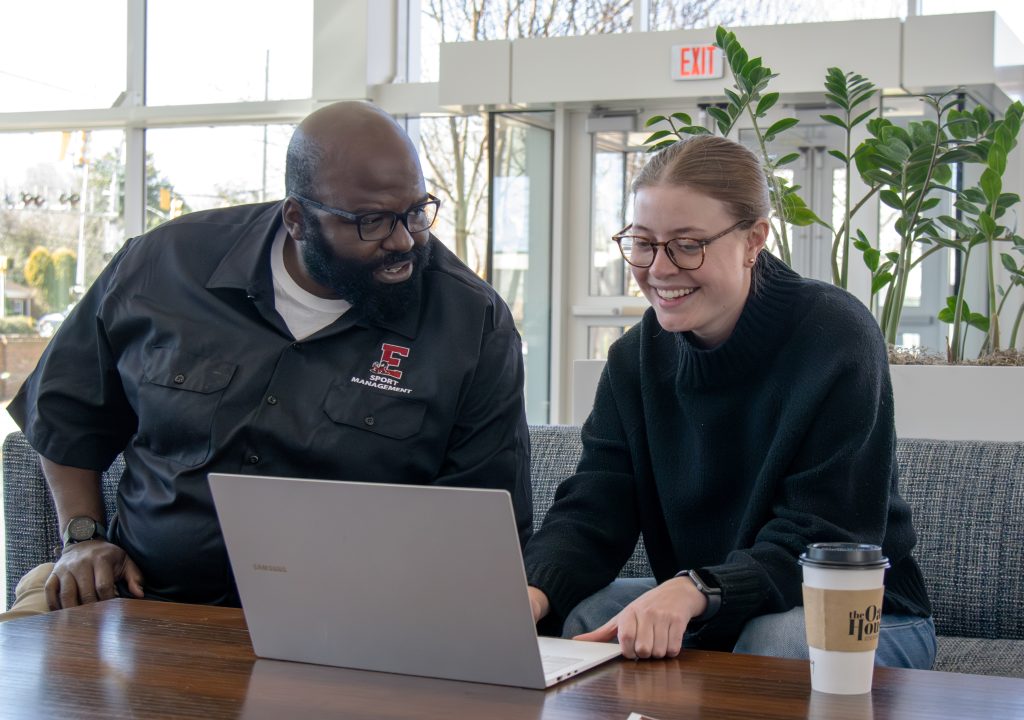
As an Elon student-athlete, Khirey Walker didn’t participate in undergraduate research — but he wishes he had. When the former defensive lineman returned to campus as an assistant professor of sport management, he was “bent on helping students understand and maximize their time at Elon in ways I didn’t.”
The 2011 graduate of Elon University’s Martha and Spencer Love School of Business meets students and student-athletes where they are, showing them that research driven by their own curiosity isn’t a heavy lift.
“Fit me in your schedule where you can,” Walker tells them, mentoring them over coffee, lunch and conversation that’s designed to keep them engaged without overwhelming them.
Summers are prime opportunities for many athletes whose calendars fill with games and practices during the academic year. He encourages them to take advantage of Elon’s immersive Summer Undergraduate Research Experience, when they meet multiple times weekly for deep dives into data and literature reviews.
Word-of-mouth has spread among the community. Academic advisors and coaches recognize Walker and know when to point athletes his way. Student-athletes curious about research opportunities regularly approach him.
“Research is one of the most intimidating words for students and it shouldn’t be,” he says, “especially if it’s something you’re passionate about and interested in.”
Clearing a Path to STEM for Transfer Students
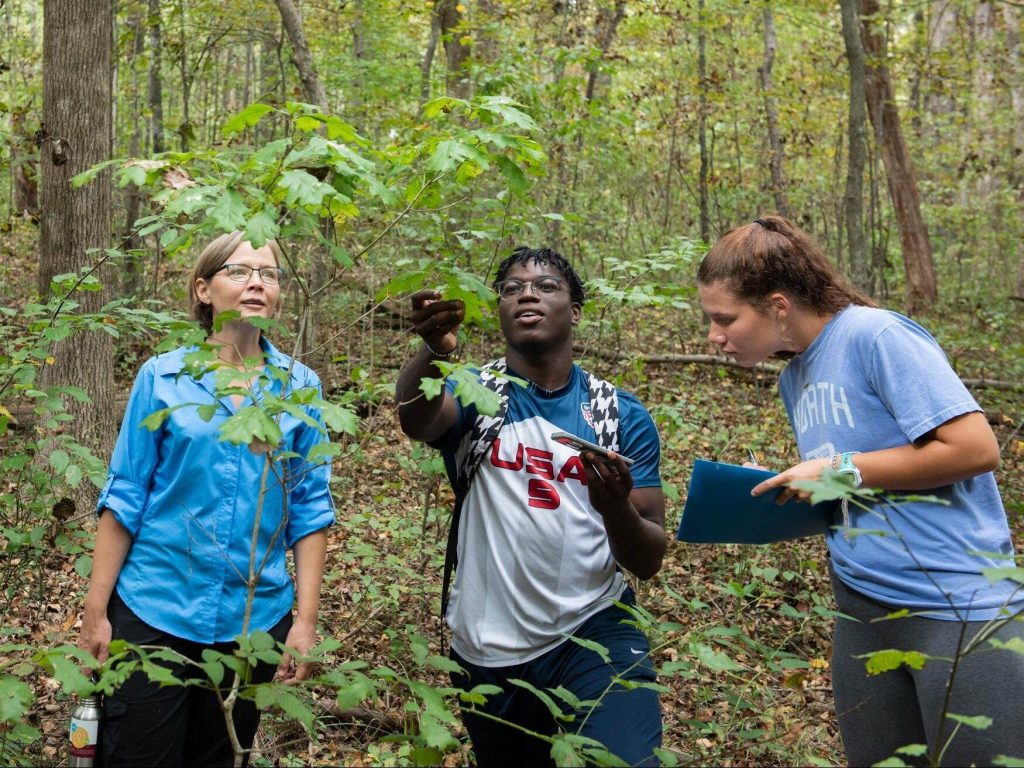
Associate Professor Jen Hamel’s unconventional path into academia shaped her understanding of belonging for nontraditional and transfer students.
Initially earning a degree in art and Russian studies, she later returned for a doctorate in biology, finding purpose and community in a “bright, motivated” undergraduate group studying animal behavior and ecology.
Her experience revealed some of the challenges transfer students face as they enter a four-year institution often lacking social capital. Alongside Professors Sirena Hargrove-Leak and Jessica Merricks, Hamel has led a National Science Foundation-funded study with Alamance Community College to support high-achieving students transferring into Elon’s STEM programs.
Through surveys and interviews, they identified that belonging is essential.
“We learned that engagement in experiences, campus activities, and social spaces matters a great deal, particularly as some transfer students might be commuter students,” Hamel says.
This spring and summer, new orientation sessions geared toward Elon’s growing transfer population and invitations to campus activities — including the Spring Undergraduate Research Forum — aim to acclimate them to campus life.
“Transfer students don’t want to be treated separately,” Hamel says. “Opportunities for those students to participate in Elon Experiences, such as research and study abroad, are very important to include as part of their planned time at Elon.”
Fostering a shared mission to enhance access to research is essential. At Elon, faculty refine that mission through workshops and conferences hosted by the Office of the Provost and the Undergraduate Research Program, as well as centers designed to advance engaged learning, teaching and mentoring. These initiatives build faculty networks to support student researchers across disciplines, making it easier for students to find mentors aligned with their interests.
Institutional stipends and grant programs can remove financial barriers for promising students to pursue research. The Undergraduate Research Program regularly supports students in completing and presenting their work. Its flagship program — the Summer Undergraduate Research Experience — provides 50 students with housing, funding and facilities to complete eight weeks of mentored research.
At some point, I’ll mention, ‘You should do research.’ And if I’m not the right mentor, I’ll connect them with someone who is.
– Assistant Professor Keshia Wall Gee
In 2024, Drew-Branch and Gee founded the Renaissance Scholars Program, melding their approach to encouraging and sustaining opportunities for students in research and global study opportunities. The four-year program — inspired by the legacy of the Harlem Renaissance — welcomed 17 scholars last fall for research, study abroad, and academic and residential experiences that foster belonging and academic engagement.
“Working together, student researchers become a team, tussling with important questions in community,” Drew-Branch says. “Being in community reduces the fear — around being wrong or not knowing — and makes the experience more rewarding: They all succeed together.”
In other words: When students see professors who believe in them and peers who share in similar experiences, their mindset shifts from “Who, me?” to “Why not me?”