Finances and operations of college athletics
Intense budgetary strain
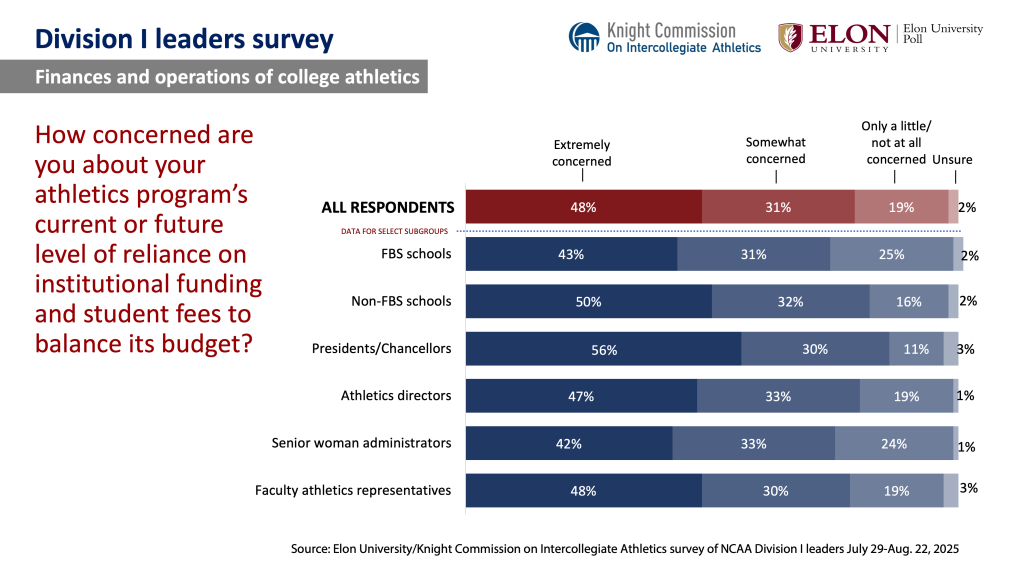
Division I leaders indicate overwhelming concern (79%), with 48% saying they are “extremely concerned,” about their athletics programs’ future reliance on institutional funds and student fees to balance their budgets. Expressing the greatest amount of concern were the leaders most responsible for finances – presidents (86%) and athletics directors (80%). The survey responses did not show significant difference between the views of FBS leaders (74%) and non-FBS leaders (82%) on this question, signaling a financial sustainability issue that is affecting schools at all Division I levels.
Mixed views on an even more professional sports model: There is a substantial difference between the views of leaders at FBS and those at non-FBS schools on whether the current “pay for play” prohibition should change to “allow universities to provide compensation to Division I college athletes for playing their sport, separate from NIL payments.” FBS leaders are split on that scenario, with 45% supporting and 42% opposing. The majority of non-FBS leaders oppose such a change with 64% opposed and only 27% supporting.


Athletics directors at schools that are currently abiding by the House settlement terms shared their expectations and strategies:
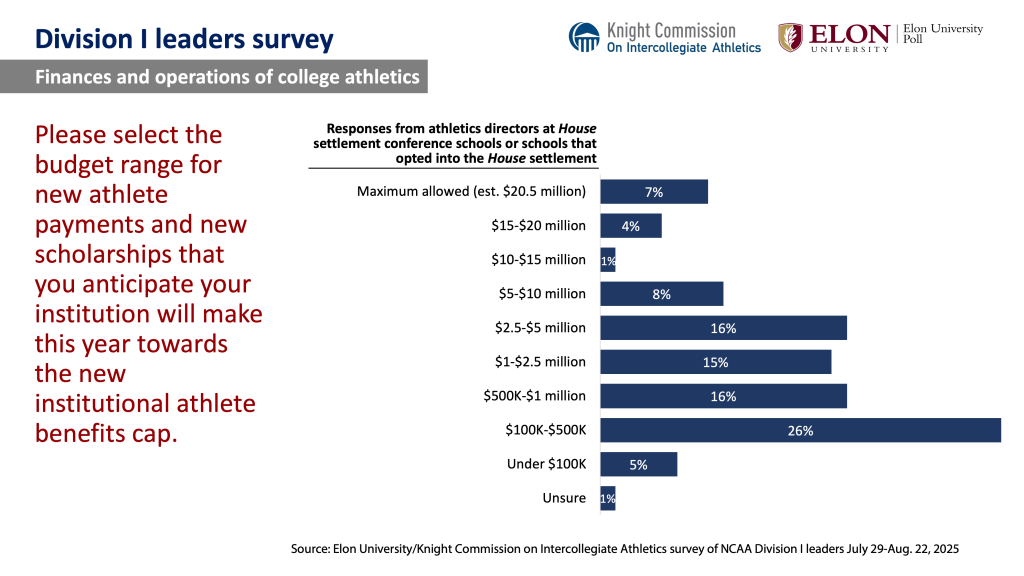
Institutional athlete NIL and revenue-share payments. Athletics directors responding to this survey provided insights into their strategies for new institutional athlete NIL compensation or revenue-sharing, with 47% expecting new athlete compensation at their school to be in a range from $500,000 – $5 million, and another 20% expecting to increase compensation from $5 million up to the maximum allowed level of $20.5 million.
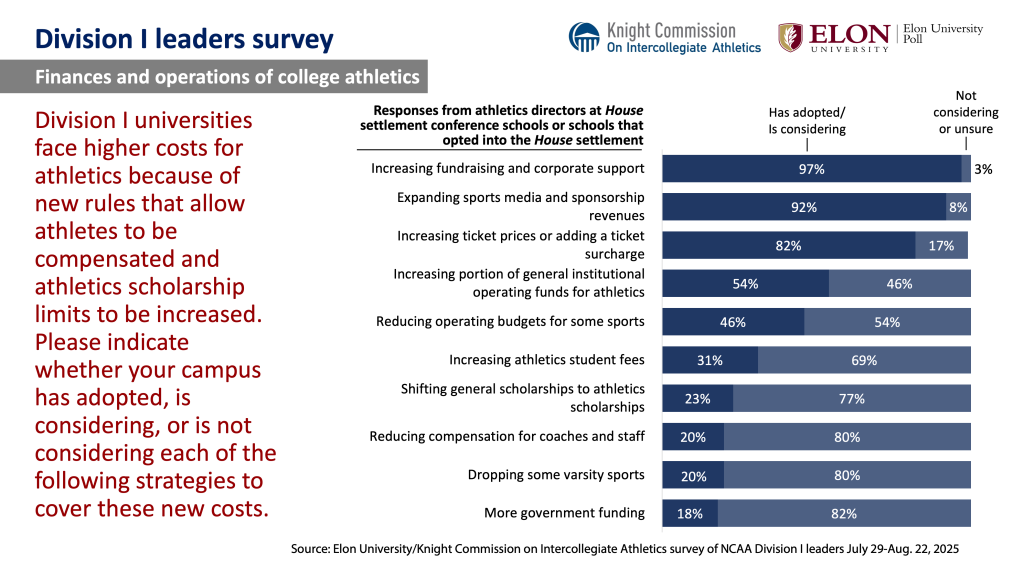
Increased pressure for institutional funding. More than half (54%) of athletics directors indicate they are pursuing an increase in institutional funding to help cover the new costs.
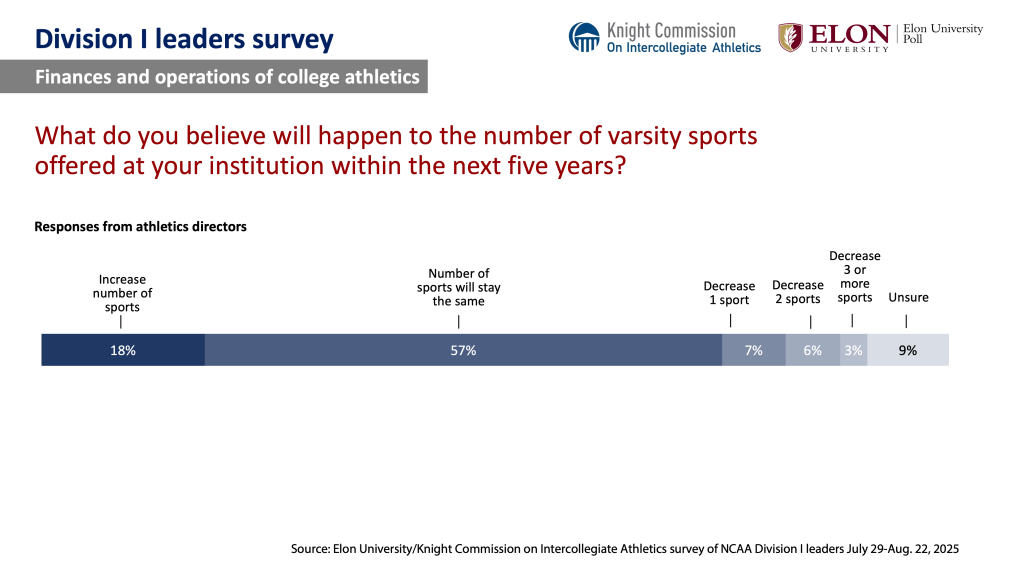
Pursuing revenues and cutting expenses. When given choices on how to meet new financial demands, athletics directors indicate they are considering multiple strategies: increased fundraising (97%) and media partnerships (92%), increasing ticket prices (82%), seeking a greater share of their institution’s operating funds (54%), reducing some sports’ operating budgets (46%), increasing student fees (31%) and dropping some varsity sports (20%).

> Text-only screen reader version of all charts in this report.