College sports governance and structure
There is widespread agreement among leaders responding to this survey that the current framework of Division I is under severe strain.
Leaders question the sustainability of the Division I structure, with 62% of all respondents expressing doubt that Division I remains viable as a single entity within the NCAA. This sentiment from a majority of presidents (69%) and athletics directors (55%) may signal that the current alignment of Division I institutions is seen as increasingly unworkable.

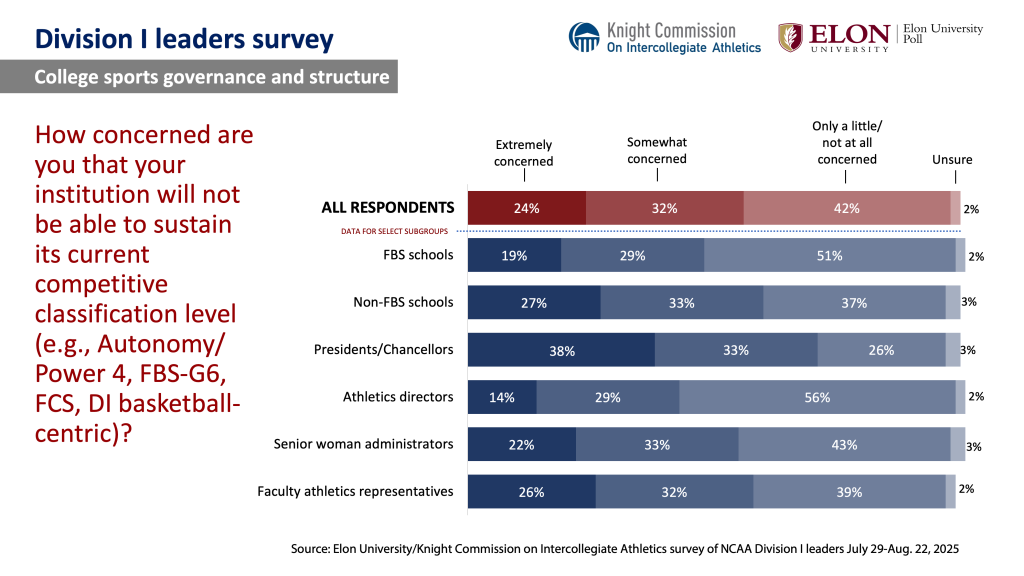
The changing landscape has created concern about the ability of institutions to maintain their competitive positions. More than half of all leaders (56%) are concerned about whether their schools can sustain their classification levels in Division I, a figure that rises to 60% among leaders at schools whose athletics programs do not include Football Bowl Subdivision (FBS) football.
A search for stability and structure: Reimagining governance, seeking enforceable policies and federal guardrails
Division I leaders show support for new governance models, enforceable rules, and federal legislation to bring order and predictability to the system.
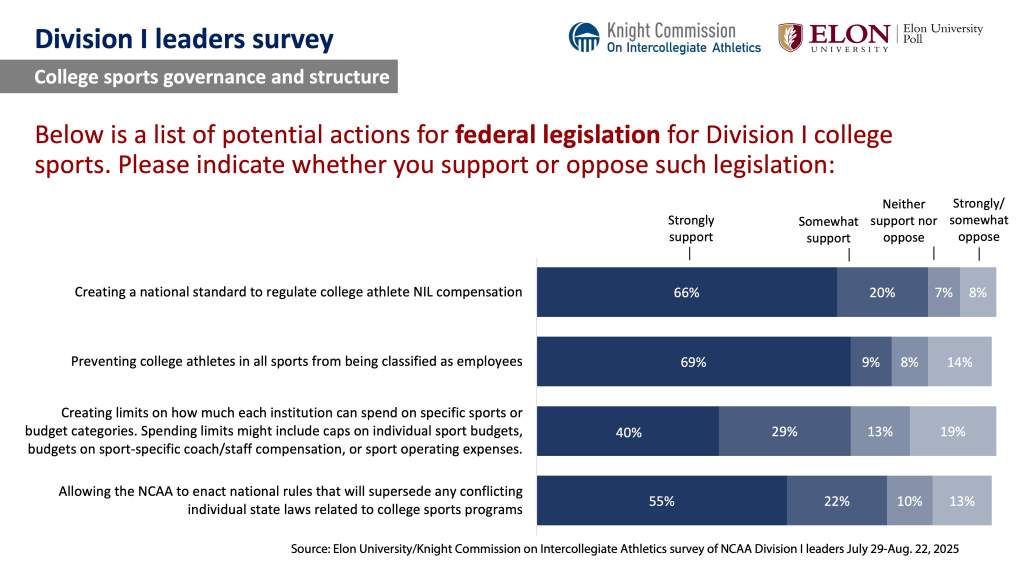
A call for uniform federal standards: Division I leaders indicate overwhelming support for federal intervention that creates national standards for athlete NIL compensation and other operational rules, and prevents college athletes from being classified as employees.
- 86% support a national standard to regulate athlete NIL compensation.
- 78% support laws to prevent college athletes from being classified as employees.
- 77% support national rules that supersede conflicting state laws.
- 69% support limits on how much each institution can spend on specific sports or budget categories.
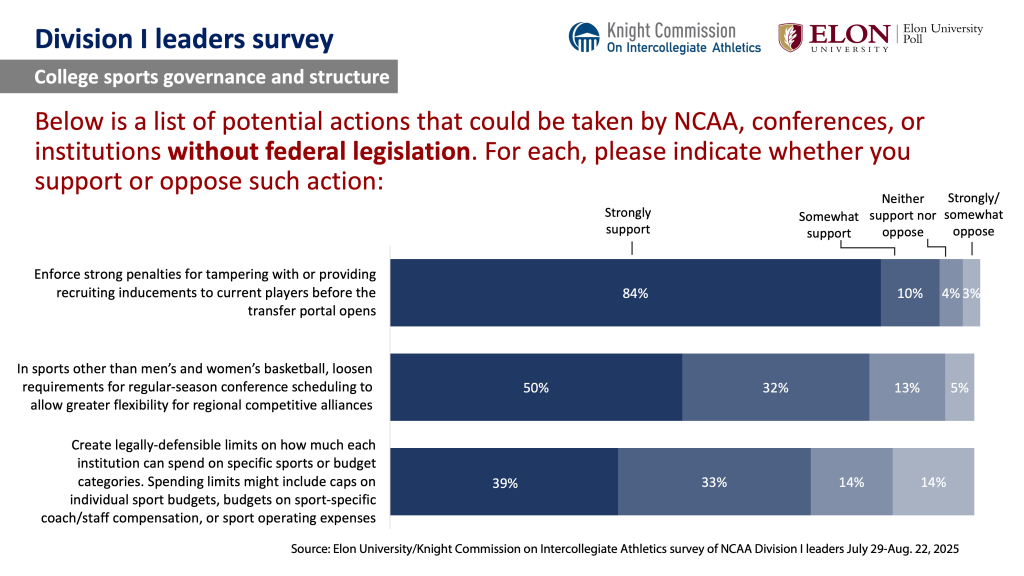
Openness to more regional scheduling: Eighty-two percent (82%) of DI leaders support “loosening requirements for regular-season conference scheduling in sports other than basketball to allow greater flexibility for regional competitive alliances.”
In a separate question to athletics directors at institutions abiding by the House settlement, 91% said that “more regional competitions for sports to reduce travel costs” could help their institutions in being able to maintain their current number of NCAA varsity sports.
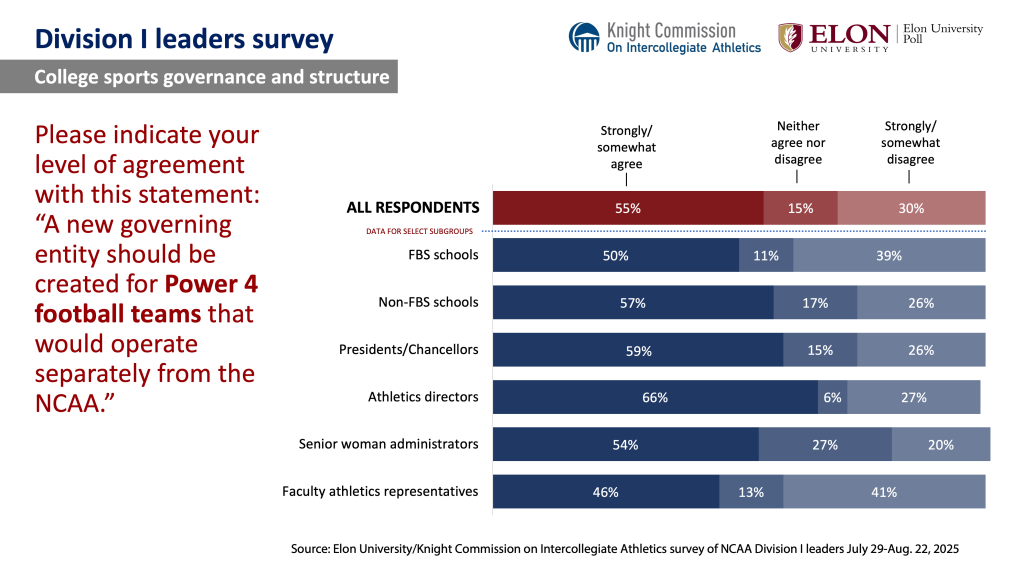
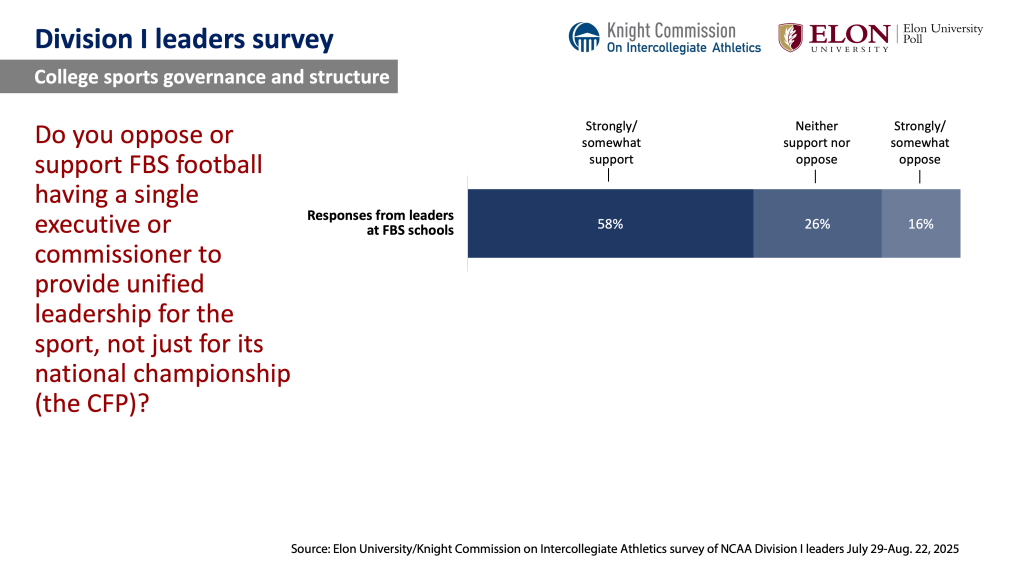
Openness to a new football governance model: There is support (55% of all respondents) for creating a new, separate governing entity for Power 4 football. The idea finds backing from both FBS (50%) and non-FBS (57%) leaders, with support being highest among athletics directors with 66% holding this view. Additionally, 58% of FBS leaders favor having “a single executive or commissioner to provide unified leadership for the sport, not just for its national championship (the CFP).”
These responses suggest support for a more specialized governance structure for Power 4 or FBS football outside the traditional NCAA framework, particularly among athletics directors.

> Text-only screen reader version of all charts in this report.