


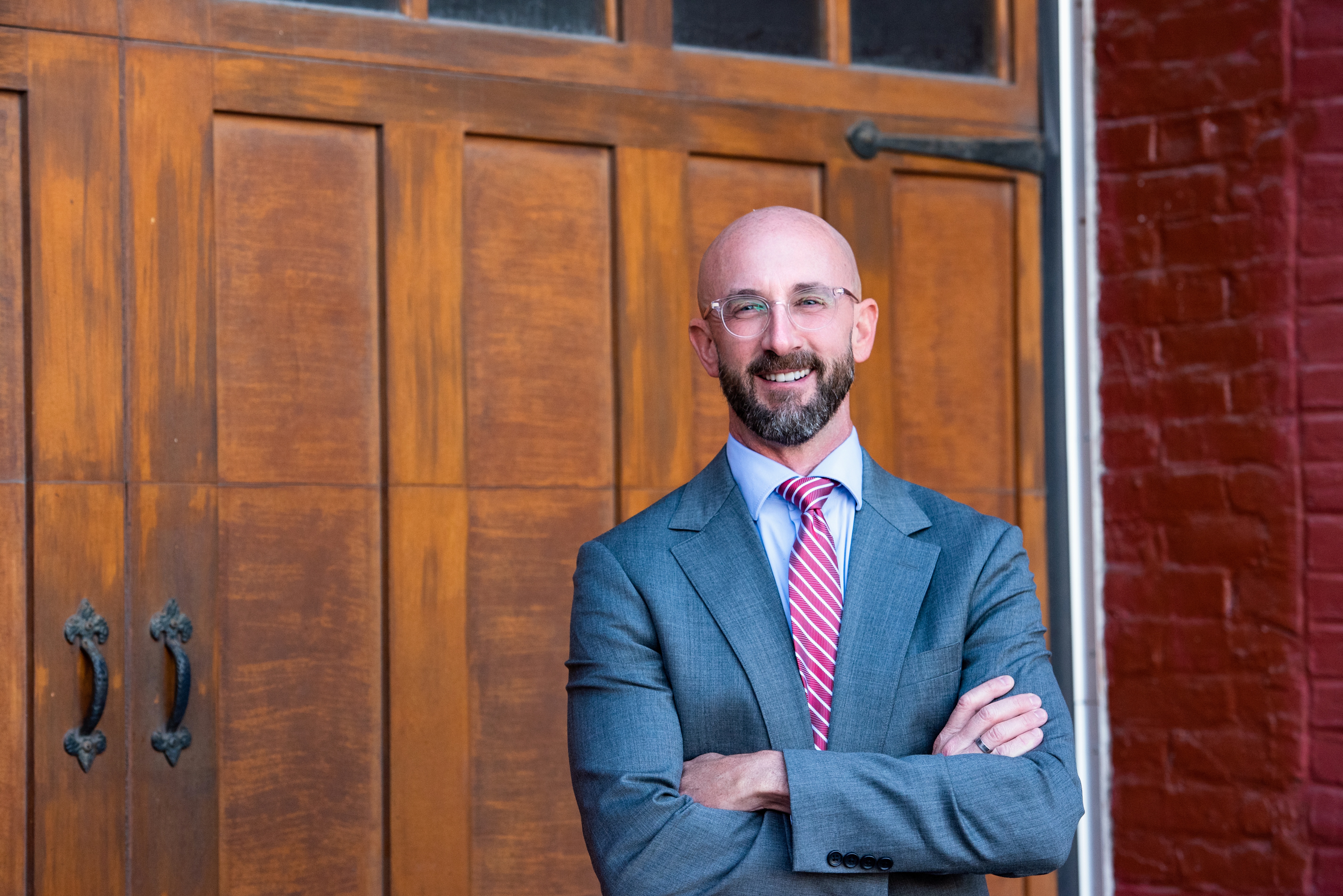
Joshua McIntosh ’97 credits his Elon education with giving him the confidence and critical thinking skills that shaped his career in higher education, from leadership roles at Harvard College, Johns Hopkins University, and Bates College, to his current position as executive dean of the Harvard Kennedy School.
A biology degree from Elon University can take you many places: a laboratory, medical school, teaching in the classroom, etc. For Joshua McIntosh ’97, the lessons he carried from his degree, critical thinking, problem-solving and working through uncertainty, prepared him for a career in higher education that has led to his current role as executive dean at the Harvard Kennedy School.
“That science degree remains material to how I approach my work,” McIntosh said. “By studying science, you learn how to think sequentially and how to deal with large degrees of ambiguity and unknown things. How do you work in teams? How do you solve problems? That foundation has been particularly important.”
Finding a sense of self
McIntosh grew up outside of Washington, D.C., and attended a high school of about 5,000 students. When it came time for college, he wanted something different.
“I was seeking something smaller in scale, where you might get to know the faculty and other students more easily,” he said. “The size and scale of Elon, coupled with the size and scale of the science department, and it not being in the state of Virginia, were all assets. It was far enough away, but not too far away.”
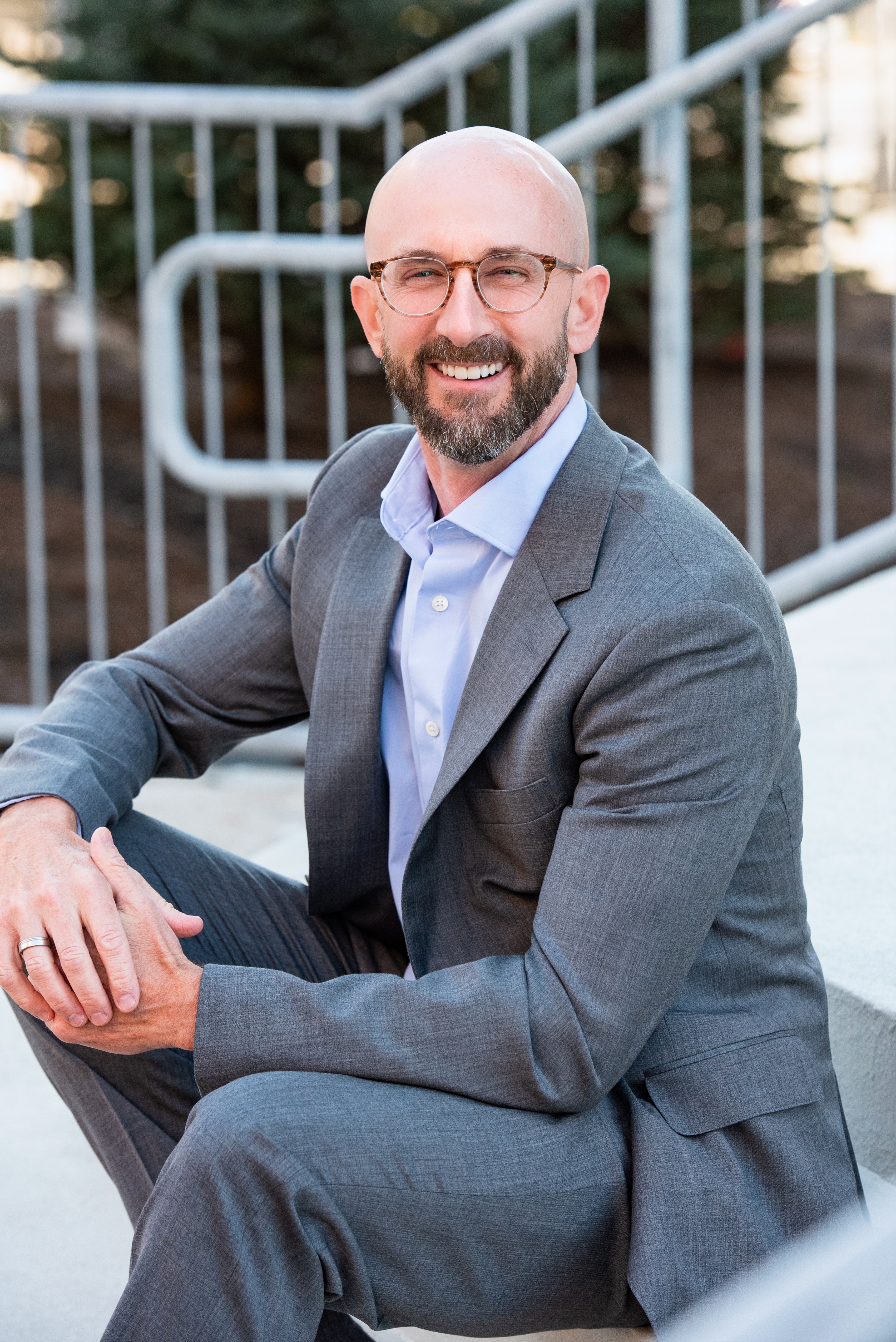
Looking back at his time at Elon, McIntosh recalls both personal growth and mentorship from faculty like Professor Emeritus Nancy Harris, as defining experiences.
“I went to Elon struggling with my own sense of self and confidence, and I think I left with a much better sense of self, and where I could contribute in the world,” he said. “Some of those faculty were instrumental in mentoring and guiding me, helping me develop confidence in my own abilities. There’s something about the relationships coupled with intellectual development, and how those two things work together between the faculty and the students, that was remarkably special.”
After completing his undergraduate degree, McIntosh earned his master’s degree at Appalachian State University before earning a doctorate in higher education administration from Syracuse University. Working in higher education appealed to him because of both its complexity and its mission-driven work.
“Higher education institutions are very complex cultural organizations,” he explained. “If I’m going to spend 60, sometimes 70 hours a week doing something, that values alignment and integration is really important. That has made it very fulfilling and meaningful work.”
Problem solving together
His career path took him to Harvard College (at Harvard University), Johns Hopkins University, and then Bates College in Maine, where he spent nearly a decade leading organizational and operational transformation as vice president for campus life. In 2024, McIntosh returned to Harvard University as executive dean of the Harvard Kennedy School, the university’s public policy school.
“If you weren’t in higher education, you’d think of it as a chief operating officer,” said McIntosh of his role. “Each school has its own IT, finance, human resources, research administration, research and library services, executive education, facilities, and campus planning and operations. I oversee and work closely with all these operational components that support the teaching and research mission of the school.”
That work, he added, has been shaped by the current challenges in higher education, but despite the obstacles, the work is still rewarding.
“The people are wonderful,” McIntosh said. “I’m getting to work with people to solve complex problems and we are doing so with creativity, deliberateness, and resilience.”
The evolution of Elon
Much has changed since McIntosh graduated in 1997: Elon’s student body has increased from about 3,500 students to a little more than 7,000, the former mascot “The Fighting Christian” is now “The Phoenix” and Elon College has become Elon University. Now, with two decades of higher education experience, McIntosh sees Elon through both the eyes of an alumnus and a professional in the field.
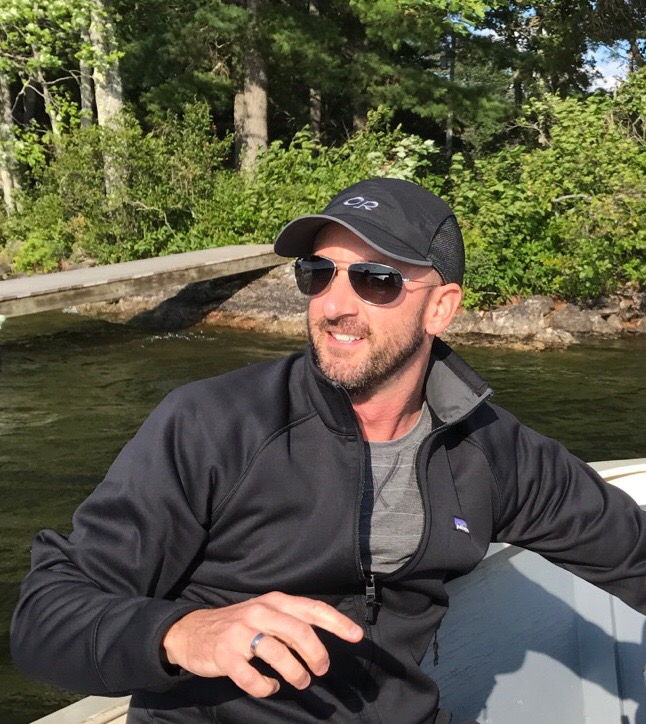
“Elon has evolved in precisely the right ways,” he said. “It has grown, created flexibility, been nimble and planful. Higher education is facing enormous challenges in enrollment and cost structure. What I’ve been impressed by is the deliberateness of how they place themselves in the higher ed market and how they think about their enrollment strategy and price point relative to competitors.”
He has also continued to give back to the university, previously serving on the Elon Alumni Board and, in 2016, was recognized by the Elon Lesbian, Gay, Bisexual, Transgender, Questioning, Queer, Intersex, Asexual and Ally (LGBTQIA) Alumni Network at the LGBTQIA Community Enrichment Awards for advocating on behalf of LGBTQIA issues and partnering with others to build an inclusive and respectful community.
“Elon has become a far more diverse community since I graduated, along a whole host of metrics,” he said. “That’s good for student learning, to sit side by side with people who hold very different points of view and who come from very different backgrounds. It challenges your assumptions, and that’s good for education.”