



Joshua Burgan L’25 learned the importance of personal connections with clients and honed his skills in medical malpractice law through a 10-week residency at a Winston-Salem, North Carolina, law firm.
Law school wasn’t on Josh Burgan’s horizon, but a single class reset his course.
Enrolled in a business law class at Appalachian State University, he discovered how much he enjoyed the precision of legal reading and writing. Reflecting on his desire to advocate for others, he saw that law school and a legal career aligned with his values, diligence and persistence, ultimately leading him to Elon University School of Law.
Elon Law’s experiential curriculum has only reinforced his decision. Through the Residency-in-Practice Program, Burgan enmeshed himself in the legal team at Rawlings Law Firm in Winston-Salem for 10 weeks last spring. The practice represents individuals and families affected by medical malpractice and medical negligence.
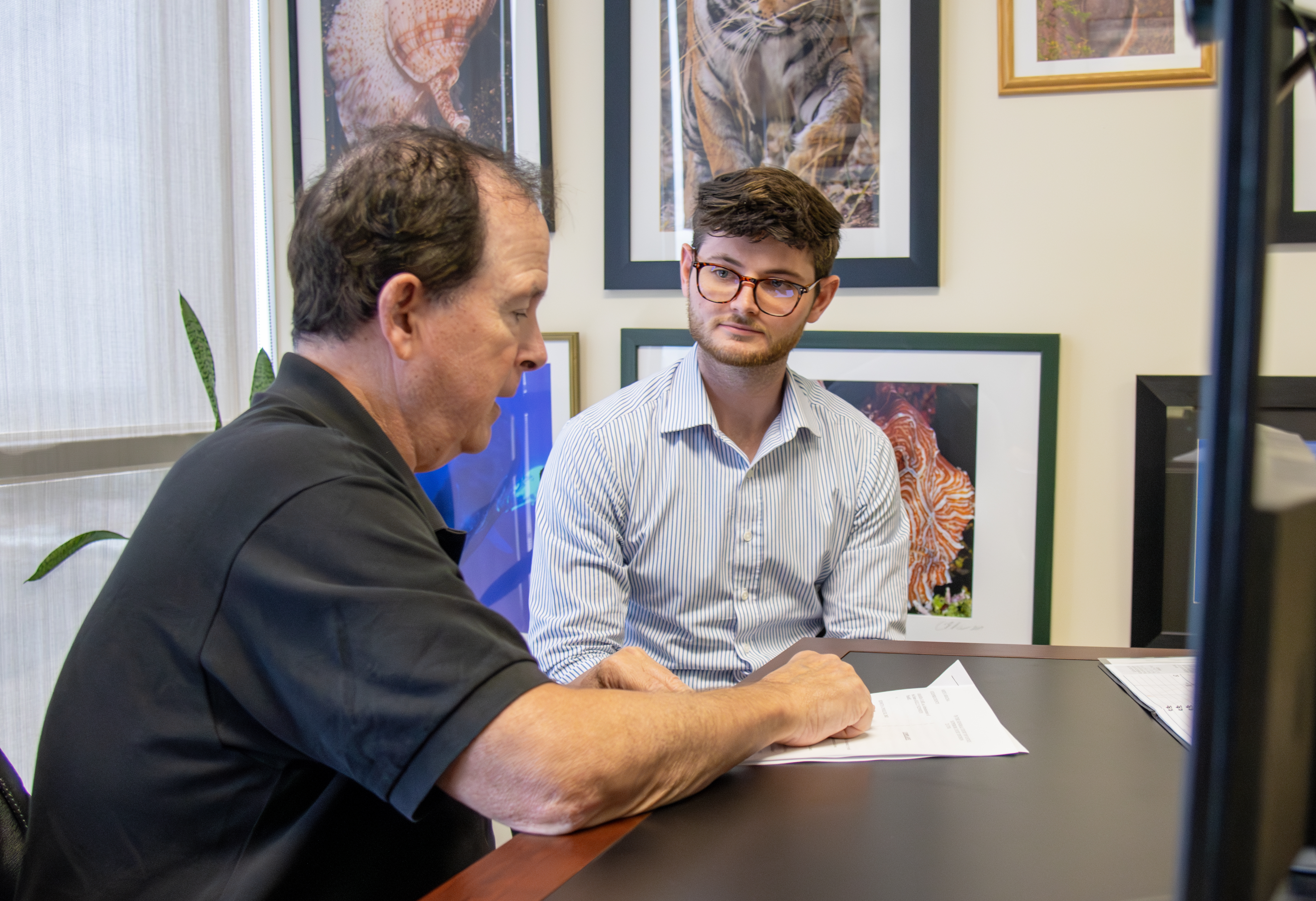
For Burgan, the placement was no accident. The third-year law student had long been interested in medical malpractice law and prioritized a residency that would allow him to work closely on the cases of clients facing life-changing challenges.
“These people are often hurt and need a lot of help, and their families are affected greatly,” Burgan said. “I saw this as an opportunity to help them recover as much as they can from the negligence they’ve endured.”
Elon Law’s Residency-in-Practice Program is the cornerstone of an innovative curriculum that emphasizes legal skills through hands-on learning. Every second-year law student spends the winter or spring in a full-time, 10-week placement under the supervision of jurists and lawyers inspired to mentor future legal leaders.
This is the second in a series of conversations with Elon Law students in the Class of 2025 reflecting on their recent residencies-in-practice.
How did you identify your residency at Rawlings Law Firm as an option?
I knew I was interested in learning more about medical malpractice law even before applying to the residency matching process. Rawlings Law Firm was my number one choice, and I was fortunate to be placed there.
Describe your daily responsibilities at the office.
I handled a variety of tasks. I answered client calls for consultations, gathering information and listening to their experiences to help assess potential cases. I drafted demand letters, pre-litigation documents and complaints. I also prepared outlines for witness depositions and reviewed documents that supported settlement negotiations before cases went to trial. Much of my time was spent researching, proofreading and ensuring arguments were supported by the law.
Based on your experience, what surprised you most about the practice of law?
The biggest surprise was how meaningful and personal the work feels. In school, drafting a complaint can feel abstract. At the firm, I knew the people involved: The stakes were higher, and the work was valued and used in real cases. That made it more engaging and rewarding.
As you look ahead to graduation and launching your career, how did your residency experience help you develop skills and connections that will be valuable to you?
My legal residency provided hands-on experience across a variety of practice areas, including personal injury, medical malpractice and civil litigation. Working closely with attorneys at The Rawlings Law Firm and other organizations, I honed essential skills in legal research, drafting pleadings and motions, client communication and case strategy. The residency also allowed me to develop meaningful professional connections with mentors and colleagues, giving me insight into the practical realities of legal practice and the professional network that will support me as I begin my career. Overall, this experience prepared me to approach my career with confidence, practical skills, and a clear understanding of the skills and professionalism expected in the legal field.
In what ways, if any, has your residency experience shaped your plans for after graduation?
It confirmed that I definitely want to be an attorney. The experience was invaluable, giving me both hard skills and the confidence that comes from working directly with clients and colleagues. Having a mentor like Charles Rawlings made a big difference. He’s patient and encouraging, often guiding me toward the answer rather than just correcting me outright. That teaching style helped me fully understand complex issues, improve my issue-spotting skills and grow my skills in the law.
What advice would you give current and prospective students as they prepare for their own residencies or law school in general?
Keep an open mind. Treat every day like an interview. Stay focused on networking and be kind to everyone you meet.