


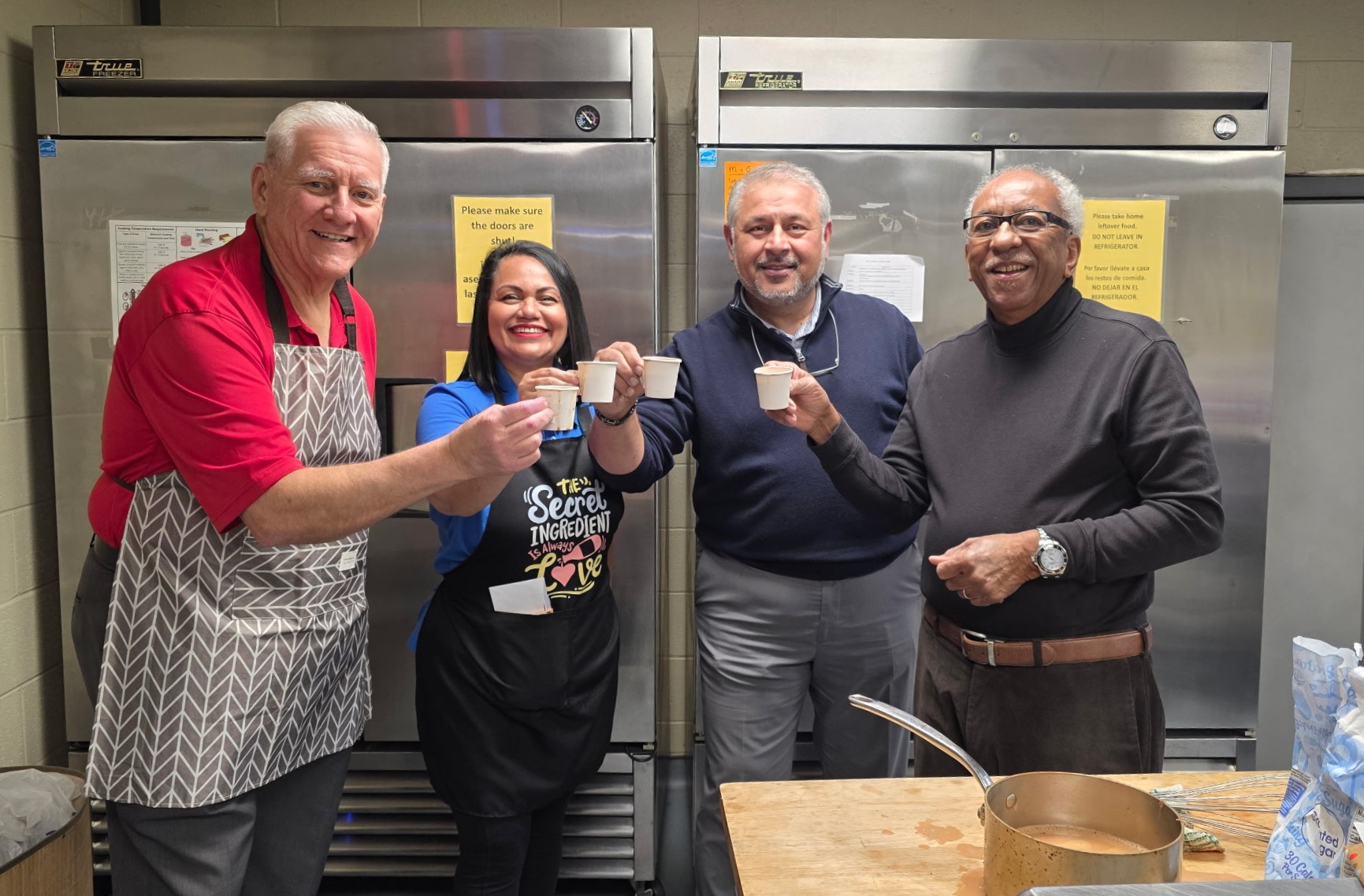
Power+Place 2025 Public Screening brings stories and food from Alamance County to over 200 community members, students, faculty and staff.
This fall, the Center for Design Thinking’s Power+Place Collaborative isn’t just crafting stories from discussions – it’s also cooking them up in the kitchen with hearty meals.
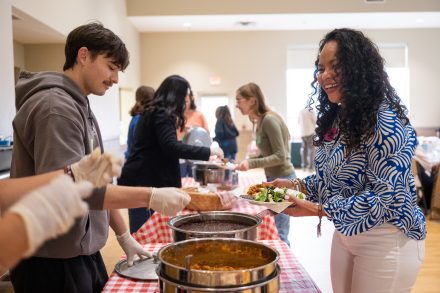
The Collaborative has partnered with Professor Pamela Runestad’s Anthropology of Food and Food Pathways course, community members, previous storytellers and the Elon Community Church to provide cultural homemade meals, where components came together to make a shared meal and shared connections for the film screening held on Dec. 4.
The screening featured a dozen stories, ten community resource tables and four food stations centered around the theme “roots and routes.” Food stations, for instance, reflected an important part of the designated culinary storytellers’ life and included “Ervin’s Beans & Slaw,” “Patty’s Tacos,” “Mohsin’s Chai” and “Randy’s Salad Bar.”
“I am convinced that food is the key to connecting people,” Power+Place 2024 storyteller Patty Holmes said. “This collaborative offers the perfect way to combine speaking and cooking. I love sharing recipes and discussing the meaning and origins of specific dishes.”
Food from Land to Mouths – Ervin’s Beans and Slaw
Students from the Anthropology of Food and Food Pathways course visited Reverend Ervin Milton’s farm to learn about farming and be introduced to what recipes they could expect at the screening.
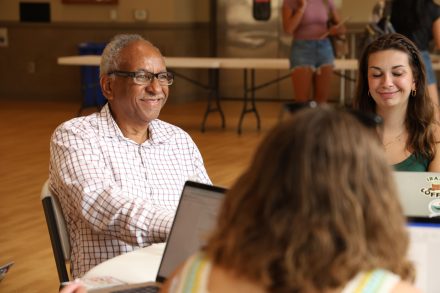
Rev. Ervin Milton was raised on a 44-acre tobacco farm in rural Gibsonville, where his family grew their own food to make for every meal. His parents never hid the fact that his family was poor, making it a lesson on how to be sustainable while making enough to feed every mouth at the table.
“I grew up poor and didn’t know it because everyone around me was poor,” Milton said. “When extra people came to our house, there was always enough for them to eat with us. [Milton’s parents] learned how to stretch things, how to make things work, how to have enough without assuming that you got everything or that you need everything.”

Milton’s family still owns the land, continuing to grow their own produce and educate others on intentionally farming food to be more environmentally and sustainably conscious of food waste.
For his dishes, Milton decided to make three things that he remembers fondly being at his dinner table: coleslaw, cornbread and pinto beans. These three dishes were staples, coming from the farm straight to the family’s plates.
“Now people are just simply throwing away [food], almost to the point where they throw away people,” Milton said. “I think it’s important to help people, in my case, to understand how you can make a meal, how you can feed people and not spend a lot of money and still make it tasteful.”
Growing up in the civil rights era, Milton was no stranger to inequality. In 1964, he was the first black student to apply to an all-white Gibsonville High School, integrating the school for the first time. The school lunch table was one of the first places where he knew that he wanted to educate people on the causes and importance of equity on both sides to “make life fair for everybody.”

“I remember sitting while the white people that I worked for, they used to eat first and then we would eat,” Milton said. “That wasn’t going to be my life. I went back out to the field that day, but that memory has always been there for me.”
You can learn more about Rev. Milton’s story and life by viewing his digital story on the Power+Place YouTube channel.
Cultural Eats – Patty’s Tacos
Holmes was a 2024 Power+Place storyteller, sharing an emotional story of crossing into the United States from Mexico with her daughter to build a new life in the nation. This year, she’s focusing her story on her “second passion” and culture, bringing an array of Mexican tacos to the table.
“The Power+Place Collaborative not only educates, but it does so through real stories — stories that often aren’t found in the news or media,” Holmes said. “We are ‘invisible yet real,’ but through initiatives like this, we can become visible and reachable.”
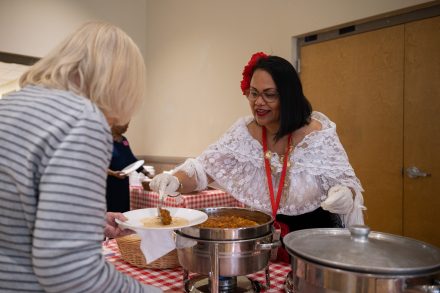
A staple of her own childhood, Holmes made picadillo tacos for the “Patty’s Tacos” station. Her mother used to create the meal as it was plentiful and could be made for both breakfast and lunch.
As a child, Holmes would visit tortilla bakeries – tortillerias – that would often have salt shakers, letting customers “savor a warm, fresh tortilla with a sprinkle of salt — a ‘tortilla con sal.’” While waiting in line, she would also enjoy a raspado, a Mexican-style shaved ice dessert topped with syrups, fresh fruit and sometimes condensed milk or chili-lime seasoning.
“My experiences becoming a storyteller for Power+Place feels incredibly fulfilling,” Holmes said. “Knowing that many people can understand the immigrant journey is powerful and promotes empathy and unity in our community.”
Faith-Fueled Food – Mohsin’s Chai and Randy’s Salad Bar
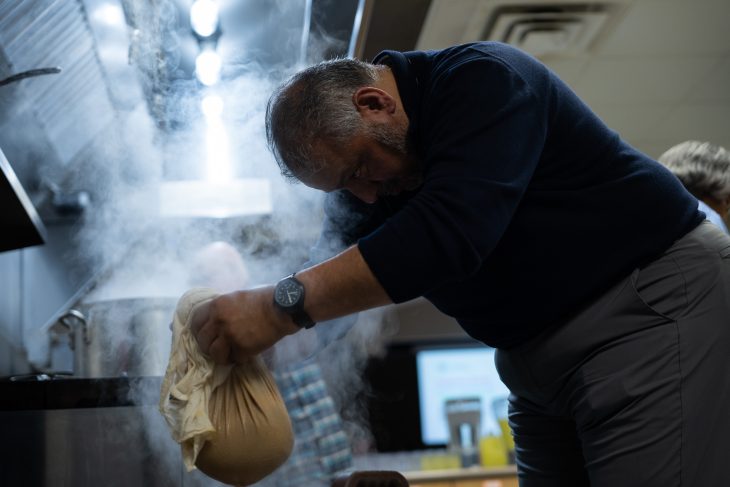
Students also met with Mohsin Sidiqui for “Mohsin’s Chai” at the Burlington Masjid, a place that’s been important to him since he came to the U.S. In 2023, Sidiqui shared his story of immigrating to Burlington, North Carolina from Pakistan’s largest city Karachi when he was a young boy. In his story, he emphasized the importance of community and family, something he missed when he moved to the states.
Through thoughtful conversation, Sadiqui told the same story to the Anthropology of Food and Food Pathways students through chai tea, a drink that he’s savored since a young boy. He also talked about the differences of the chai made in Pakistan and the U.S.
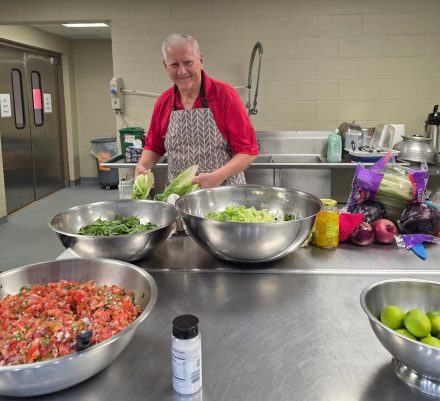
Randy’s Salad bar features staples from Pastor Randy Orwig, Pastor of the Elon Community Church. Pastor Randy has been a longtime, generous supporter of the Collaborative.
In preparation for the film screening, students met with pastor Randy Orwig to educate on community engagement within the church and its mission, along with touring the kitchen where the food will be made. In addition to hosting “Randy’s Salad Bar,” Orwig helped design the event, oversee the set up, and recruit community volunteers for the event.
Feeding the mind and body – Anthropology of Food and Food Pathways
Students in Professor Pamela Runestad’s Food and Food Pathways interviewed culinary storytellers about the particular dishes and took field trips to Milton’s family farm and the Burlington Masjid to gain a better sense for the significance of these foods to their storyteller.
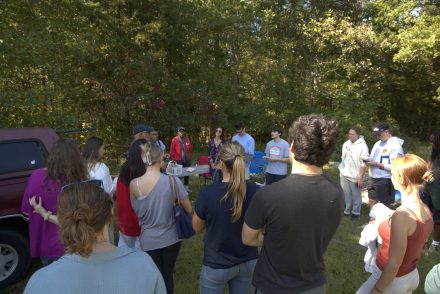
Students’ insights from their interviews with storytellers and their site visits will be archived on the Power+Place Collaborative Omeka website alongside the dozen new stories captured this year about “Roots and Routes.” So far, Power+Place has archived over 120 documents, photos, transcripts, and more to their database that is accessible to anyone.
“I think students are really interested to learn about the variety of different experiences in our wider community here and see how food fits into that,” Runestad said. “They’re also learning about collection and processing of qualitative data — not just for data’s sake, but for a purpose: these narratives will be shared with Storytellers and saved in the archive.”
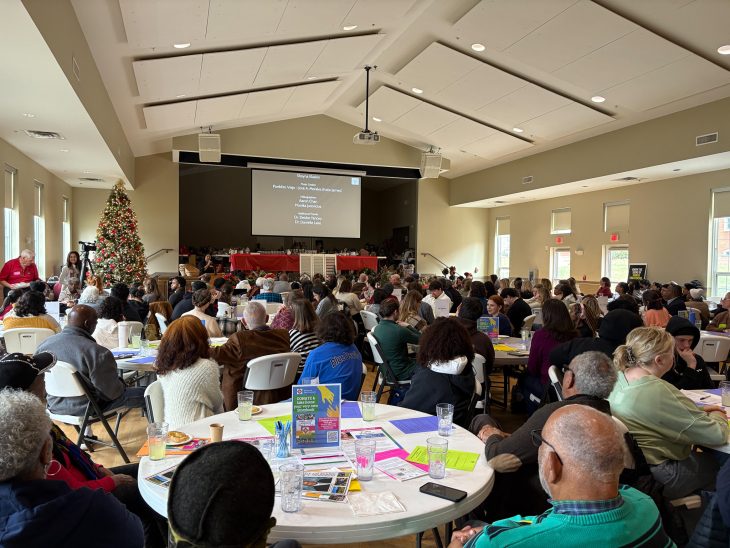
Both the culinary and Power+Place Stories of Alamance storytellers met with Williams High School participants, the students who have been working with them and the Elon community at the church. This year, 12 new storytellers were featured with a focused theme of rootedness, migration and belonging.