


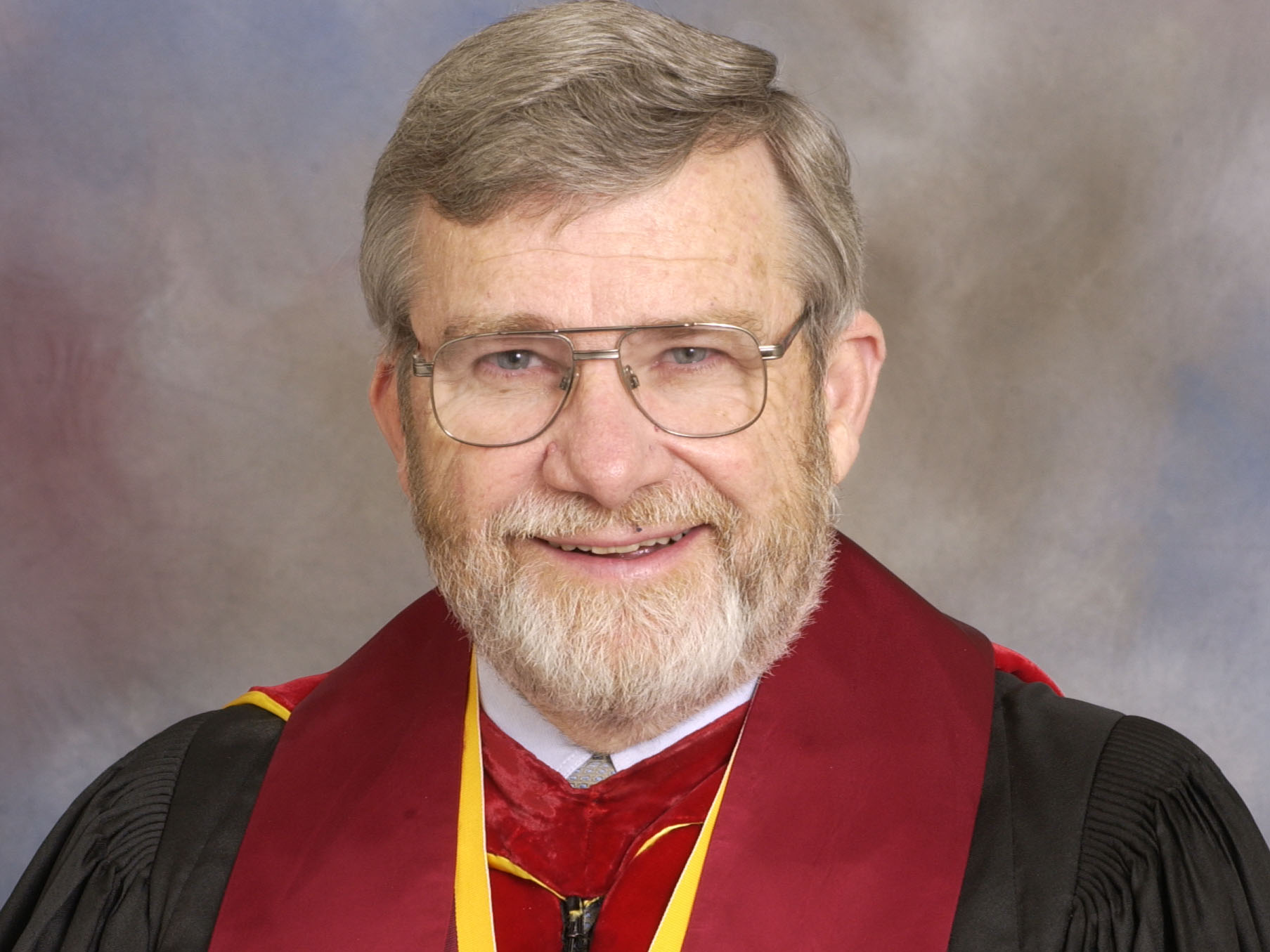
One of the university's most beloved faculty members for more than three decades passed away on Feb. 13, 2026, leaving a legacy shaped by his work with thousands of students and "a powerful voice that lifted up the most cherished values of the institution."
John G. Sullivan, Elon University’s beloved Maude Sharpe Powell Professor of Philosophy emeritus and the institution’s first Distinguished University Professor, died February 13. His passing marks the end of a remarkable life dedicated to teaching, scholarship, spiritual exploration and the transformative power of education.
For 36 years, from 1970 until his retirement in 2006, Sullivan was a cornerstone of Elon’s academic community, an intellectual and spiritual guide to countless students and an embodiment of the university’s highest ideals.
“Dr. Sullivan lovingly shaped Elon University and its academic programs through a career that was thoroughly infused with intellectual and spiritual light,” said Elon University President Connie Ledoux Book. “He will forever be remembered as one of the greatest faculty members in Elon’s history and his influence endures, like ripples in a pond, through the lives of all he touched.”
President Emeritus Leo M. Lambert said Sullivan, “had a powerful voice that lifted up the most cherished values of the institution. Whether the forum was a meeting of the faculty or the Board of Trustees, John’s wisdom guided us. I always valued his quiet counsel to me.”
A Life of Service and Scholarship
John Sullivan grew up in Newport, Rhode Island, and his intellectual and spiritual journey began in the Catholic priesthood. Ordained in 1963, he studied in Rome during the transformative period of the Second Vatican Council, earning a doctorate in ecclesiastical law from the Pontifical Lateran University. This immersion in one of the great moments of religious reform would shape his lifelong interest in the intersection of wisdom traditions, ethics and lived experience.
After leaving the priesthood, Sullivan earned a doctorate in philosophy from the University of North Carolina at Chapel Hill, bringing to his academic work the same depth of commitment and spiritual inquiry that had characterized his earlier vocation. When he joined Elon’s faculty in 1970, he brought with him a rare combination of scholarly rigor, pastoral care and philosophical depth that defined his career.
An Extraordinary Educator
Sullivan’s reputation as one of Elon’s most respected teachers was established early and endured throughout his career. In 1979 he received the Daniels-Danieley Award for Excellence in Teaching, the university’s highest honor for teaching achievement—a testament to his extraordinary gifts in the classroom. His students found in him not just an instructor, but a guide who could illuminate the great questions of human existence with clarity, compassion and wisdom.
For 18 years, Sullivan chaired the Department of Philosophy, shaping not only individual students but the intellectual culture of the university itself. He was instrumental in developing Elon’s interdisciplinary Honors Program, was a member of the general studies committee that helped revise Elon’s curriculum in 1994, and served as the first coordinator of the Asian-Pacific Studies Program. His influence extended to the university’s governance as well, serving on the 1998 presidential search committee and on Southern Association of Schools and Colleges reaccreditation self-study steering committees across two decades.
Sullivan led Elon’s participation in the Carnegie Academy for the Scholarship of Teaching and Learning, demonstrating his ongoing commitment to exploring and advancing the art of teaching itself. His selection by the Board of Trustees in 2002 as Elon’s first Distinguished University Professor—an honor bestowed on full professors who have made distinguished contributions to teaching, scholarship and the university community—represented the culmination of a career dedicated to academic excellence.
A Voice in Times of Crisis
Perhaps no moment better captured Sullivan’s role in the Elon community than the day after the Sept. 11, 2001, terrorist attacks. When Elon students, faculty and staff gathered in Alumni Gym to process their grief and fear, Sullivan was chosen to speak alongside President Lambert and President Emeritus Earl Danieley.
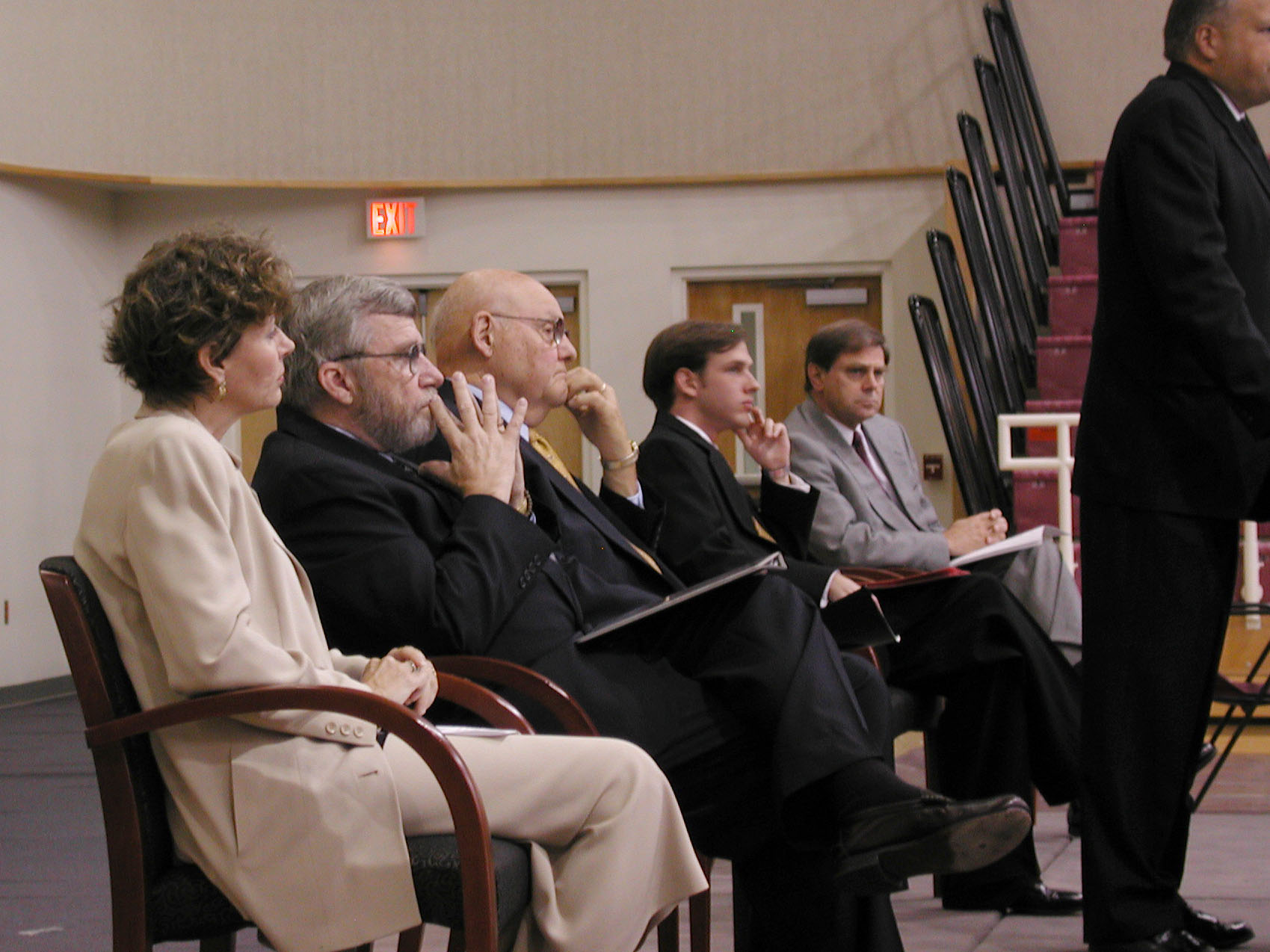
With characteristic insight, Sullivan noted the irony that he had learned of the disaster just as he was about to lead his class in studying Dante’s “Divine Comedy.”
“I said to my students: Today, we are in the dark wood,” he told the gathering. “Today, we are at the gateway to Hell. There it is on the screen. The Manhattan skyline, its twin towers collapsed; clouds of smoke muffling screams of horror.”
But Sullivan did not leave his community in despair. Drawing on Dante’s journey from darkness to light, he reminded those assembled of humanity’s capacity for both evil and good, and offered words that would resonate for years to come: “The simple truth is this: Hate is never overcome by hate. Strange as it seems to so-called realists of any age, hate is only overcome by love.” He concluded with Dante’s own words, invoking “the love that moves the sun and other stars.”
It was quintessential Sullivan—learned, profound, pastoral and ultimately hopeful, offering both philosophical depth and practical wisdom in equal measure.
A Commencement 20 Years in the Making
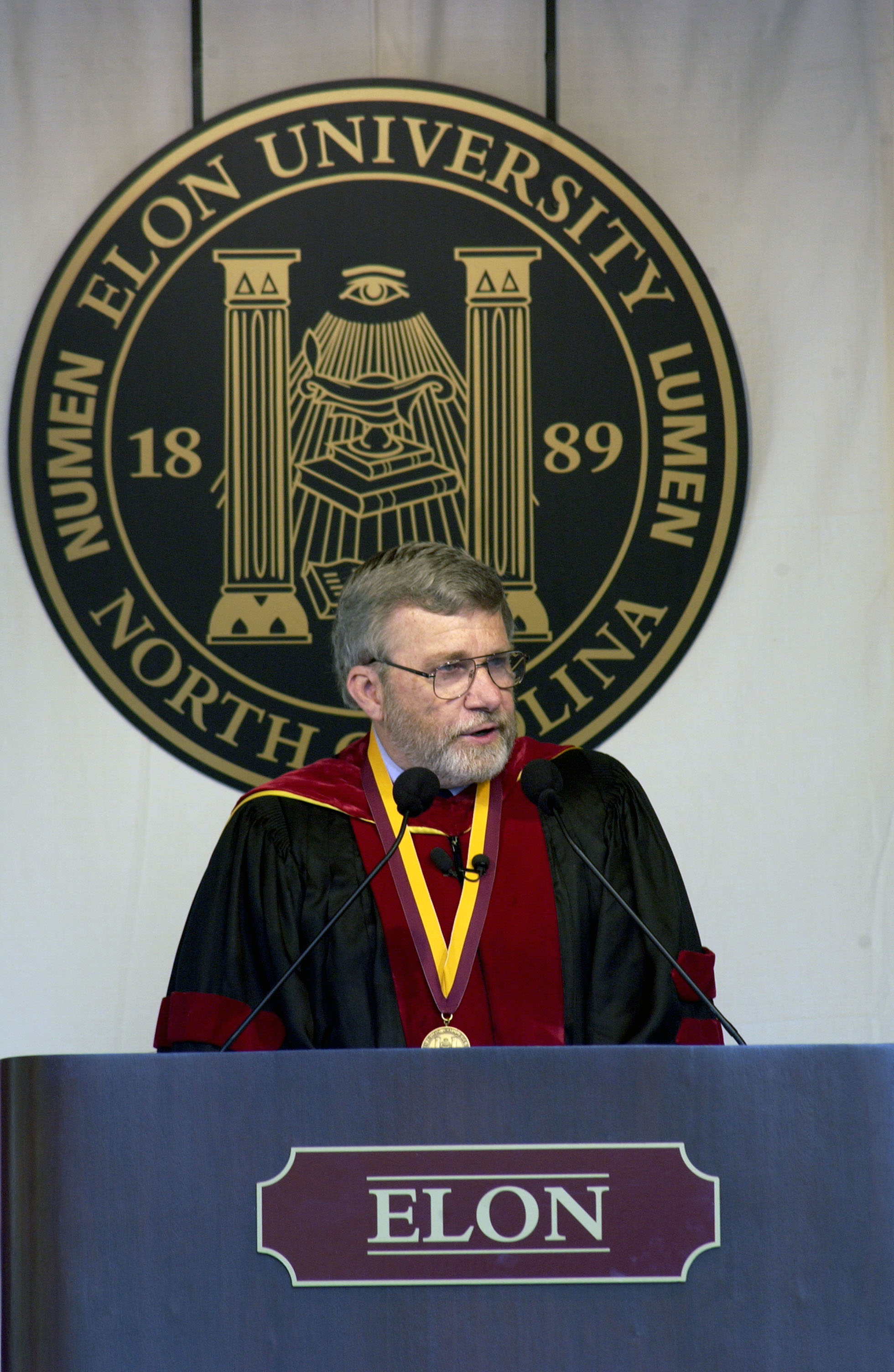
In May 2002, Sullivan finally delivered the Commencement address he had been preparing for over two decades. Since 1980, he had served as Elon’s backup Commencement speaker, revising and refining his speech each year in case he was needed. He would sit quietly in the faculty section in his academic regalia, his speech folded inside a book, waiting for a moment that never came—until 2002.
When the scheduled speaker, astronaut Mae Jemison, withdrew due to a family illness, Sullivan’s moment arrived. His unusual role as America’s most patient backup speaker caught national attention. The Wall Street Journal ran a front-page story, chronicling Sullivan’s 22-year wait and Elon’s meticulous contingency planning for commencement. The story noted that the 65-year-old religious scholar was “the unofficial dean of the nation’s standby commencement speakers.”
Sullivan maintained an air of mystery about his speeches over the years, refusing to share them even with his wife, Gregg. “It’s the one thing in our marriage we haven’t shared,” he told the Journal. “I always think, maybe the speaker’s plane will be late, or he’ll keel over on the platform, and I’ll come rushing up to save the day, like in the old movies.”
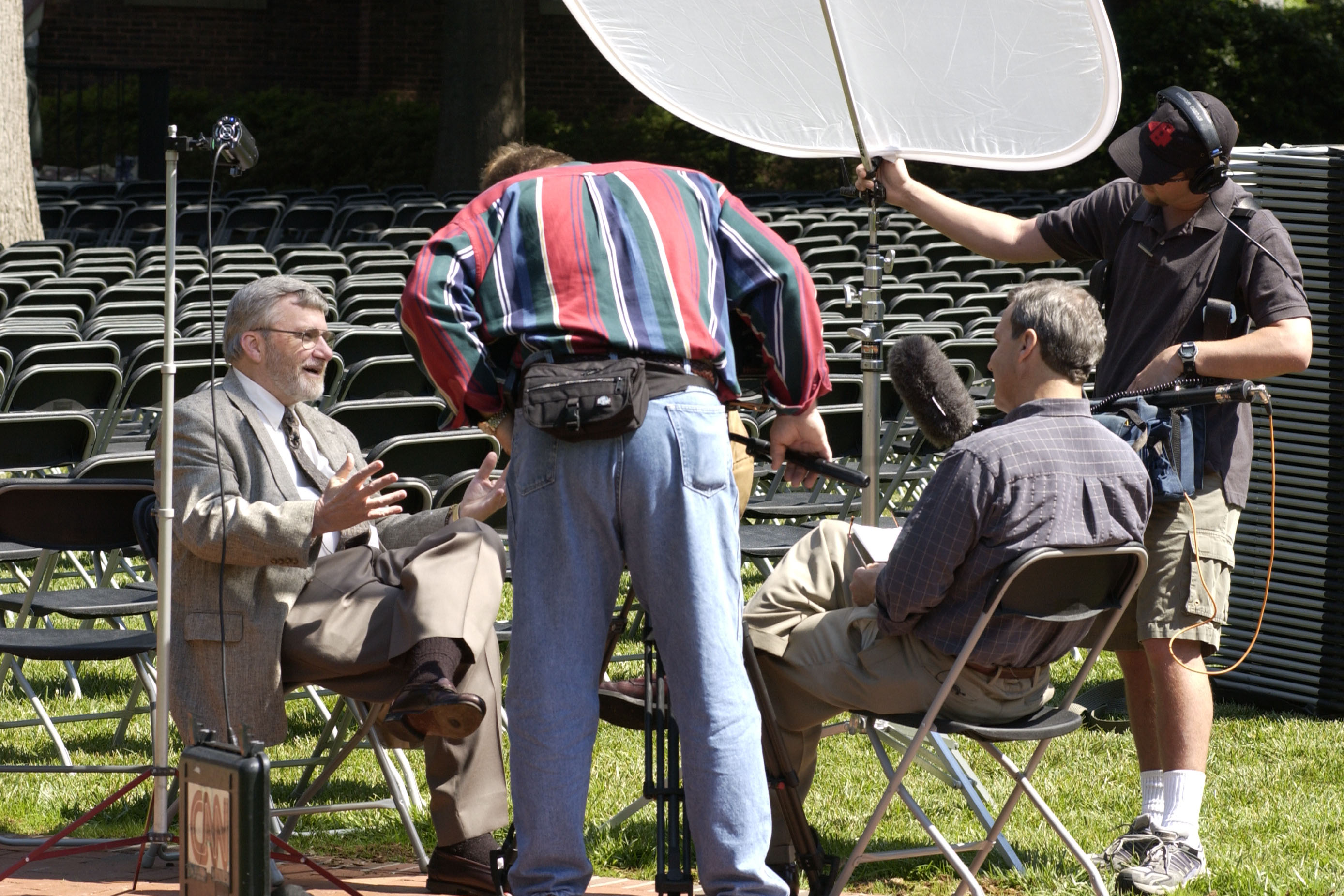
The story also received coverage on CNN and NBC network news, bringing national recognition to both Sullivan and Elon’s thorough preparation for all contingencies.
When Sullivan finally stood at the podium on May 25, 2002, at Elon’s 112th Commencement exercises, he was characteristically humble about the moment. “I’m honored,” he said. “But this is not about me. It’s about graduation—these students who have completed their career here and are going on to new things. We are just their cheerleaders.”
Beyond Elon: Teaching and Healing
Sullivan’s influence extended far beyond Elon’s campus. In 1987, he co-founded the School of Philosophy and Healing in Action (SOPHIA), a program at the Traditional Acupuncture Institute in Columbia, Maryland (later Tai Sophia Institute in Laurel, Maryland). The program taught healing principles based on ancient Chinese philosophy and wisdom traditions, reflecting Sullivan’s belief that philosophy was not merely an academic exercise but a path to living more fully and helping others do the same.
Following his retirement from Elon in 2006, Sullivan became principal designer and a faculty member in an innovative master’s program in transformative leadership at Tai Sophia Institute. This program for adult learners applied the lessons of nature and the great wisdom traditions to everyday life, embodying Sullivan’s conviction that education should transform as well as inform.
The Elder as Teacher: A New Chapter
Retirement did not mean withdrawal from teaching for Sullivan. Instead, it marked a new chapter in which he explored and embodied what he called “the gifts of later life.” In 2007, he participated in a continuing education program for residents of Blakey Hall, a retirement community near Elon’s campus, teaching courses alongside other retired faculty members. He found in this work a different kind of fulfillment.
“When you are in your work life, you have a lot of interactions with colleagues on a day-by-day basis,” Sullivan reflected in 2012. “When you retire, that’s hard to replace.” But teaching adult learners, he discovered, offered its own rewards: “You invariably receive more than you give. There is a different sense of what learning can be; you’re freer—you’re now learning for your own deepening, not for a diploma.”
In 2011, Sullivan became chair of the executive board for LIFE@Elon, a university-sponsored program offering learning opportunities to people ages 50 and older. As he explained, the program’s purpose was “to help Elon community members, alumni and friends remain vital in mind and heart.”
“I like being with adult learners,” Sullivan said. “I think they bring so much. Being in touch with people who are older but still vital gives me hope.”
A Philosophy of Aging
Sullivan’s retirement years were marked by deep reflection on the meaning and purpose of life’s later stages. In 2009, he published “The Spiral of the Seasons: Welcoming the Gifts of Later Life,” a poetic meditation that challenged conventional views of retirement and aging. Drawing on the four stages of life from ancient Indian philosophy, Sullivan likened a human lifetime to the four seasons: in spring we are students, in summer we are householders, in autumn we are forest dwellers, and in winter we are invited to become sages.
“Our culture is very much at home in the first half of life,” Sullivan observed. “We are at home in doing, in striving, in achieving. The quest is toward fame and fortune.” But the transition to life’s second half, he maintained, involves simplifying and returning to a fuller relationship with the natural world—what he called “release from striving” and “release from identifying with power and prestige and possessions.”
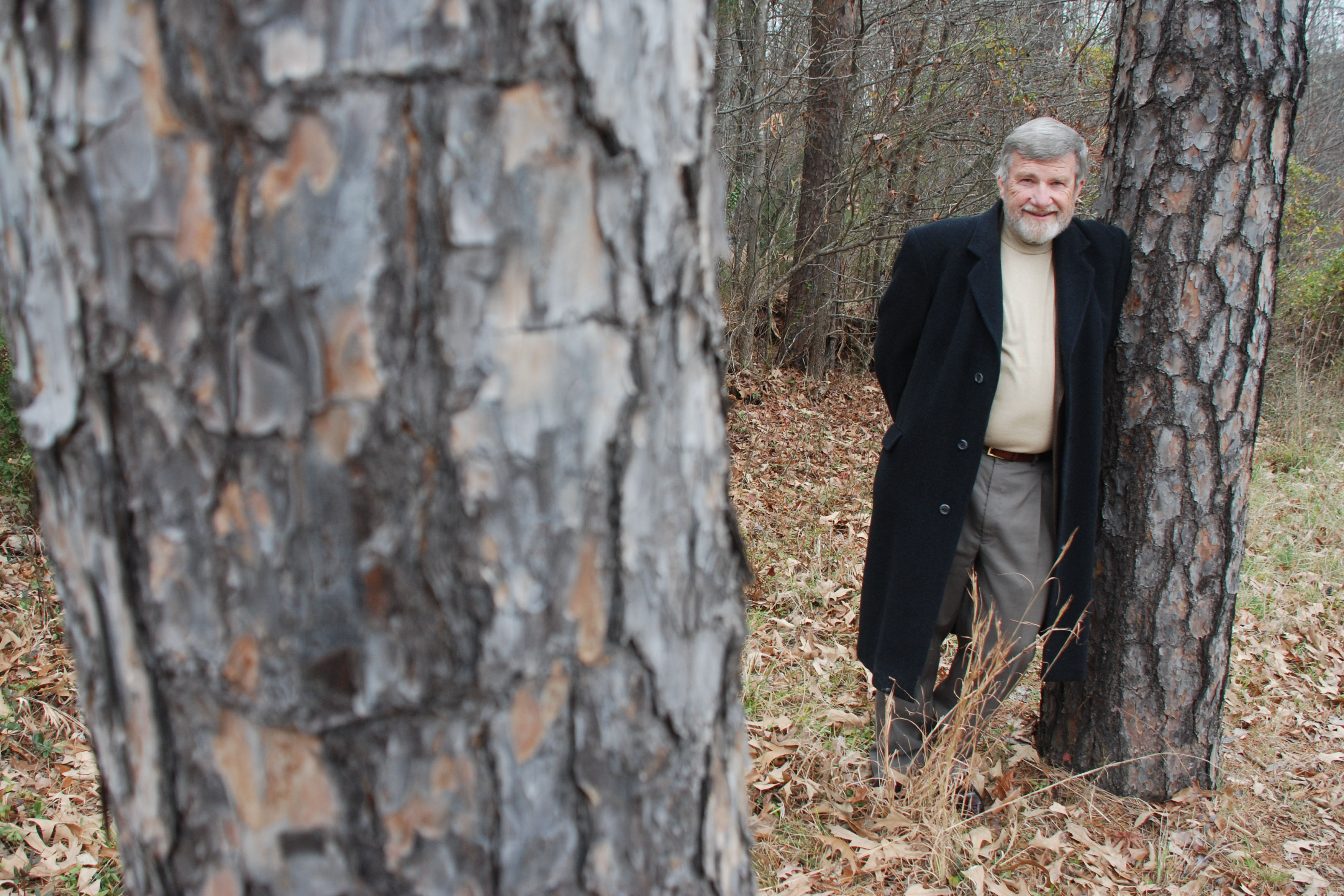
Sullivan identified three essential tasks of an elder: keeping the little things little and the big things big, encouraging creativity, and blessing the young. Writing from what he called “the perspective of one wanting to enter the arc of descent in conscious, peaceful and joyful ways,” he offered both a philosophy and a practice for aging with grace and purpose.
“I am exploring the opportunities of this phase myself,” he wrote. “I am delighted to have the companionship of fellow explorers.”
A Lasting Legacy
John Sullivan was awarded the Elon Medallion, Elon’s highest honor, in 2008. In 2013 the Board of Trustees named a residence hall in The Oaks neighborhood in his honor. But perhaps his greatest honor can be found in the lives of thousands of students whose lives he touched and transformed. They learned from him not just philosophy, but how to live philosophically—how to ask deep questions, to seek wisdom in multiple traditions, to meet darkness with light and to overcome hate with love.
Sullivan and his late wife, Gregg Winn Sullivan, established the Sullivan-Winn Endowed Scholarship to assist students studying philosophy or the humanities. He was a loyal donor to Elon, with 52 years of giving, including gifts to the endowed scholarship and the Elon Academy.
In a career spanning four decades at Elon and continuing long beyond his retirement from the university, Sullivan exemplified the role of teacher-scholar: learned but humble, rigorous but compassionate, intellectually demanding but pastorally caring. He taught that education was not merely about acquiring knowledge but about becoming more fully human, and that the examined life was indeed worth living.
A memorial service for Sullivan will be held on Saturday, April 18 at 1:30 p.m. at the Community Church of Elon.