


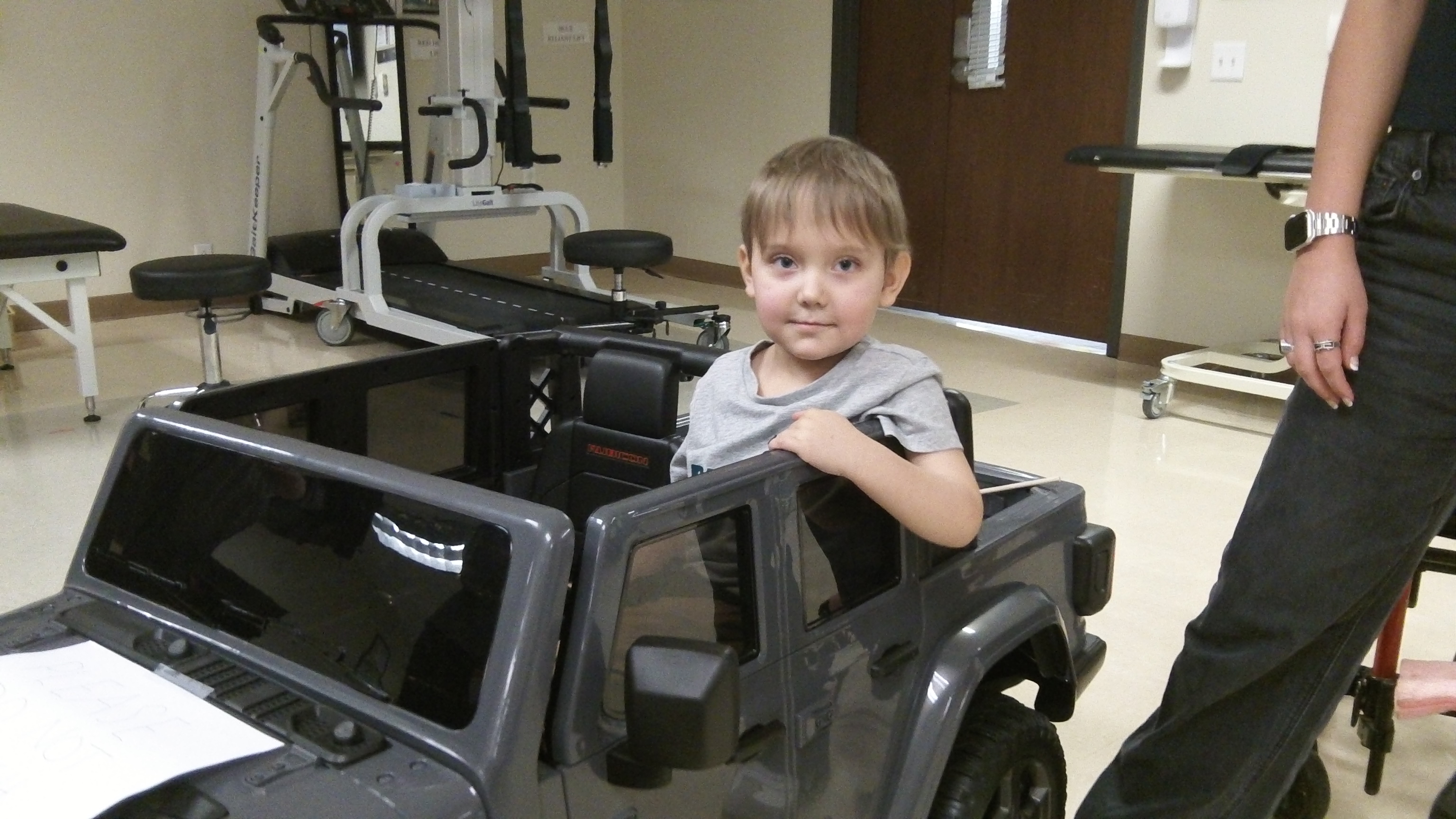
Go Baby Go unites Elon physical therapy students, Elon Engineering Club, and the Phoenix Racing team in a collaborative effort to expand access to early mobility for children with disabilities, beginning with the evaluations and volunteer recruitment.
The Go Baby Go program at Elon University is launching a new interdisciplinary effort aimed at increasing early mobility opportunities for children with disabilities, while giving students hands-on experience in collaborative, community-focused design.
Sirena Hargrove-Leak, professor in the department of engineering, is co-mentoring the Go Baby Go project with engineering students Julianna Millett, Diego Hernandez and Abbey Johnson, who initiated the project as part of the TOM Fellowship Program.
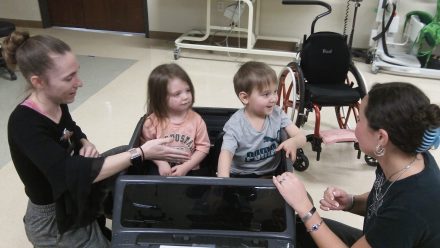
Go Baby Go is a national initiative that modifies ride-on toy cars to meet the individual physical needs of young children who experience mobility challenges. At Elon, the program brings together students from physical therapy and engineering along with members of the Elon Phoenix racing team, to combine clinical insight, technical design, and hands-on fabrication skills. Before cars are built, the team is focused on recruiting student volunteers and connecting with local families for evaluation. These evaluations help determine each child’s specific mobility needs and guide design decisions for the custom ride-on cars.
Paula DiBiasio, associate professor in the department of physical therapy education and a pediatric physical therapist, has run Go Baby Go projects in the past and is co-mentoring the project and is leading efforts to recruit families, and providing the physical therapy evaluations to assess the mobility, seating, and switch needs for the children. For each evaluation, PT and engineering students are working with DiBiasio to gather data, engage with the children/families, and problem-solve the buildout. Together with DiBiasio, the team plans the equipment needed for each individual child’s car.
Physical therapy students play a key role in assessing trunk stability, limb movement and safety consideration, while engineering students contribute to design, electronics, and fabrication planning. Members of the Phoenix Racing team add technical expertise and hands-on problem-solving on the day of the event.
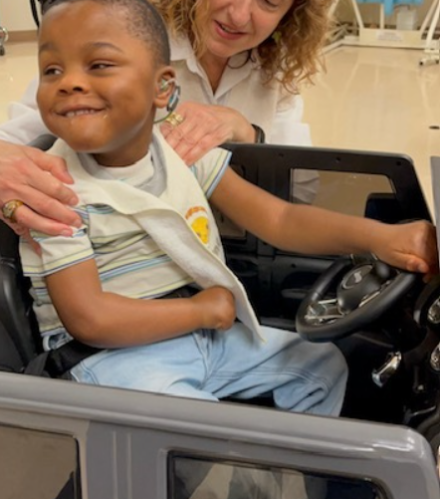
The program not only supports children and families in the surrounding community, but also gives students a unique opportunity to apply classroom learning to a real-world challenge with meaningful impact. By working across disciplines, students gain experience in teamwork, human-centered design, and problem solving.
Students interested in learning more about the program or getting involved can reach out to jmillett@elon.edu or 410-812-8770.