


The assistant professor of anthropology will will bring ethnographic expertise and a commitment to holistic wellness pedagogy to the Center’s ongoing initiatives.
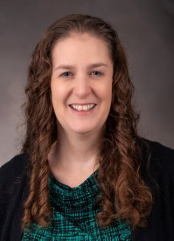
Pamela Runestad, assistant professor of anthropology, has been named the 2026-2028 Scholar for the Center for the Study of Religion, Culture, and Society (CSRCS). During her term, Runestad will focus on resources for faculty and staff with community engaged experiences in their courses. Additionally, she will help build CSRCS capacity for student research, internships and foster campuswide engagement. Runestad will assume her position on June 1, 2026.
“I’m really excited to bring together expertise from CSRCS and PERCS regarding best practices for class site visits to religious sites so that we have resources for faculty and staff who facilitate community engaged experiences as part of their courses. I hope these will be useful for in-house courses and winter term courses abroad,” Runestad said.
CSRCS Director Brian Pennington says that Runestad’s “expertise in Japan and in medical anthropology will bring new skills and insights to the CSRCS. Her commitments to student learning and to campus culture are well known, and we will be excited to welcome her on board.”
Runestad is a Food Studies faculty member and is a medical anthropologist who began to combine interests in biology, social studies, and culture while teaching in Nagano, Japan, from 2000 to 2006. She moved to Honolulu to study medical anthropology in 2006 and returned to Japan for her doctoral research on HIV/AIDS, supported by Fulbright-Hays and the Crown Prince Akihito Scholarship Foundation, from 2009 to 2013. She is particularly interested in medical narratives, and biocultural aspects of infectious disease, chronic conditions and nutrition.
“As a medical anthropologist, I’m also excited to contribute to the ‘Bridging Faith and Health’ microcredential and related conversations about interdisciplinary health and human experience on campus. My own research explores socio-cultural and religious components of maternity clinic strategies to engage patient-clients as the birthrate continues to decline in Japan,” said Runestad. “Sometimes religious underpinnings of everyday practices are difficult to discern or are more complicated than they appear at first glance. Attending to those underpinnings can make root causes of social issues clearer.”