


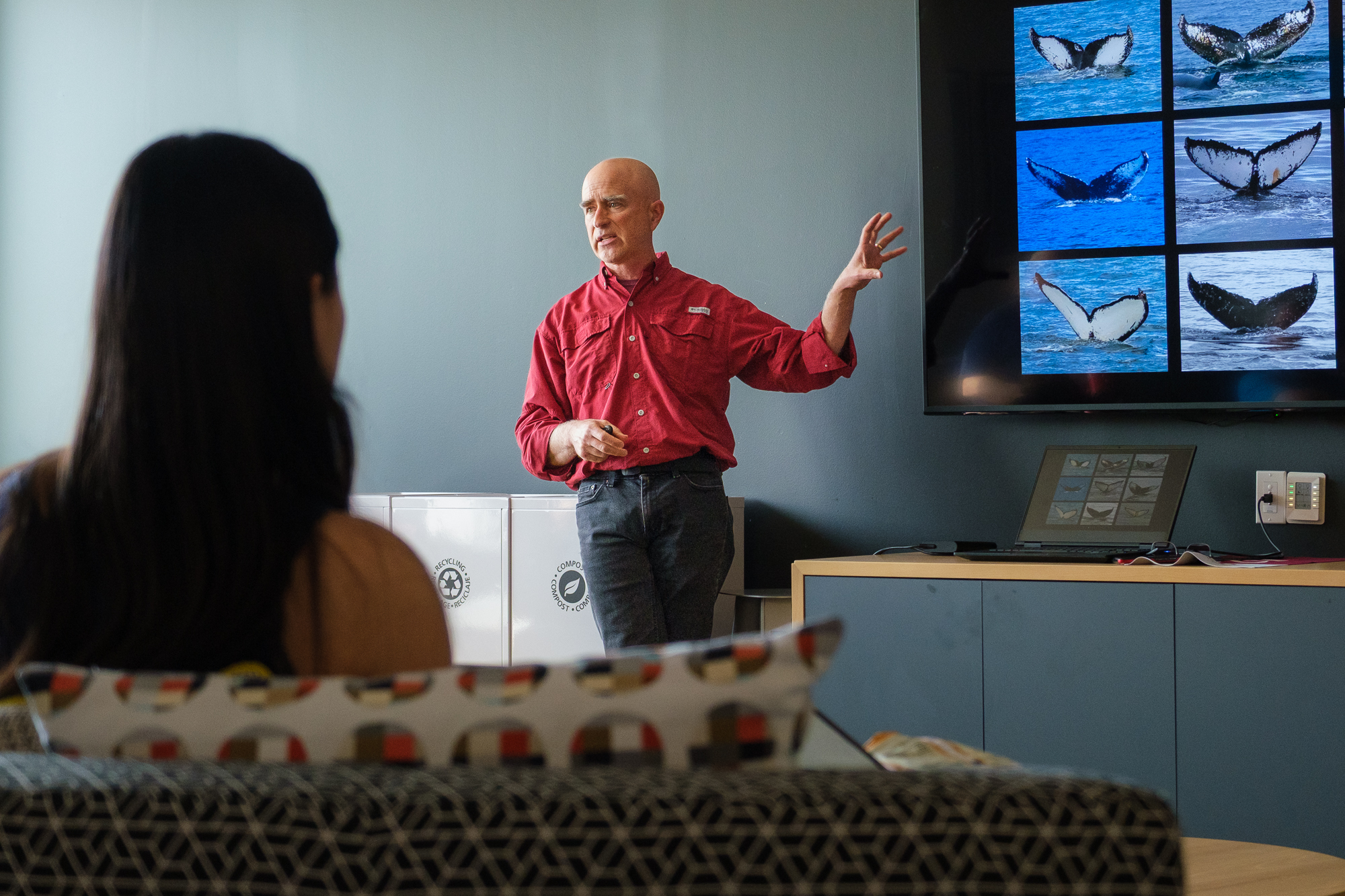
From whale tails to climate change, a story of minimally invasive research providing data in the polar regions
Through his work as a naturalist and expedition guide with National Geographic–affiliated programs, Instructor of Physics Tim Martin helps interpret geological and climatic processes in the rapidly changing polar landscapes. Newer technologies like remote cameras and drones allow for minimally invasive data collection techniques in modern polar research. For example, scientists studying whales often rely on photographic identification of tail flukes, which function like unique fingerprints, allowing individuals to be tracked over time without physical capture.
Similar low-impact approaches are used in ice flow and climate research, including remote sensing, photography, and observational fieldwork of ice flows and glacier dynamics.
Hosted weekly by the Department of Physics and Astronomy, Physics & Astro Tea promises engaging discussions, thought-provoking ideas and a delightful spread of refreshments. Open to all students, faculty and staff, this gathering is the perfect opportunity to connect with fellow physics aficionados in a relaxed and informal setting. Meetings take place in the third-floor lounge of Innovation Hall at 3:20 p.m. on Wednesdays.