


Through a series of immersive excursions, students examined how art, architecture, and urban development intersect to shape the identity of Los Angeles, past and present.
This semester, students in the Study USA Los Angeles program taking the LA Issues and Art History course stepped beyond the classroom and into the city itself, engaging directly with some of Los Angeles’s most iconic cultural and historical landmarks.
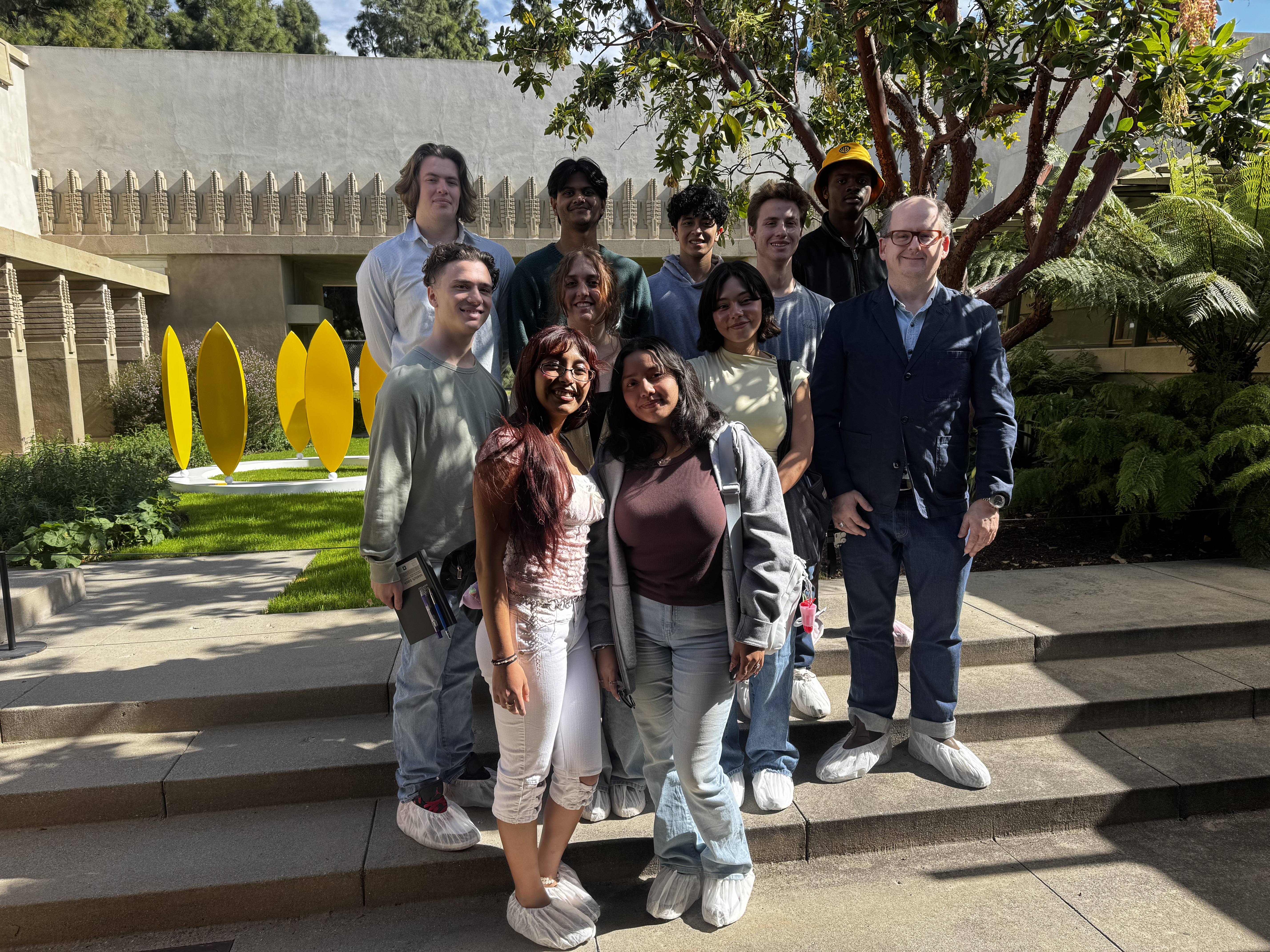
Hollyhock House at Barnsdall Art Park
Perched atop Olive Hill, the Hollyhock House stands as one of Frank Lloyd Wright’s most significant West Coast works and a UNESCO World Heritage Site. Built in the early 1920s for oil heiress Aline Barnsdall, the home represents Wright’s experimentation with blending architecture and environment, what he called “organic architecture.”
Students explored the house’s Mayan Revival influences, geometric motifs and the iconic hollyhock flower design woven throughout the structure. The site offered a powerful introduction to how Los Angeles became a testing ground for architectural innovation, especially during a time when the city was rapidly expanding and redefining itself culturally.
Downtown Los Angeles: Layers of History and Movement
Traveling via the Los Angeles Metro, students experienced the city as Angelenos do, through its evolving public transit system, before diving into the heart of downtown.
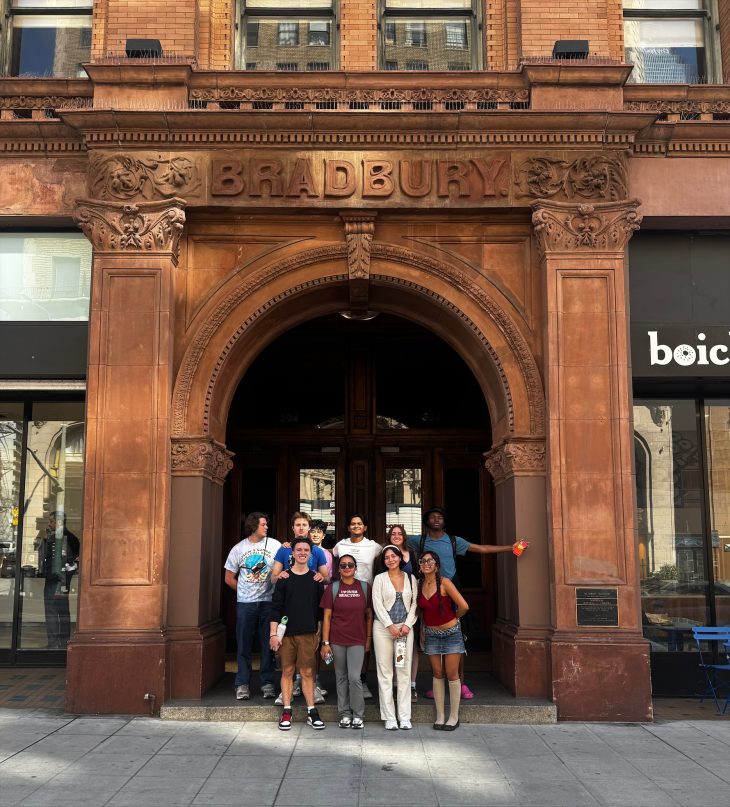
Union Station – Opened in 1939, Union Station is often called the “Last of the Great Railway Stations.” Its architecture blends Spanish Colonial Revival, Mission Revival, and Art Deco styles, reflecting Los Angeles’s layered cultural identity. Inside, students observed the grandeur of its waiting rooms, tiled floors, and wooden beam ceilings, symbols of a bygone era when rail travel defined urban movement.
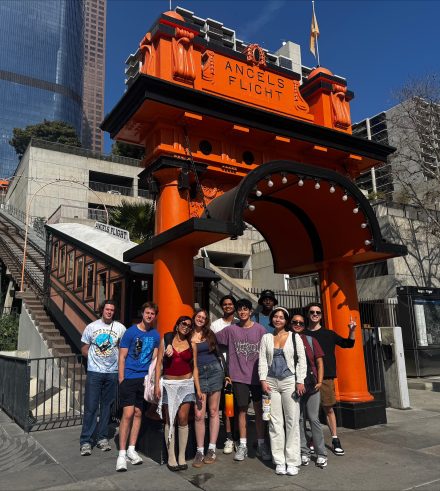
Angels Flight – Just a short walk away, Angels Flight, the world’s shortest railway, offered insight into the city’s early 20th-century infrastructure. Originally built in 1901, the funicular once transported residents up Bunker Hill, a neighborhood that has since undergone dramatic redevelopment. Its preservation speaks to ongoing efforts to maintain pieces of Los Angeles’ historic fabric amid modernization.
Los Angeles City Hall & Chinatown
At City Hall, students discussed civic architecture and governance, noting the building’s Art Deco style and symbolic prominence in the LA skyline. Nearby Chinatown provided a contrasting cultural lens, highlighting immigrant histories, urban displacement and the evolution of ethnic enclaves in Los Angeles.
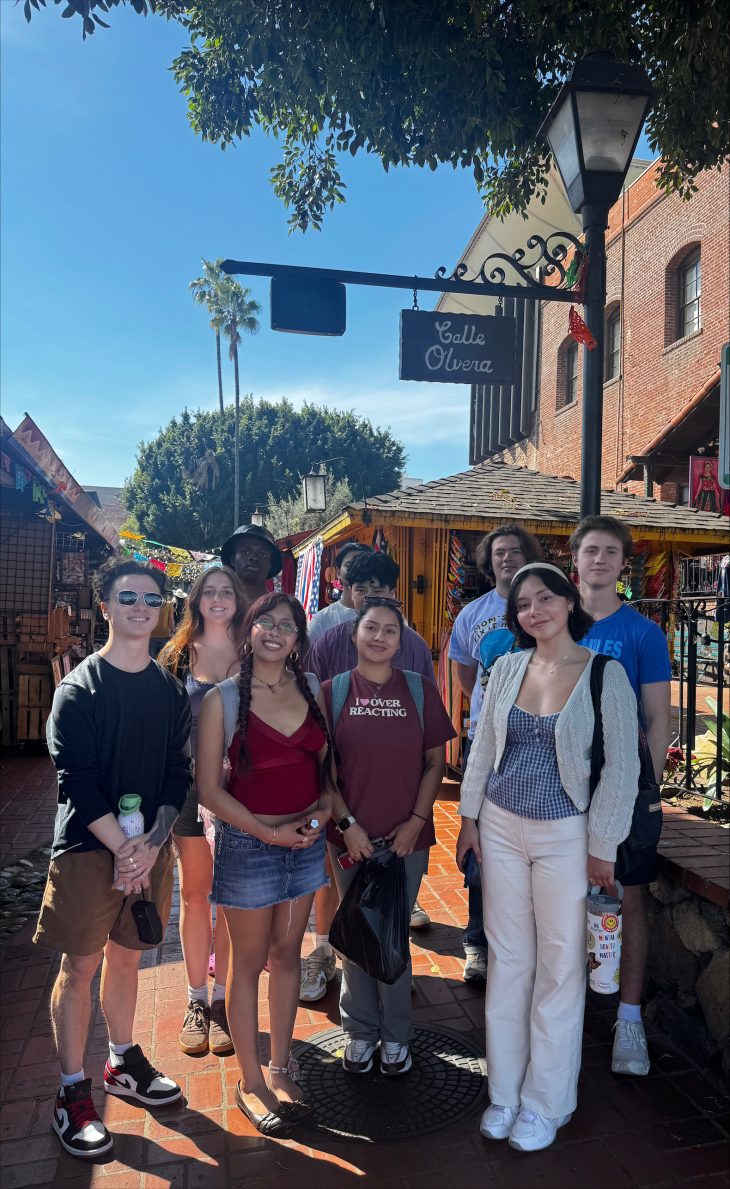
Olvera Street
Often referred to as the birthplace of Los Angeles, Olvera Street immerses visitors in Mexican-American heritage. Students explored its marketplace, murals and historic buildings while discussing the complexities of cultural preservation versus commercialization. The site reflects both celebration and simplification of heritage, an important conversation in art and public history.
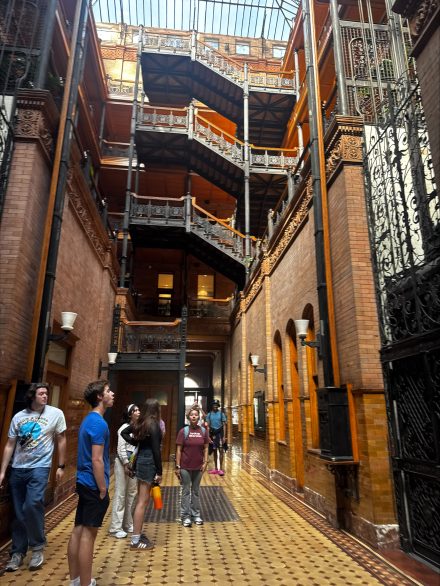
Angelus Temple & Echo Park
In Echo Park, students visited Angelus Temple, a striking example of early 20th-century religious architecture and a cornerstone of the Foursquare Church movement founded by evangelist Aimee Semple McPherson. Built in 1923, the temple reflects a blend of revivalist architecture and emerging media-savvy religious practices, as McPherson was one of the first to use radio to reach a national audience.
The surrounding Echo Park neighborhood added another layer to the visit, offering insight into how communities evolve over time. Once a streetcar suburb, Echo Park has transformed into a culturally vibrant area shaped by waves of immigration, artistic communities, and, more recently, gentrification. Together, the site and neighborhood sparked discussion on the intersection of faith, media and urban change.
The Gamble House
In Pasadena, students visited the Gamble House, a masterpiece of the American Arts and Crafts movement designed by architects Charles Sumner Greene and Henry Mather Greene in 1908. Commissioned by the Procter & Gamble family, the home emphasizes craftsmanship, natural materials, and harmony with its surroundings.
Students examined intricate woodwork, custom furnishings, and the intentional use of light and space—hallmarks of the Arts and Crafts philosophy, which emerged as a reaction against industrialization. The visit provided a striking contrast to Wright’s modernism, allowing students to compare different architectural responses to similar cultural shifts.
Looking ahead: Final excursions
As the semester continues, students will expand their exploration of the city’s artistic and architectural landscape with one final site visit.
The course will conclude with a visit to the Walt Disney Concert Hall, designed by renowned architect Frank Gehry. Celebrated for its sweeping stainless-steel forms and innovative acoustics, the building stands as a defining example of contemporary architecture in Los Angeles. Here, students will consider how modern design continues to push artistic and structural boundaries while shaping the city’s global cultural identity.
These excursions bring course themes to life, allowing students to critically engage with Los Angeles as a living museum. From early 20th-century architectural movements to the layered cultural histories embedded in downtown neighborhoods and beyond, each site offers a unique perspective on how art and environment shape one another.
By navigating the city firsthand, students not only deepen their understanding of art history but also develop a stronger connection to LA itself—its stories, its communities and its ever-evolving identity.
The immersive Study USA Los Angeles semester and summer experiences offer students opportunities for alumni engagement, community service, unique academic classes with industry professionals and site-based experiential learning. Applications for Spring 2027 are open now.