


Elon students can develop a deeper understanding of sustainability through global experiences abroad, including the ways they travel, interact with communities and engage with different cultural practices. Learning from different cultures helps shape how the Elon community understands and engages with sustainability beyond the borders of campus.
With over 78% of students participating in study abroad before they graduate, Elon sustainability inherently incorporates global sustainable practices. Whether that be through direct study abroad programs that target sustainable behavior or exposure to different practices across cultures, Elon community interactions with sustainability don’t stop at the borders of campus. Students, faculty and staff interact with campus in a multitude of ways and differing practices across the world shape how the Elon community understands local sustainability.
The Boldly Elon Strategic Plan includes an institutional goal to reach carbon neutrality by 2037. Study abroad travel represented roughly 22% of Elon’s 2025 greenhouse gas emissions. Boldly Elon also includes a priority to expand access to global education opportunities, which means study abroad emissions are not a source of emissions that will be actively reduced. As a result, the Office of Sustainability and the Global Education Center (GEC) created a Carbon Neutral Global Engagement Initiative starting in fall of 2020. This initiative includes the purchase of verified carbon offsets on an annual basis to counteract the carbon impact of global engagement travels.
Studying away more sustainably also requires intentional actions taken by Elon community members to consider environmental stewardship while abroad. The Office of Sustainability and Global Education Center have curated a list of actions students, faculty and staff can take before departure, while they’re away, and when they return home. Across courses and countries, there are many actions that can be taken to support reducing one’s environmental footprint while abroad. Similarly, learning how different countries and cultures approach sustainability can have a bigger impact than any one initiative on its own.
When abroad, regardless of interests, interacting with sustainability is as easy as walking down a new road or talking to community members about their daily practices. Students across Italy, Germany and New Zealand have had direct and indirect interactions with differing sustainable practices.
Italy: Anna Keller, ’28
While studying in Italy in spring of 2026, Anna Keller ’28, a Teaching Fellow, noticed sustainability through both city infrastructure and everyday life. In Florence, Keller experienced accessible and affordable public transportation throughout her travels as well as access to a diverse waste-sorting container system. Whether it be “residio non differenziabile (residual waste), organico (food waste), carta e cartone (paper and cardboard), imballagi e contenitori (packaging and containers) and vetro (glass),” Italy provided an urban landscape that naturally incorporates environmentally conscious waste management strategies.

Within this urban setting, Keller also learned to appreciate the small parts of daily life that reflected the city’s efforts to incorporate sustainability into the daily norm. The abundance of parks, gardens and green spaces provides opportunities to connect with nature daily, while compostable grocery bags normalize small acts of widespread environmental stewardship.
Cultural differences also provided another perspective on sustainability as a way of life rather than a separate initiative. Keller observed families that grew their own food, raised animals, produced olive oil and made products such as soap, bread and chapstick themselves, all of which are “just their philosophy of living”. A global study away experience laid the foundation for Keller, among other community members involved in this trip, to deepen their understanding of sustainability while learning from a diverse array of communities.
Germany: Caroline Halso ’27
While living in Germany in Spring of 2026, Caroline Halso ’27 experienced drastic shifts in daily sustainability practices. Due to their recycling system, Halso described having to re-learn how to recycle as they have seven different bins. These bins included thin plastic recycling as well as a series of bins to sort glass based on color. This waste disposal system in Germany makes recycling an easy personal habit for Germans and contributes overall to their environmentally responsible behaviors.
Similar to Keller’s experience in Italy, Halso also discussed the impacts of city-wide incentives to bring reusable bags when shopping and be conscious of individual plastic consumption. As Germany does not allow thin plastic bags, there is no other option but to bring reusable tote bags to stores. To further incentivize reducing plastic waste, grocery stores also offer a system where you can return plastic bottles for 15 cents. At the end of her study away experience, Halso returned all collected bottles in exchange for 5 euros off her groceries.
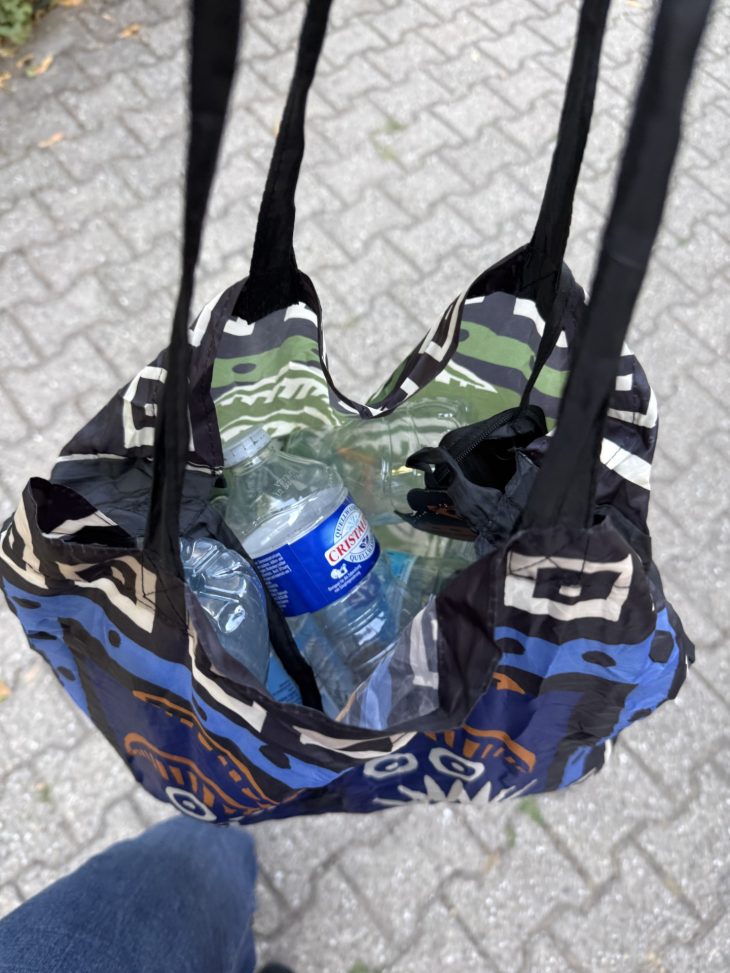
Outside of cultural differences, one act of intentional sustainability Halso remarked on in her travels abroad is her programs’ “flow market.” While this is not a system put in place by Germany, the program offered a system where, at the beginning of a semester, household goods such as coat hangers, towels, sunscreen and other products are available to all students. Following the end of the semester, people traveling abroad could then return unused items for future students, faculty and staff in the program to continue to use. This circular system eliminates overconsumption and excess waste between travel-away programs while also providing support for community members finding their footing in a new country.
New Zealand: Kate Ponder ’28
For Winter Term 2026, Kate Ponder traveled away with one of Elon’s New Zealand: Critically Engaged Ecotourism courses that focus directly on environmental stewardship and sustainability. This course allowed students to have a study abroad opportunity directly connected to sustainable experiences.

In New Zealand, there is something called the Tiaki Promise, which is a community-based commitment to care for the land, both now and for future generations. Ponder explains that under this promise “there are five key principles: protect nature, keep New Zealand clean, be prepared, drive carefully and show respect.” This community commitment reflects a broader social culture of environmental stewardship employed on the daily by New Zealand. Under this broader culture, Ponder reflected on small actions that were encouraged for all residents, permanent or temporary in their travels.
“Every hostel had signs on the bathroom mirrors reminding guests to be mindful of their water usage and to limit unnecessary consumption,” said Ponder. “In most of the hostels we stayed at, we brought and prepared our own food, which helped reduce the food waste that often comes with hotel buffets. Everyone was also responsible for providing and reusing their own towels, meaning fewer loads of laundry were needed to maintain the rooms for new guests.”
Under the Tiaki promise, this Winter Term course also had open discussions around the dissonance between the class focus on ecotourism and the fact that flying from the United States to New Zealand creates a significant carbon footprint in the process. Differing from student experiences in places like Italy or Germany, this global education experience intentionally prompted community conversations of sustainability.
“Sustainability was interwoven into every activity and discussion throughout the trip,” Ponder said. “Our class spent time cutting down and removing invasive species to allow native plants to thrive. During all of our excursions, from zip-lining, to whitewater rafting, to a guided tour with the Otago Peninsula Eco Restoration Alliance (OPERA), the guides took time to inform our group about the different sustainability initiatives they had in place and how part of the cost we paid for each activity was dedicated to supporting those initiatives.”
Whether traveling abroad in Europe or Oceania with courses that do or do not intentionally discuss environmentalism, global sustainability across cultural environmental differences provides the Elon community an opportunity to understand, reflect and learn more about sustainable actions.
Global travel directly connects to the Transportation Goal in Elon University’s Sustainability Master Plan 2025. Learn more about the Sustainability Master Plan 2025.