


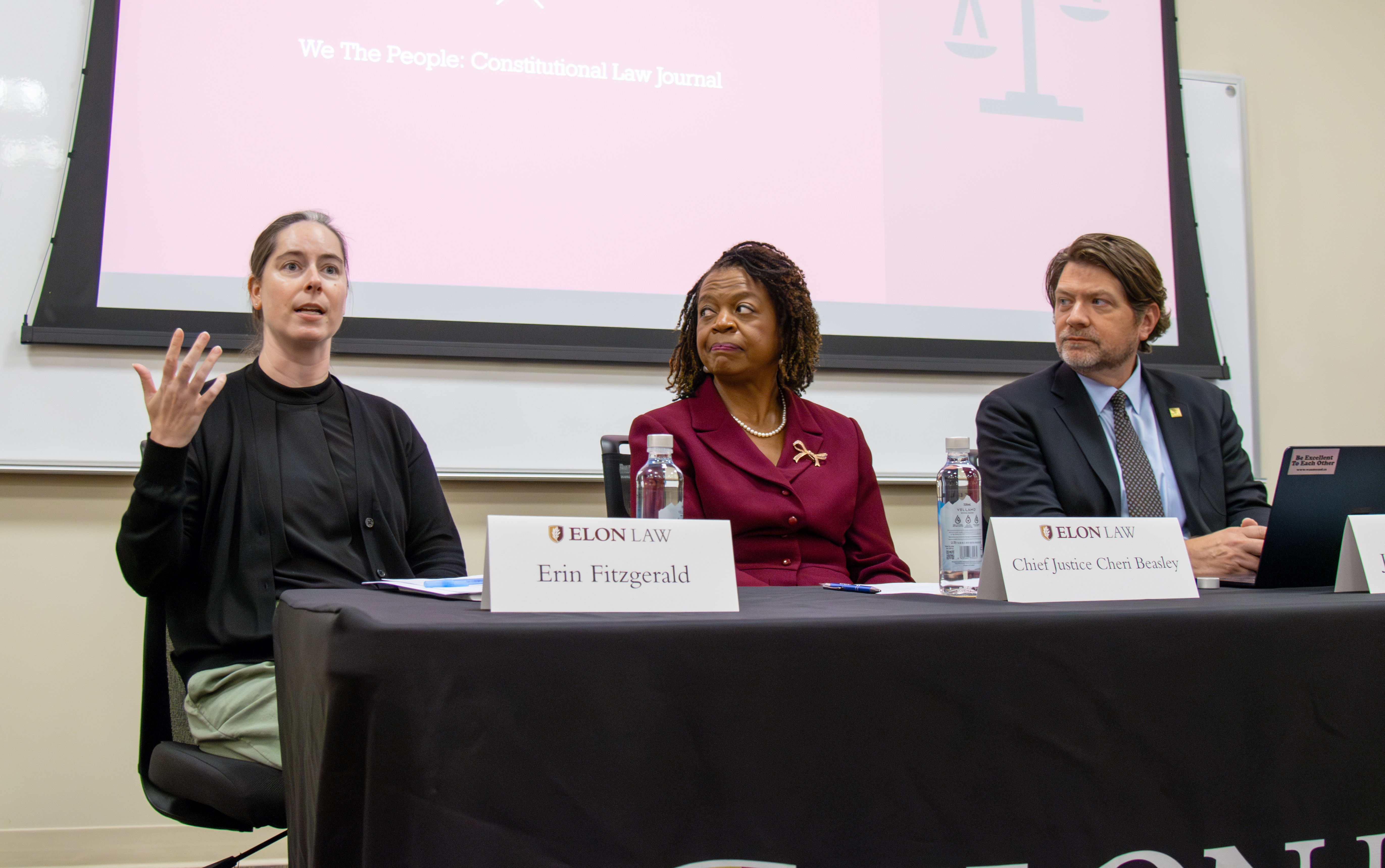
A panel discussion hosted by We the People: Elon Law’s Constitutional Journal explored recent changes in immigration enforcement and why attorneys and the courts are vital to preserving due process and the Fourth Amendment's protections.
The Fourth Amendment to the U.S. Constitution promises protection against unreasonable searches and seizures, yet its application differs sharply between criminal and civil proceedings.
Those distinctions can determine who has access to legal counsel, when warrants are required, and what remedies exist when rights are violated.
That complex divide was the focus of a panel discussion hosted by We The People: Elon Law’s Constitutional Law Journal on Oct. 7, 2025. “Unlawful or Unprotected? 4th Amendment Rights in Criminal vs. Immigration Detention” attracted a standing-room-only crowd to Room 204 at Elon Law’s downtown Greensboro campus, with discussion and response to audience questions lasting more than an hour and a half.
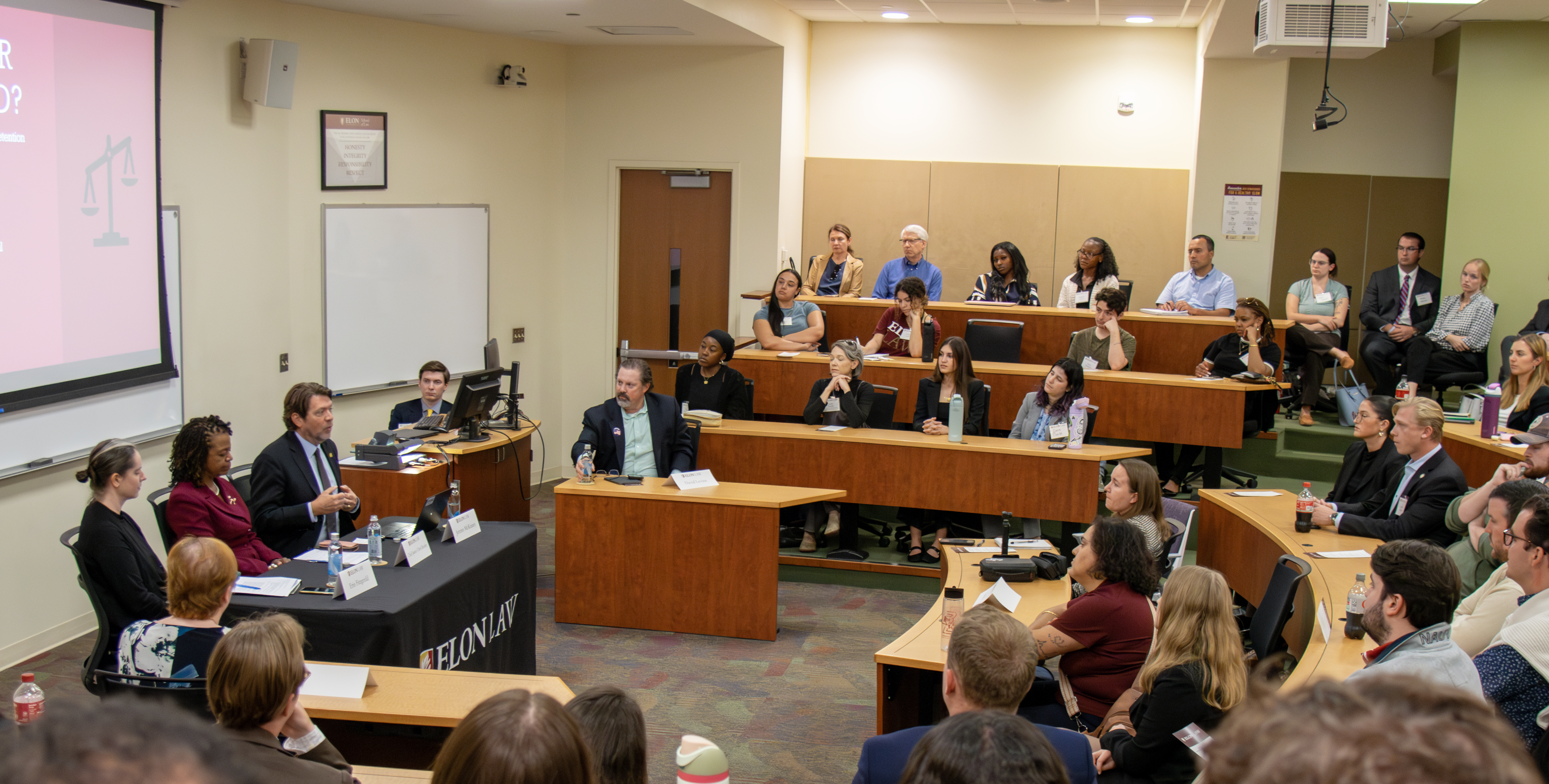
Panelists Cheri Beasley, Sandra Day O’Connor Professor at Elon Law and former chief justice of the N.C. Supreme Court, Erin Fitzgerald, assistant professor of law and a former prosecutor, and Jeremy McKinney, a renowned immigration attorney, explored variability in Constitutional protections and how those safeguards operate in practice. Their discussion was moderated by Professor of Law David Levine.
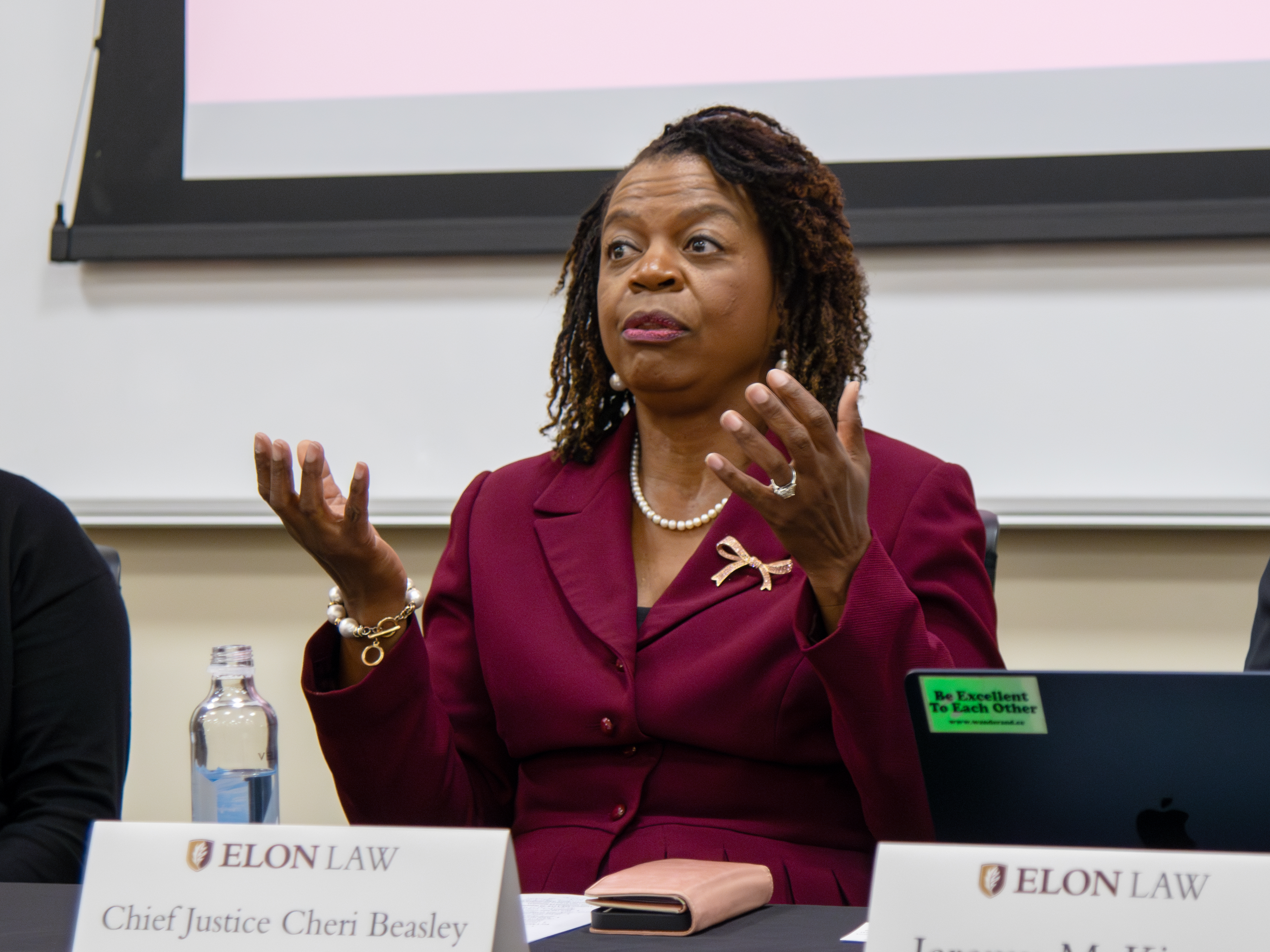
“Courts are grappling in real time with evolving issues,” Beasley said, noting a trend of brief orders and rulings from higher courts clouding how lower courts should respond. “Appellate courts sometimes use brief or per curiam dispositions. When major questions are resolved on abbreviated orders, the U.S. Supreme Court’s so-called ‘shadow docket,’ the lack of reasoning can disserve the public and the bar” through lack of legal guidance.
Fitzgerald explained that searches and arrests generally require a warrant supported by probable cause, except in limited, well-defined circumstances such as emergencies or brief investigative stops. Lesser encounters — like brief detentions or frisks — require only reasonable suspicion that criminal activity is afoot.
“In the simplest terms, the Fourth Amendment protects people and their ‘persons, houses, papers, and effects’ from unreasonable governmental searches and seizures,” Fitzgerald says. “We care because we all have boundaries — our phones, cars, homes. … Knowing these standards is how we protect our rights.”
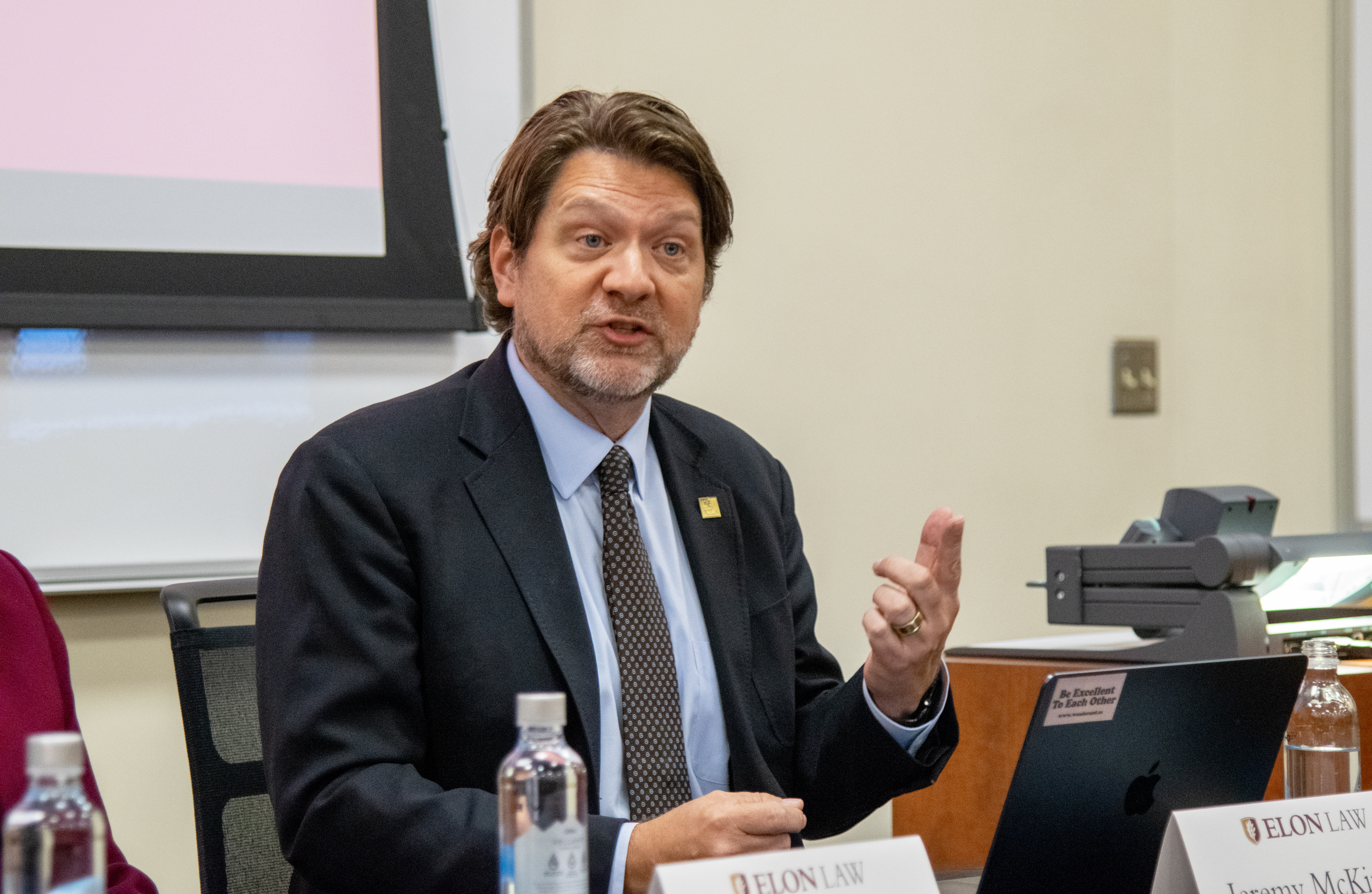
McKinney described how the same standards don’t necessarily apply in immigration matters, where proceedings are considered civil. People questioned or detained by Immigration and Customs Enforcement (ICE) agents have a right to remain silent, may refuse entry to their homes without a judicial warrant, and can ask to speak with an attorney — but those rights are grounded in statute, not constitutional law. Because immigration cases are civil, the exclusionary rule that suppresses illegally obtained evidence in criminal court rarely applies.
Beasley expanded on the practical challenges this creates for courts and communities, noting that individuals are sometimes held in local jails at federal request and that many detention centers are privately operated, complicating oversight and access to due process.
“Detention usually implies criminal punishment, but immigration detention is labeled civil, and that fluidity raises due process concerns: Who may be held, where, under what conditions, and with what rights?” Beasley said. Despite these complexities, she said, lawyers and judges play a crucial role in upholding fairness, transparency, and public confidence in the legal system.
McKinney detailed a recent case where an immigrant was mistaken for someone on a watch list with the same name. He was detained and interrogated without a judicial warrant and held at a facility in Georgia, though McKinney said it was clear his client wasn’t the individual the government was looking for. The client posted bond, but ICE invoked an “automatic stay.” McKinney freed his client through a writ of habeus corpus — challenging the lawfulness of government detention — but hiring an attorney to take that step is cost prohibitive for many.
He cautioned that knowing your rights may not matter as much in the current climate if those “feel ignored on the ground.”
“The government can’t have it both ways — calling people ‘criminals’ while denying criminal-procedure protections in what it labels as civil proceedings,” McKinney said.
Panelists closed by urging future lawyers to understand these boundaries, help clients know their rights, and uphold justice in every setting — criminal, civil or otherwise.
“Lawyers and courts are pushing back and upholding the rule of law,” Beasley said, noting why she is encouraged during a challenging moment for democracy. “The pendulum swings, but advocacy, teaching and judging move the needle. To our students: It’s a good time to be a lawyer. Your work changes lives and strengthens institutions.”