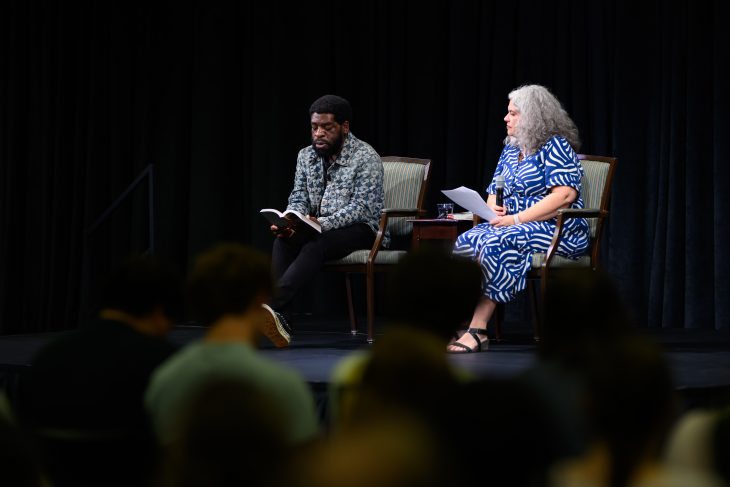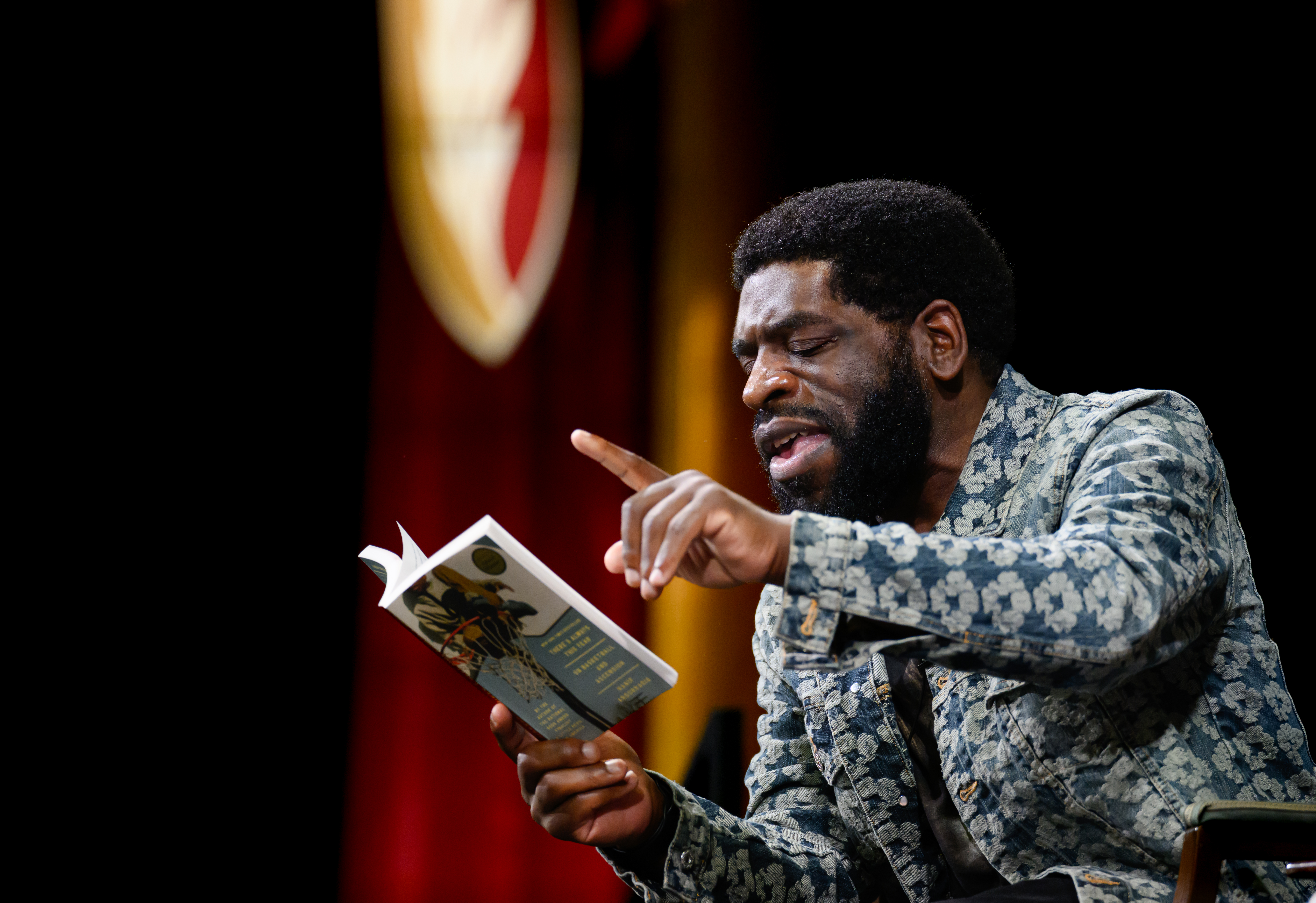
Abdurraqib's memoir "There's Always This Year: On Basketball and Ascension" was chosen as the 2026-27 Common Reading.
In Hanif Abdurraqib’s “There’s Always This Year: On Basketball and Ascension,” the poet, essayist and cultural critic writes a love poem to the people and places that shaped him, demonstrating how love can make the ordinary iconic. During his Common Reading lecture on Sept. 29, Abdurraqib connected that idea to something central to Elon’s mission: mentorship.
“You want to build your own internal Hall of Fame that adheres to what you know, what you love and the people who define a childhood for you,” he said. “I was fascinated to think about and write about the stories of the basketball communities that I grew up in that were players who were ‘LeBron-like’ to me before LeBron.”
Part poetry, memoir and meditation on history and modern culture, “There’s Always This Year” was selected as Elon University’s 2026-27 Common Reading. Incoming first-year students read the book over the summer before exploring it from a variety of perspectives with their First-Year Foundations instructors during their first year at Elon.
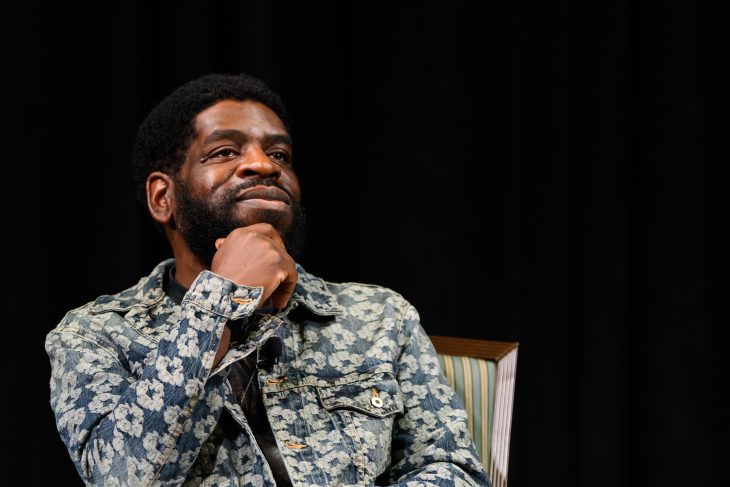
Abdurraqib, a native of Columbus, Ohio, is the author of several poetry and essay collections and books that have earned national acclaim. His 2021 book, “A Little Devil in America,” was a finalist for the National Book Award, National Book Critics Circle Award and PEN/Diamonstein-Spielvogel Award for the Art of the Essay. It won the 2022 Andrew Carnegie Medal for Excellence in Nonfiction and the Gordon Burn Prize.
For the Common Reading lecture, Abdurraqib sat down with Paula Patch, teaching professor of English, for a conversation in Alumni Gym. Interspersed with selected readings from the book, their discussion explored Abdurraqib’s writing process, the stories he chooses to tell and the people and places that shape his work.
“There’s Always This Year” is divided into four quarters, like a basketball game played by Abdurraqib’s favorite team, the Cleveland Cavaliers. But the structure took time to develop, and Abdurraqib readily described his initial draft as “bad.”
“I really took seriously the conceit of the countdown, and so the whole thing was flipped. The fourth quarter was once the first quarter. So, it began backwards. It was difficult, but it wasn’t good, and I think this idea that I had written a very hard book, I was so proud of that,” he said. “I remember feeling so proud when I turned it into my editor … She was very impressed by the rigor of it, but it wasn’t a good book. So, I think one thing that is challenging for writers is to humble oneself.”
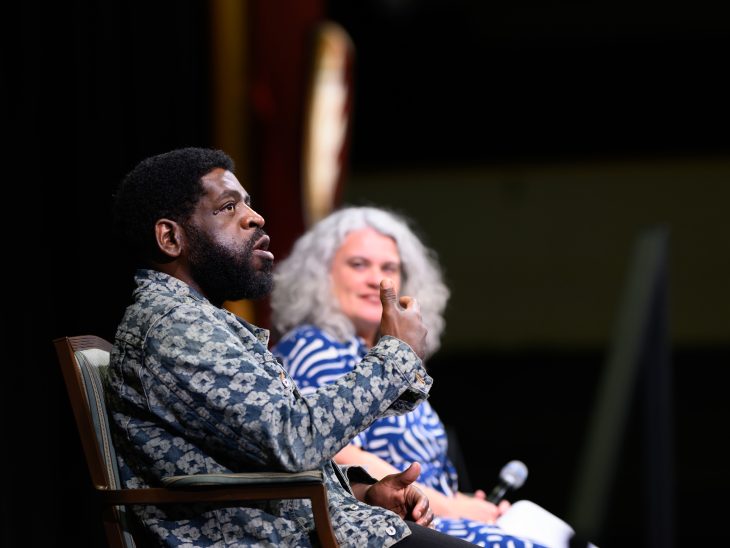
Abdurraqib said he often begins writing without knowing exactly what a book will become, allowing curiosity to guide the process.
“The function is, I have a single curiosity that around it has a garden that has not yet bloomed and I’m writing to find the proper ways to water that and feed that,” he said. “I really do think you can come to this book and get reflected back to you what you most want. … I think the idea of writing a book was to create these small illusions to give people the idea that they’re reading one thing when they’re actually reading something else.”
Abdurraqib still lives in Columbus and feels a strong sense of responsibility to the city and the people who shaped him. That connection emerged throughout the conversation as he reflected on what it means to call a place home — and what it means to document that place as it changes.
“I really value that people there have known me since I was a kid, and I lot of people looked out for me since I was kid,” he said. “(The city) is just a bunch of gray, monochromatic columns. They’re tall, gray, metal … that no one really lives in because the city is trying to build itself up for a population it imagines will arrive, and it’s doing that at the expense of the population that already exists. So there’s a way that staying there and writing from the perspective of the city, both the city that is and the city that was, is an archival tool.”
That responsibility to people and place also informs how Abdurraqib thinks about mentorship. He told the audience that mentorship does not always have to take a traditional form.
He recalled a group of children who were beaten by police after stealing candy from a store. In response, drug dealers Abdurraqib grew up around began asking the children to hold their jewelry while they played basketball, paying them for the task.
For Abdurraqib, that seemingly small gesture offered a different possibility to young people in his community — and expanded his understanding of what it means to look out for someone else.
“That’s a level of mentorship that builds an ideology that still propels me to this day,” he said. “I ask the question of, ‘What of myself can I offer to someone that might rescue them momentarily from another life that is different from their current life?’”