

'Mentoring Constellations' That Support Undergraduate Research Across the Globe
At its core, research is more than collecting data – it’s about fostering meaningful relationships that drive deeper understanding.
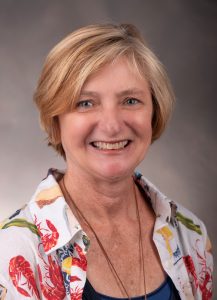
Professor Maureen Vandermaas-Peeler, founding director of Elon’s Center for Research on Global Engagement
At Elon University, undergraduate research is rooted in thoughtful engagement – not only with research subjects but also with project mentors. This philosophy, explains Professor Maureen Vandermaas-Peeler, founding director of Elon’s Center for Research on Global Engagement, underscores a commitment to high-quality, collaborative research.
For students conducting research internationally, preparation is key. “One way to prepare students who are going to a different country is to meet people online first – to hear from them, ‘What should I be thinking about before I come?’” Vandermaas-Peeler says. Engaging with communities in advance helps students gain a deeper understanding of the cultures and contexts they will encounter.
One example at Elon University is the Multifaith Scholars program, where students interact with the Burlington Masjid and local refugee communities before traveling abroad. Pre-departure engagement ensures that students are not just visitors but informed participants in cross-cultural research.
“Students can’t just arrive in a different community without extensive preparation,” Vandermaas-Peeler says. “They need to practice interviews, understand local customs, and reflect on their own identities in relation to the places they are researching.”
Mentorship also remains a guiding force throughout the research process, often spanning multiple years and evolving alongside the student’s academic journey. Vandermaas-Peeler says it’s common for faculty to work with students for two-plus years.
Together, a faculty mentor and student preparing for a global research topic will map out a pre-departure plan, where students engage in methodological coursework, cultural competency workshops, and identity reflection exercises. This underscores a larger reality: impactful research requires mentorship from multiple sources.
Stories of Mentoring in a Global Context
In Belize, Digging Into the Past Helps Shape the Future

For more than a quarter century, Rissa Trachman has conducted archaeological research in a vast, 250,000-acre conservation area in northwestern Belize, uncovering the lives of ancient Maya civilizations.
Having first arrived in Belize as an undergraduate in 1997, today’s J. Earl Danieley Distinguished Professor now leads the same field school that once shaped her academic path.
Trachman’s work is deeply intertwined with student learning. Each summer, she takes 6-8 Elon students to Belize, immersing them in excavation, artifact analysis, and fieldwork. “I think of my students as collaborators in the research process,” Trachman says. “Including undergraduates in the research only makes the research better.”
She ensures students have an immersive experience like her own. Workdays are long – eight hours in the field or lab – and in the evenings, students engage in cultural exchange, learning from each other and their surroundings.
The preparation and mentoring begin months before they depart. Trachman assigns readings about Maya background and research methods, provides access to a personal website with preparatory materials, and conducts two mandatory individual meetings beforehand. The goal is to comprehensively prepare students for the conditions where they will live communally with others.
“This is not the same, in general, as a prep course for studying abroad,” Trachman says. “It’s a field school. They will learn how to do archaeology, while actually doing archaeology. It is the most hands-on thing you could possibly do – the epitome of hands-on learning.”
Learning to Draw Laughs: Comedy Courses Give Students a Stage in Los Angeles

Kai Swanson understands the call to the stage having performed standup since their teens. That experience helps the assistant professor of cinema and television arts connect with students in their Comedy Writing and Comedy Production courses in Los Angeles.
“Many students come to L.A. interested in comedy as a career or creative outlet but haven’t yet had access to academic spaces that focus exclusively on the art and craft of comedy,” Swanson says. “These courses fill that gap.”
Swanson assigns students a pre-semester task to list 25 favorite comedies – spanning books, films, characters, or digital content – and analyze common themes, forms or physicality in their selections. Coursework covers American comedy history, global influences, and underrepresented comedic traditions while studying formats from standup to sketch writing and screenplays.
Beyond the classroom, students gain real-world experience. Industry professionals like comedian Fahim Anwar and alumni Jay Light ’12 and Michelle Leibel ’14 offer insights, while The Nitecap in Burbank provides a space to workshop material, thanks to Swanson’s connection with club owner Aaron Mliner.
“L.A. is one of the top cities in the world to study comedy,” Swanson says. “Being here allows students to immerse themselves in that ecosystem – not just as audience members, but as participants engaging directly with working comedians and writers.
“It gives them a tangible sense of the industry, the lifestyle, and whether this path is right for them in a way no classroom setting ever could.”
In her role leading Elon’s participation in the inaugural cohort of the American Council on Education’s Learner Success Lab, Vandermaas-Peeler joined faculty and staff to study the landscape of mentoring in higher education. Through more than 100 interviews, they found that students thrive when they have a broader, more holistic support system of their choosing.
That research shaped Elon’s emphasis on “mentoring constellations” – a dynamic model where students receive support from multiple mentors, including faculty, peers and professionals. This approach ensures that students benefit from diverse perspectives and specialized expertise.
Students can’t just arrive in a different community without extensive preparation. They need to practice interviews, understand local customs, and reflect on their own identities in relation to the places they are researching.
– Professor Maureen Vandermaas-Peeler
“The idea of a constellation of mentors recognizes that no single mentor can meet all of a student’s needs,” Vandermaas-Peeler explains. “A faculty mentor might be strong in research methodology, but a student may need an identity-linked mentor, or someone with direct experience in a specific community.”
Vandermaas-Peeler recently mentored a Venezuelan student, Isabel Blanco Araujo, studying children’s play in the South American country’s changing political climate. Because the student already had deep cultural understanding, the mentorship focused on research methodology and interview techniques.
“Throughout the process, I learned a great deal from her, just as she learned from me,” Vandermaas-Peeler says. “These relationships are built on reciprocity and mutual benefit.”