


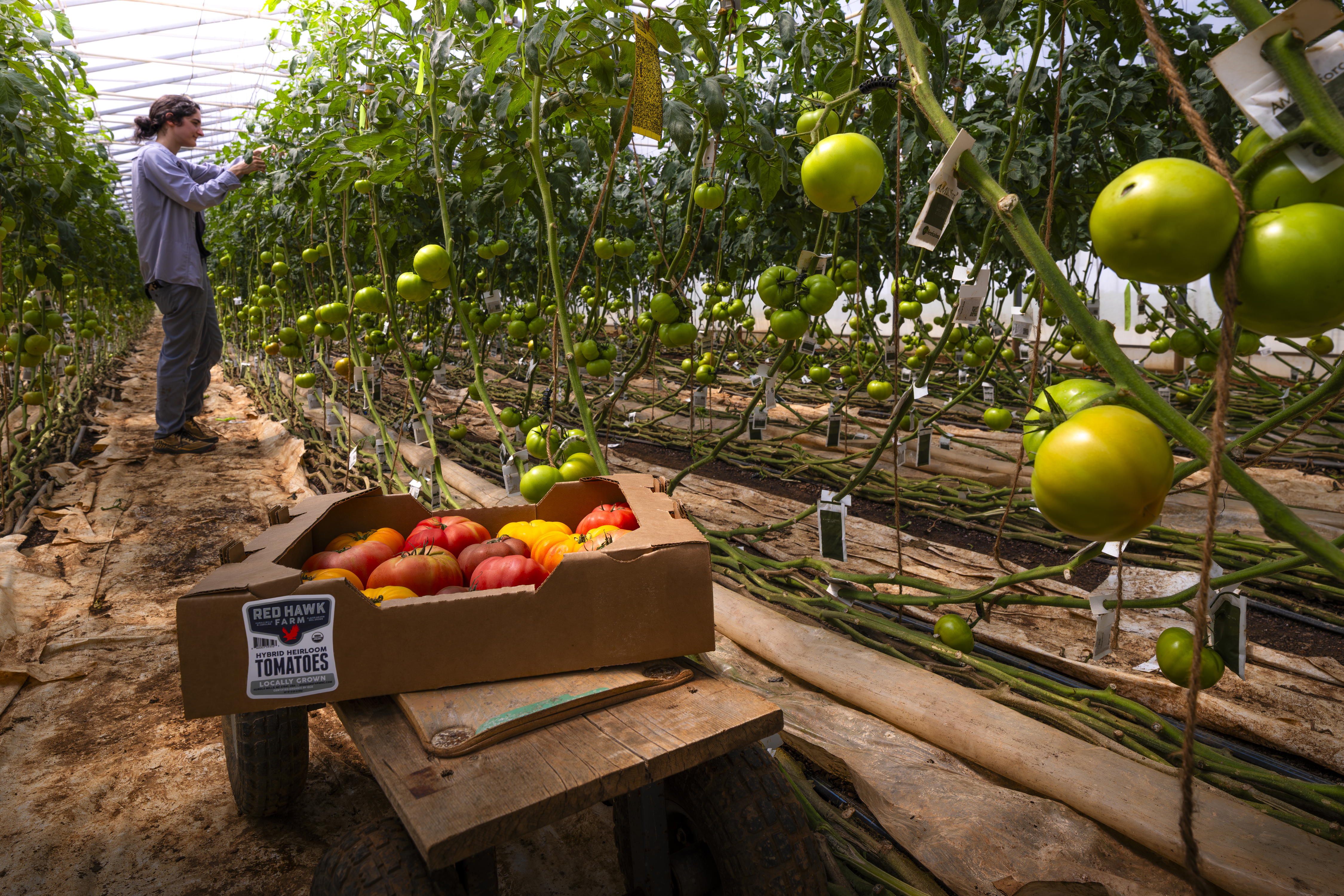
Red Hawk Farm’s partnership with Elon Dining connects local food to campus tables while advancing the university’s sustainability vision.
Less than an hour from campus in Hurdle Mills, North Carolina, Red Hawk Farm is quietly making a big impact on what shows up on students’ plates at Elon.
The Certified Organic farm, owned and operated by Brett Evans ’13, supplies Elon Dining with fresh, seasonal produce, including microgreens, spinach, herbs and lettuce, that’s harvested with care and rooted in sustainable practices.
For Evans, the connection to Elon is deeply personal. As an undergraduate, he was involved in the Sierra Club, the Community Garden and Loy Farm, and he spent many weekends helping on a professor’s homestead farm. “I remember being concerned about the limited local and organic options on campus,” Evans says. “To now be a meaningful part of the solution, with our produce consistently in the dining halls for multiple years, is a truly full-circle experience I am grateful to have.”
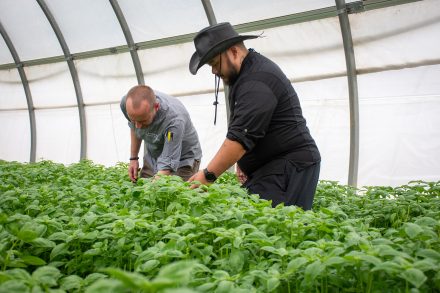
Sourcing from local partners like Red Hawk, who are committed to sustainable farming practices, allows Elon Dining to invest in the community, care for the land and bring fresher ingredients to campus. Students experience that connection daily, whether through the flavor of their meals or meeting farmers like Evans at campus events.
According to Leslie Bosse, sustainability manager for Elon Dining, chefs often visit partner farms, which deepens their connection to the dishes they prepare and gives them an even greater respect for the ingredients. “When you know where the food comes from and have seen the hard work the farmers put in to produce it,” Bosse says, “it reinforces the desire to use each ingredient to its fullest capacity out of respect for the process.”
Elon Dining’s sustainability efforts extend well beyond sourcing. Initiatives include plant-forward menus, waste reduction, reusable to-go containers and a partnership with CompostNow to process food scraps, creating a local loop that returns nutrients to the land.
Kelly Harer, Elon’s associate director of sustainability for education and outreach, says the Red Hawk Farm partnership supports Elon’s Sustainability Master Plan 2025, which serves as Elon’s roadmap for advancing sustainability on campus, outlining eight key areas — including dining, academics, transportation, waste reduction and more — that guide the university’s efforts toward a more sustainable future.
“With Red Hawk, we’re not only building and supporting the North Carolina community, we’re also building our Elon community.” — Leslie Bosse, sustainability manager for Elon Dining
One of the plan’s dining strategies calls for 35% of annual food purchases to be local by 2035. “Food and dining are critical components of Elon’s sustainability strategy because they directly impact environmental, social and economic systems,” Harer says. “By making intentional food choices, we can reduce carbon emissions, support local farmers and educate students about the broader impacts of sustainable food systems.”
The collaboration between Elon Dining and the Office of Sustainability is ongoing and intentional. Dining staff participate in working groups for university-wide planning and regularly meet with campus sustainability leaders to align strategies and share progress. “We don’t just want to buy local when it’s convenient,” Bosse says. “We’re committed to building long-term relationships that truly support the farms we work with.”
The fact that Evans is an alumnus makes this partnership especially meaningful. “With Red Hawk, we’re not only building and supporting the North Carolina community,” Bosse adds, “we’re also building our Elon community.”