


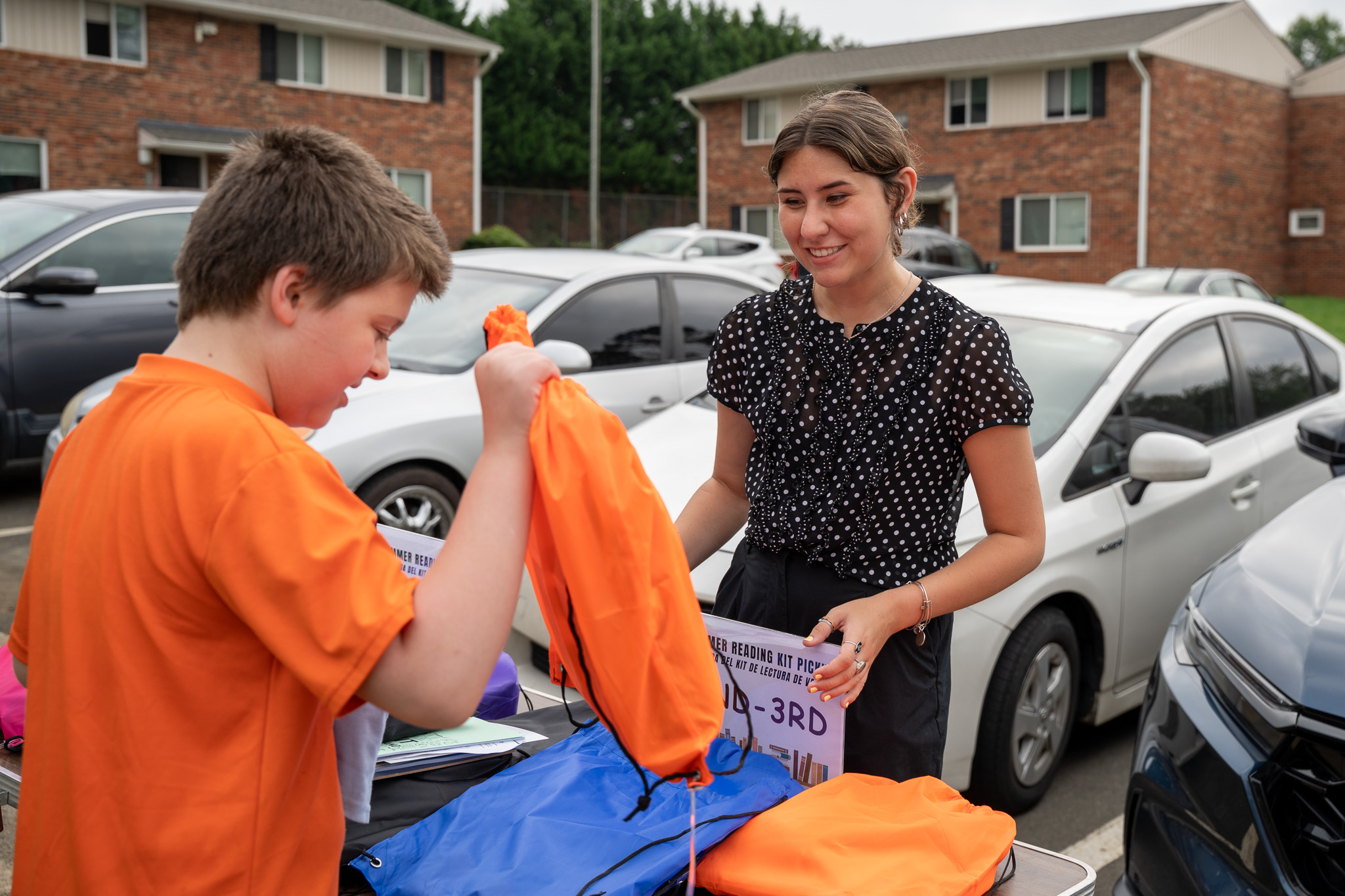
As the back-to-school season begins, the Village Project reflects on the students who took home the magic of literacy this summer.
To reinvent its “Summer in the Village” program, the It Takes a Village Project shifted from a traditional in-person format to a tangible tool for success: summer reading kits.
With the support of a grant from the Dollar General Literacy Foundation, 100 Alamance-Burlington School System students from Title I schools are heading into the school year with fresh books, school supplies and literacy resources. The Village Project at Elon University empowers K–5 students in Alamance County through hands-on, community-driven programs. Despite the restructuring this summer, the Summer in the Village program remained focused on its original mission.

“Our goal remains unchanged: to increase summer reading engagement and reduce learning loss,” said Elle Collins, executive director of the Center for Access and Success. “However, we believe we can achieve even greater impact by transitioning from an in-person model to a more accessible, family-centered approach with student take-home reading kits.”
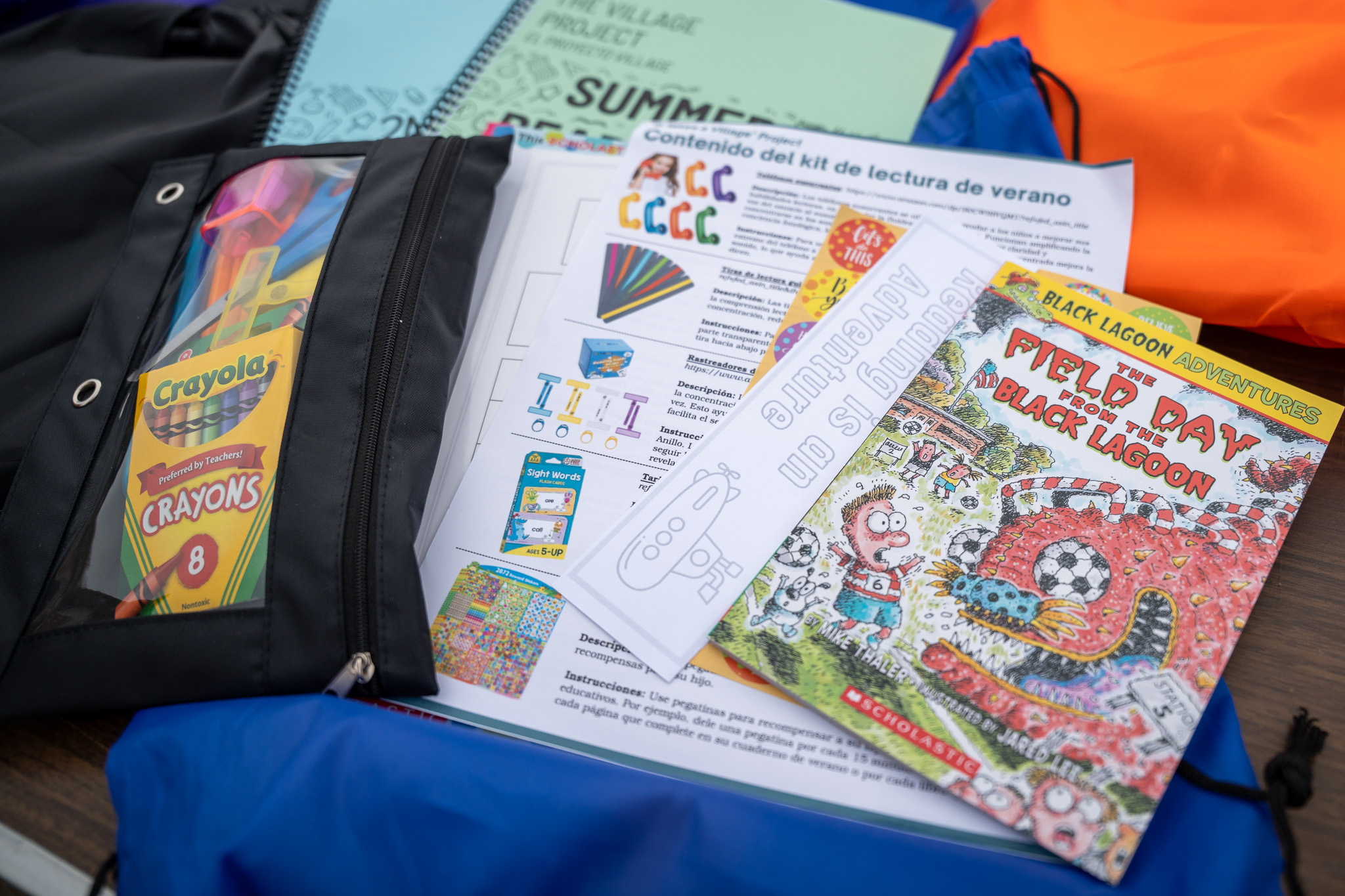
The initiative, aimed at preventing the “summer slide” in reading skills, distributed 50 reading kits for kindergarten through second-grade students and 50 for third through fifth graders. Each kit contained free, high-interest books for children to keep, instructional resources for students and parents, and basic school supplies. With tools for learning at their fingertips, students received a head start on the new academic year.
“We know summer can be a time when students lose ground academically, especially in reading,” said Laura Clemmons, assistant director of It Takes a Village. “By putting these materials directly into the hands of students and families, we’re giving them the tools to keep learning all summer long.”
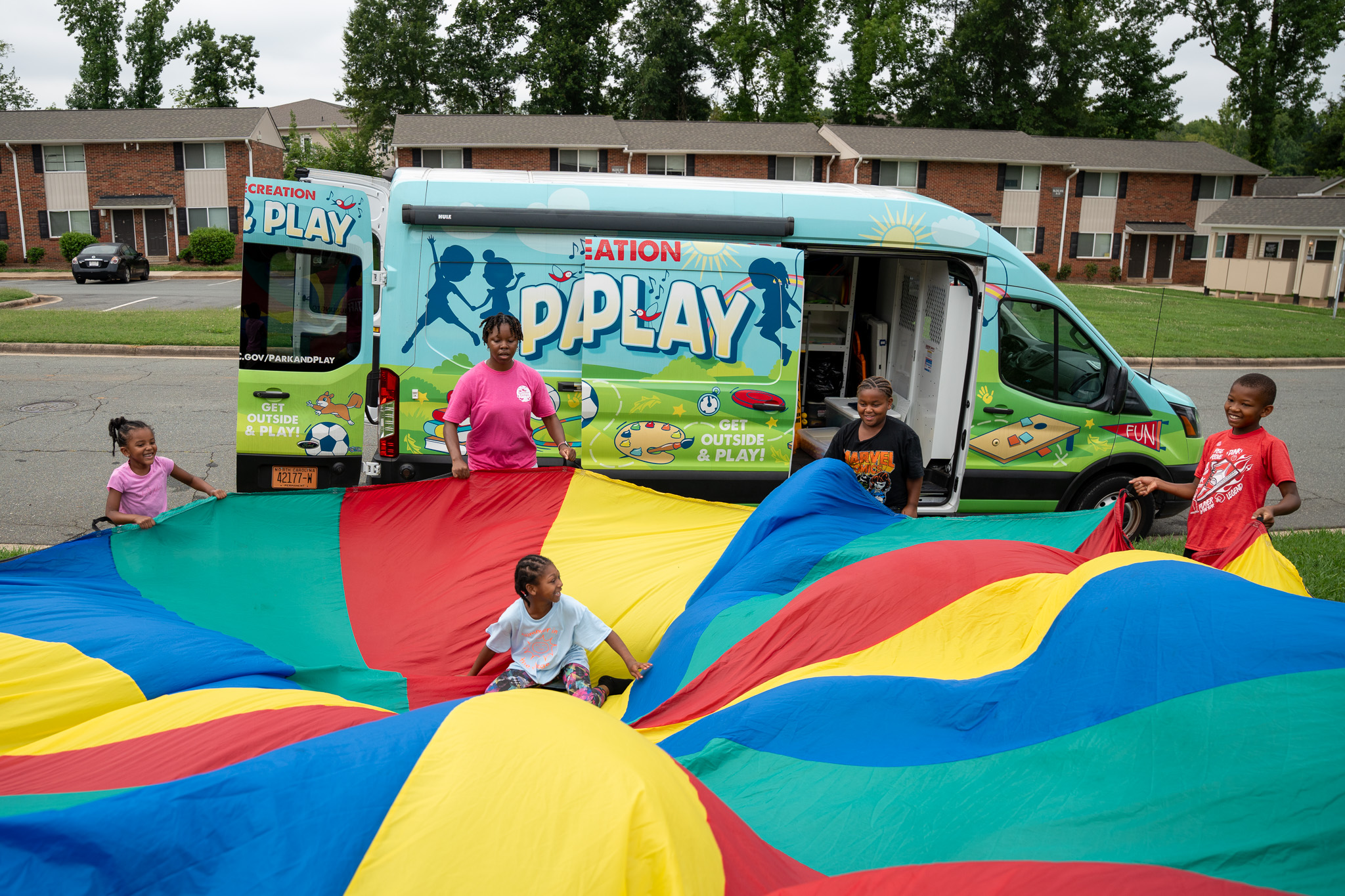
This summer also provided an opportunity to collaborate beyond Elon University and into the broader community. The program partnered with May Memorial Library and Burlington Parks and Recreation’s Park and Play program to deliver the kits directly to children. The Park and Play program, which brings recreational and educational opportunities to neighborhoods, provided an ideal setting for reaching families who might face transportation or scheduling barriers.
Kits were tailored to grade levels, with early elementary students receiving sight word flashcards, foundational literacy activity sheets and journals for family reflection. Upper elementary kits included age-appropriate novels, writing prompts and enrichment activities to encourage independent reading and critical thinking. Students who attended check-in events at May Memorial Library also participated in on-site crafts as part of the pickup experience.
Through this new approach, the program also expanded its impact beyond students. Within the kits, parents received guides explaining each item and offering tips for incorporating reading into daily routines. The kits additionally included QR codes linking to additional online resources, as well as incentives such as bookmarks and stickers to keep young readers engaged. These items encouraged parent participation in summertime learning and empowered them to support their children outside of the classroom.
The effort reflects a growing movement toward family-centered literacy support. Research shows that sustained reading at home can help close learning gaps and improve student performance when school resumes in the fall. According to a report by the National Summer Learning Association, students typically lose up to two months of reading skills over the summer if they are not actively engaged in educational activities.
Organizers said they will track the program’s impact by comparing students’ spring and fall reading assessment scores and gathering feedback from parents.
“We’re committed to making sure every child has the chance to grow as a reader, regardless of circumstances,” Clemmons added. “This is about building a love for reading that lasts far beyond the summer.”
-
Elle Collins
Executive Director, Center for Access and Success and Instructor
-
Laura Clemmons
Assistant Director of the Center for Access & Success and Lead of It Takes A Village
-
Keely Platts
AmeriCorps VISTA
-
Sydney Gilbert
VISTA Program Coordinator and Program Coordinator for "It Takes a Village" Project