


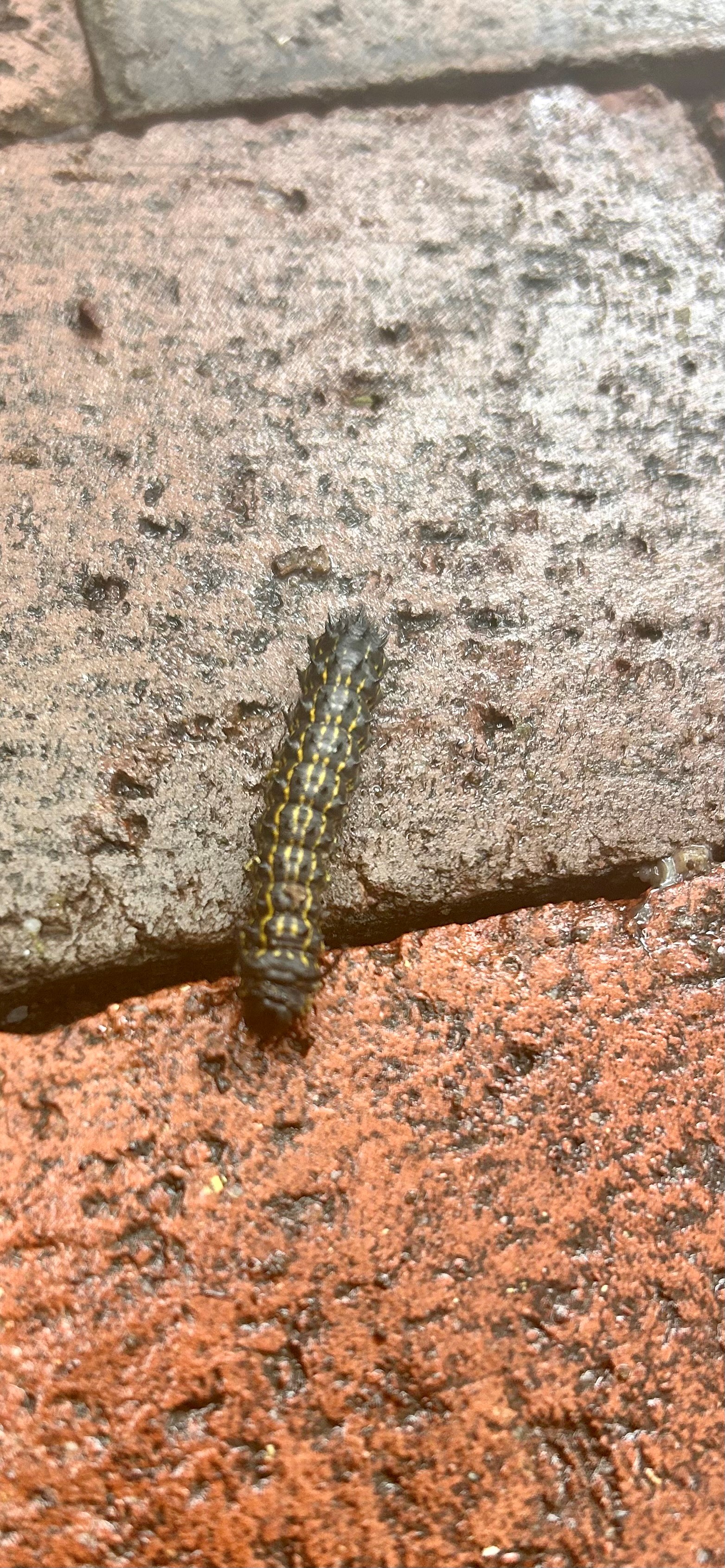
Each fall, orange-striped oakworms make their return to campus, feeding on oak leaves while leaving the trees healthy for seasons to come.
Each fall, Elon’s campus host a familiar visitor: the orange-striped oakworm. These caterpillars feed on oak leaves and can cause trees to look bare late in the season. But despite their appearance, healthy trees aren’t harmed long-term, since they’ve already stored the energy they need during the spring and summer.
Rather than defaulting to chemical treatments, Elon manages the oakworms through its Integrated Pest Management Plan, which emphasizes sustainability and careful decision-making.
“From a sustainability standpoint, this shows why the Integrated Pest Management Plan we use at Elon University is so important,” said Hanna Smith, Botanical Garden Coordinator. “We first identify the insect that is causing damage and the plant that it is causing damage to, and then determine if control is necessary. There are many situations, such as this one, where chemical control is not warranted. This helps save the environment from unnecessary pesticide usage as well as supporting Elon’s goals of financial sustainability.”
By choosing more sustainable options for pest management – such as cultural methods (water, fertilizer, etc.), mechanical methods (hand removal), or no control at all—when possible, Elon is able to reduce pesticide use and save resources while maintaining a beautiful campus.