


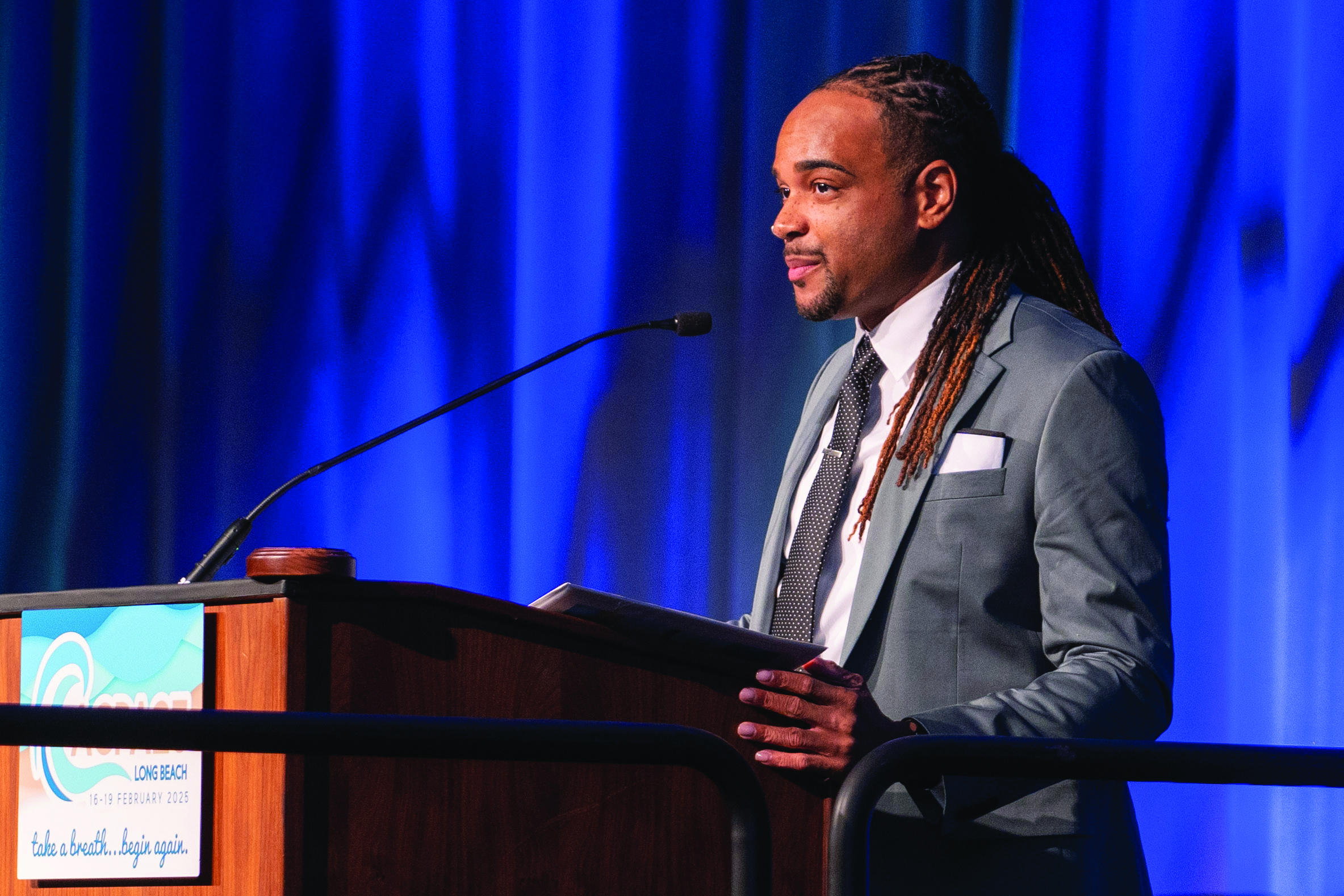
Seeing the potential in others is a gift Jonathan McElderry received from mentors who believed in him.
This story was originally published in the November issue of The Leaflet, Elon’s quarterly printed newsletter.
Jonathan A. McElderry subscribes to “the possibility model,” which he defines as the ability to recognize a person’s potential and then do whatever is within his power to uplift and support that person. He has been shaped by mentors who have uplifted his own potential, and he is motivated to support others in the same way.
McElderry is the dean of student inclusive excellence and an assistant professor at Elon. He is also the first Elon staff member to serve as president of the American College Personnel Association – College Students Educators National, a national association of student affairs professionals.
“Going to college as a first-generation student, I was not well-versed with the hidden curriculum, but I always had older students and professionals look out for
me and connect me to groups and people on campus,” McElderry said.
One of the first defining moments of McElderry’s career came when he was an undergraduate. He was surprised to learn that textbooks had to be purchased. Friends and family helped him that first semester, and he soon realized many others faced the same barrier. He has since championed textbook assistance in various roles at the University of Missouri, Wake Forest University and, now, at Elon.
As president of ACPA, McElderry is expanding that commitment. At this year’s national conference in Baltimore, he is partnering with Cristo Rey Jesuit High School to provide textbook scholarships. He raised $6,000 to be shared among a select number of college-bound seniors, most of whom are from historically underrepresented backgrounds.
“As I thought about how to best leverage my presidency with ACPA, I thought about the cities that are hosting us and the importance of giving back to those communities,” McElderry said.
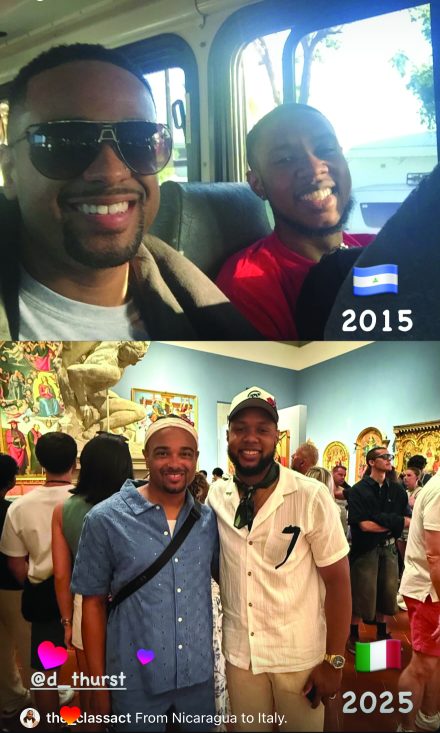
For McElderry, giving back also takes the form of mentorship. On a recent trip to Italy, he unexpectedly reunited with a former student he had once guided.
“You’re the reason I have a passport,” the student told him, citing a study abroad trip McElderry encouraged the student to take a decade earlier. That experience gave the student confidence to lead a trip the following year.
“I told him that first year, ‘This is your time to pay it forward for the next generation to create their story,’” McElderry said. “It was a very full-circle moment to see him traveling 10 years later.”
McElderry says that, as was the case in his own life, he could be the first person to recognize the potential of a student who may be a future dean, administrator or president of an organization. Such power is a responsibility and an opportunity.
“I enjoy supporting the next group of leaders,” he said. “No matter what kind of institutional role that I’m in, the student connection and mentor relationships are always important.”
“It’s important to give back what was done for me. Whether it’s supporting a scholarship or helping a first-time author envision their first chapters, I think about the next generation. I say, let’s pull you in.”
McElderry had been participating with ACPA for 15 years before taking on the role of president. He began as an executive secretary for the Pan African Network and takes pride in being the first person from Elon to serve in this role. He said he is grateful for the years of support from peers in the organization and motivation from colleagues at Elon who gave him the confidence that he could serve in this role effectively.