


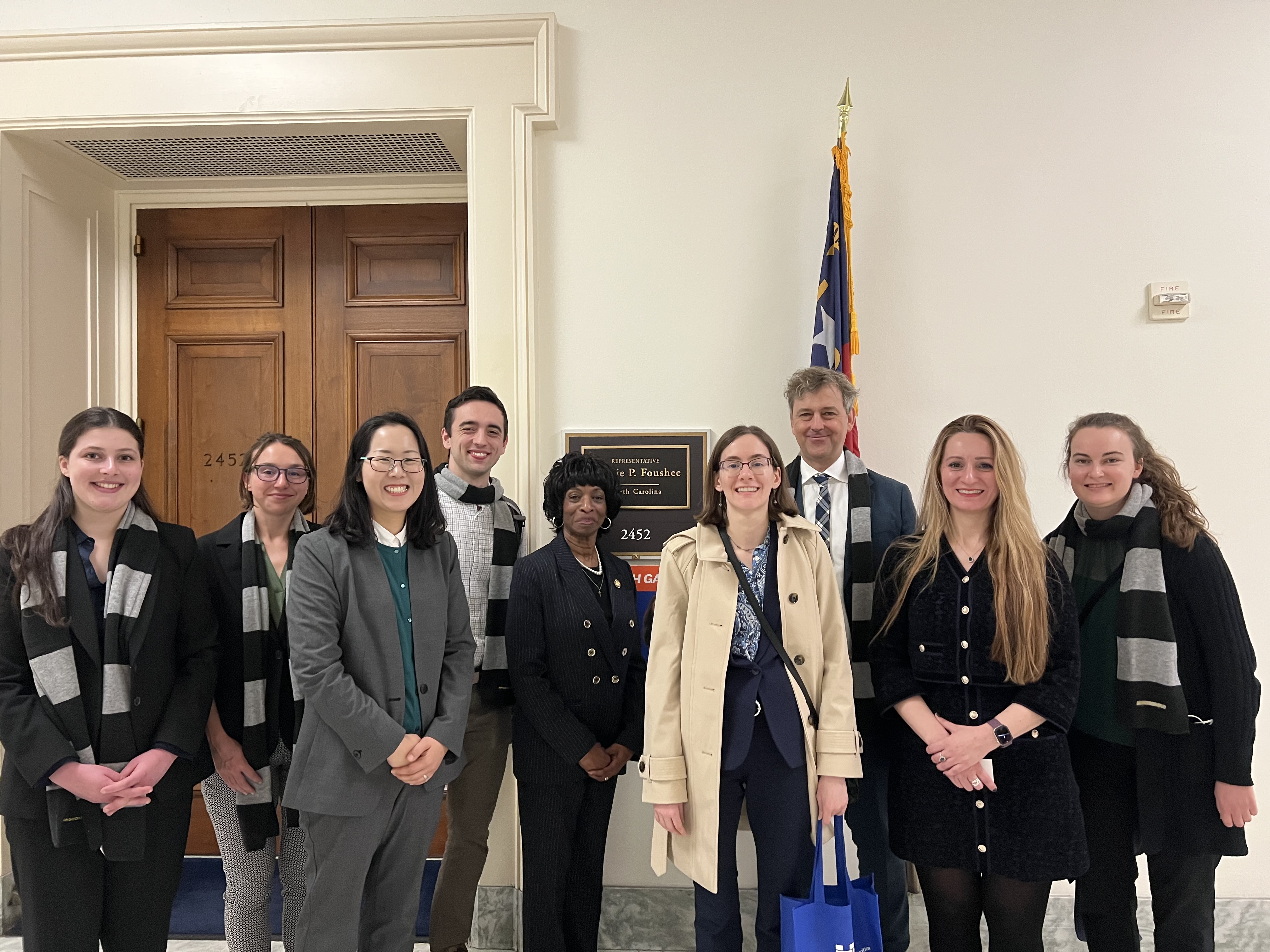
An Elon University associate professor of mathematics Hwayeon Ryu joined more than 290 mathematicians on Capitol Hill on Jan. 8, 2026, to advocate for sustained federal investment in mathematical sciences education and research, highlighting how federal support promotes undergraduate research, expands access to STEM pathways and strengthens the U.S. STEM workforce.
In January 2026, Associate Professor of Mathematics Hwayeon Ryu traveled to Washington, D.C. to participate in #MathSciOnTheHill, a national advocacy event organized by the American Mathematical Society and 17 partner mathematical societies. The event brought together more than 290 mathematicians from across the United States to meet with members of Congress and their staff and to advocate for policies that strengthen STEM education and the U.S. STEM workforce through sustained federal investment.
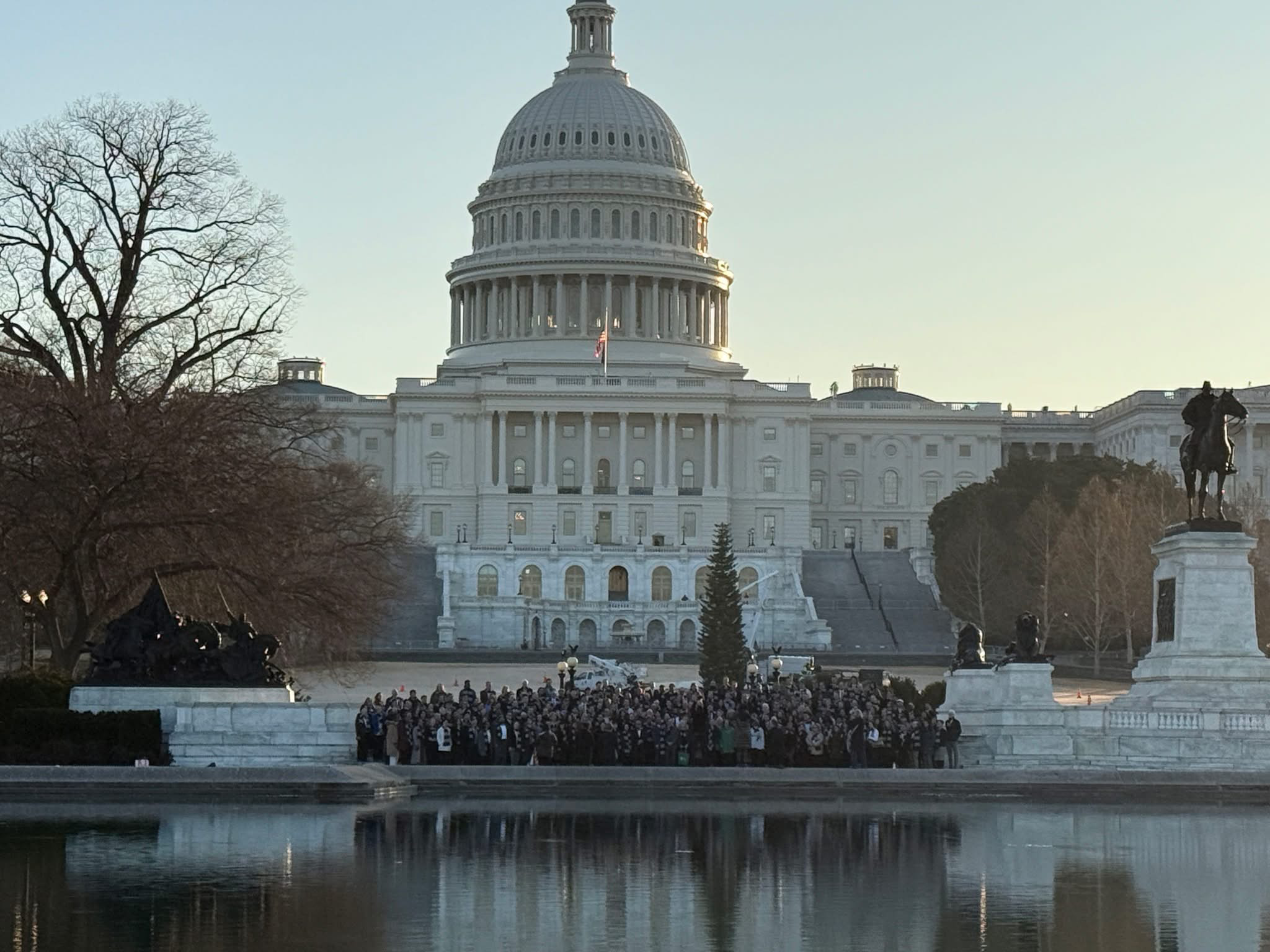
Participants were organized into advocacy teams based on geographic location. Ryu and her team (of North Carolina 4th Congressional District) met with the offices of U.S. Senators Ted Budd and Thom Tillis through their legislative assistants and held an in-person meeting with U.S. Representative Valerie Foushee of North Carolina’s 4th Congressional District. In each meeting, Ryu participated in the discussions focused on STEM education and continued federal funding, through the National Science Foundation (NSF), Department of Energy (DoE), and National Institutes of Health (NIH), to sustain and strengthen the U.S. STEM workforce.
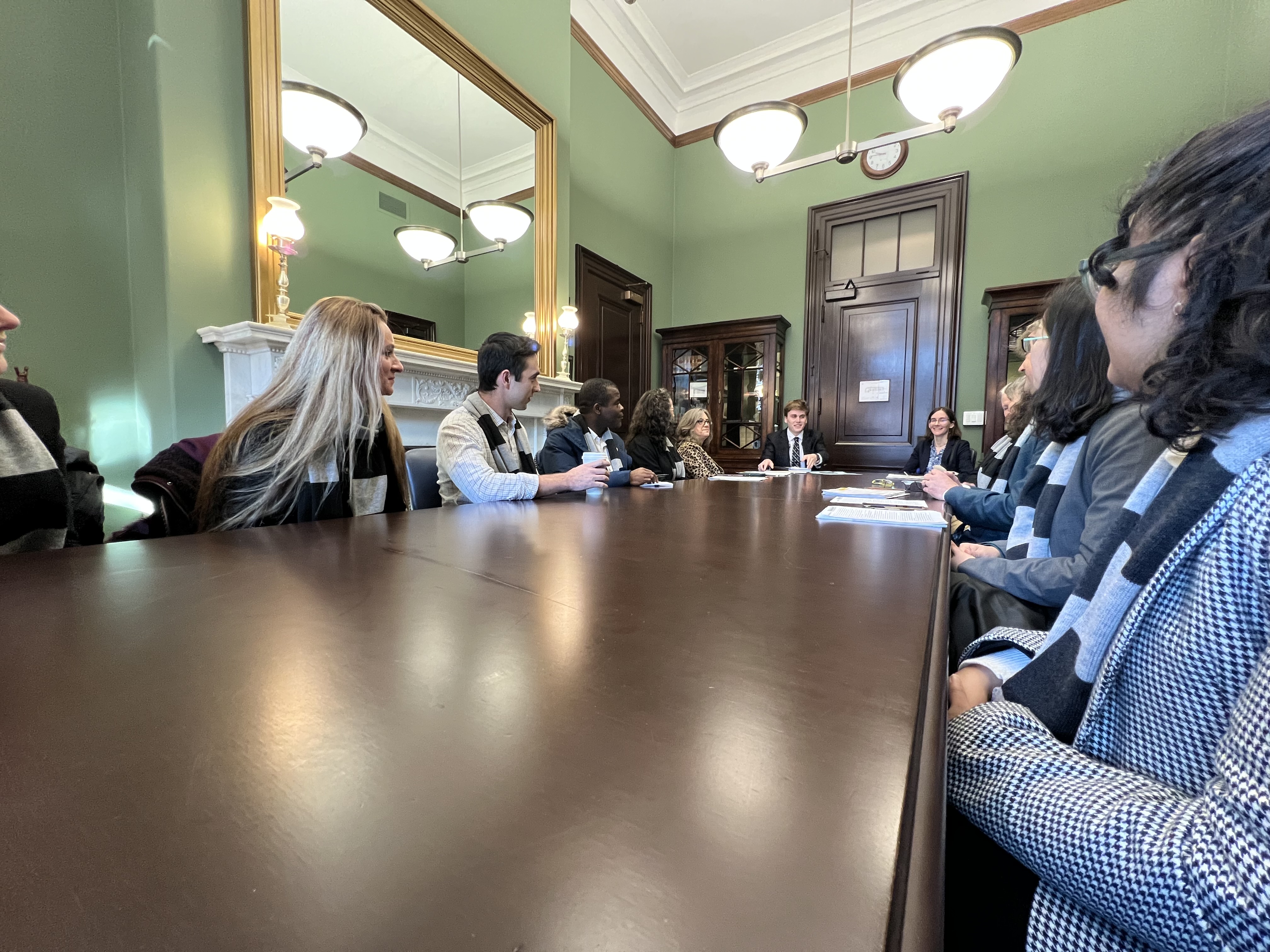
The conversations emphasized that mathematics is foundational to nearly every STEM field, including artificial intelligence, biotechnology, cybersecurity, climate modeling and advanced manufacturing. While often operating behind the scenes, mathematical sciences provide the analytical framework that enables innovation across STEM fields. Federal support, such as NSF, ensures that students receive high-quality training in quantitative reasoning, data analysis, and interdisciplinary problem-solving—skills that are increasingly critical in a rapidly evolving economy.
As a faculty member at a primarily undergraduate institution, Ryu highlighted how her NSF-supported research directly benefits students from various STEM majors at Elon University. NSF funding allows faculty to engage undergraduates in authentic research experiences that integrate teaching and scholarship. Through these projects, students gain hands-on experience working with real data, computational models, and collaborative research teams. Many of her former and current students have gone on to graduate programs in STEM, federally funded research positions, or STEM careers in industry and healthcare, contributing directly to the national workforce pipeline.

The meetings also underscored the important role that primarily undergraduate institutions play in educating a diverse STEM workforce, including first-generation students and those from rural or underserved communities. Investments in NSF programs that support undergraduate research help expand access to STEM pathways and ensure that talent from a wide range of backgrounds is represented in the nation’s scientific workforce.
By participating in #MathSciOnTheHill, Ryu helped amplify a collective message from the mathematical sciences community: continued federal investment in mathematics education and research is a strategic investment in the strength, adaptability, and competitiveness of the U.S. STEM workforce.
The Capitol Hill visit highlighted how faculty advocacy can connect classroom and research experiences at Elon University to national conversations about innovation, economic growth, and workforce development. Her Capitol Hill visit was supported by the American Mathematical Society.