


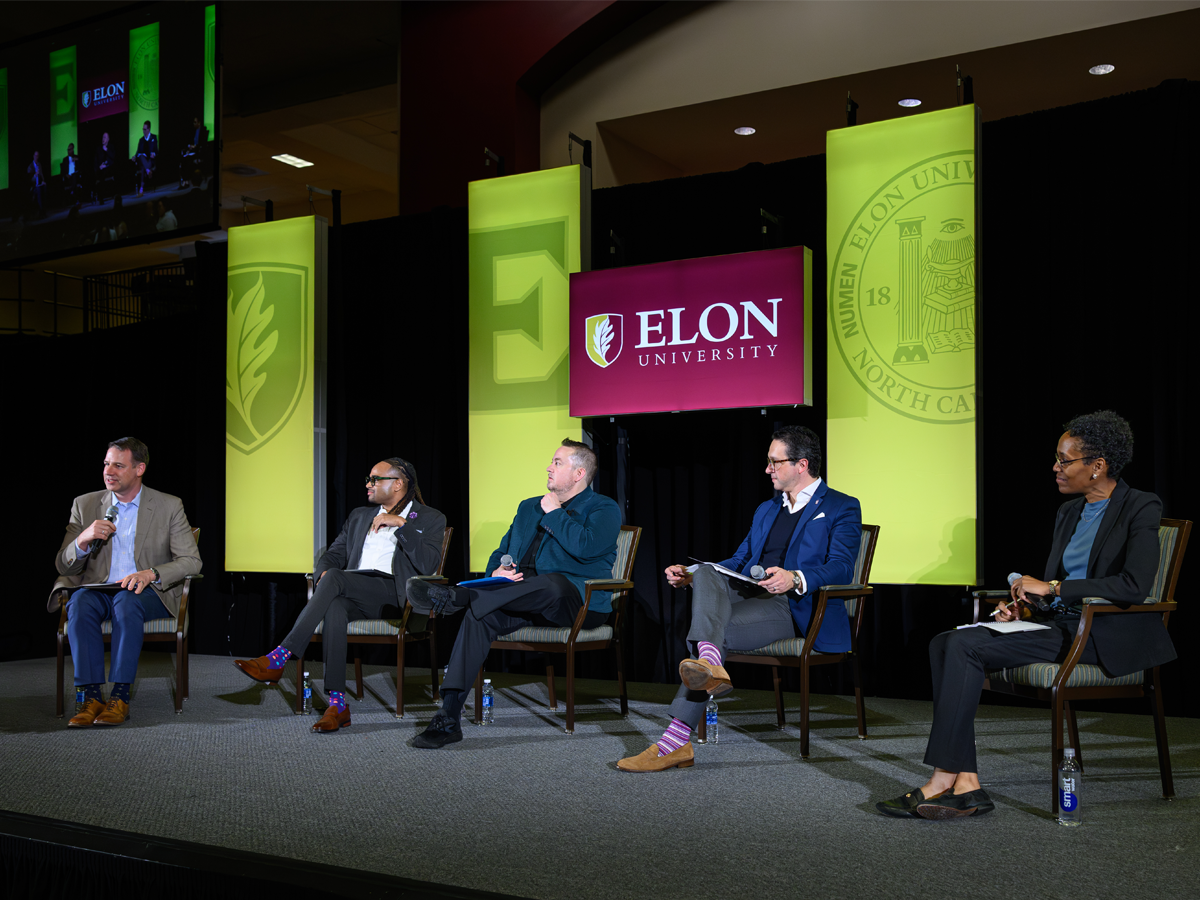
Hosted by the Division of Student Life, the Winter Symposium explored topics of mentorship, student-centered leadership and the evolving role of student affairs.
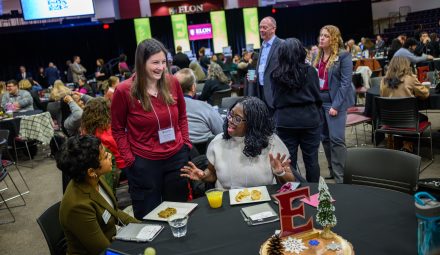
Elon University’s Division of Student Life welcomed nearly 250 higher education professionals from across the state for a day of professional development, knowledge sharing, and connection at its annual Winter Symposium.
The event on Jan. 14, 2026, included two plenary discussions and 11 breakout sessions, featuring 36 presenters and speakers over the course of the day-long gathering. Traditionally an internal professional development experience, the symposium was expanded this year to invite Elon colleagues from outside the Student Life division, as well as university professionals from other institutions.
“This year, as we were making plans for the symposium, we kept adding new ideas and eventually, it became clear that this work was meant to be shared,” said Jon Dooley, vice president for Student Life and associate professor of education. “Student affairs work is transformative not only for the students we serve, but for the professionals who walk alongside them. We wanted to open our doors to colleagues from across campus and across the region to celebrate the meaningful impact of this work.”
Mentorship, student success and the power of connection
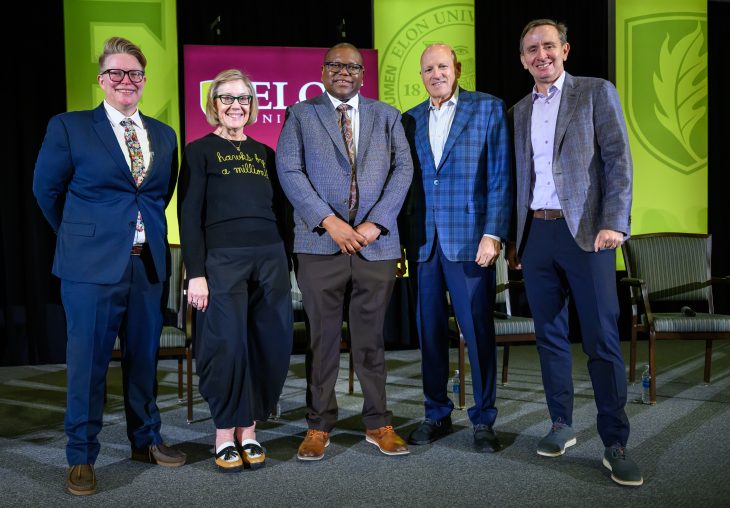
The morning plenary featured a dynamic conversation on mentoring and student success, bringing together nationally recognized leaders in higher education to reflect on the relationships and structures that support student learning and well-being.
Moderated by Emily Krechel, director of New Student Programs, panelists included Peter Felten, assistant provost for teaching and learning and executive director of the Center for Engaged Learning; Leo M. Lambert, president emeritus and professor in the Dr. Jo Watts Williams School of Education; Sarah Hansen, vice president for Student Life at the University of Iowa; and Darris R. Means, professor of educational leadership and dean’s fellow for rural education at Clemson University.
Throughout the discussion, panelists reflected on the moments that most often shape students’ experiences. While long-term mentoring relationships are important, students more frequently point to brief interactions that reframed how they see themselves, their education or their future.
The conversation also emphasized the role of intentionality in those moments. Creating space for connection, even during busy schedules, can leave a lasting impression. Panelists shared examples of leaders who prioritize presence and accessibility, noting that small, intentional interactions across campus often stay with students long after graduation and meaningfully shape their collegiate experience.
A shared stage for the future of student affairs
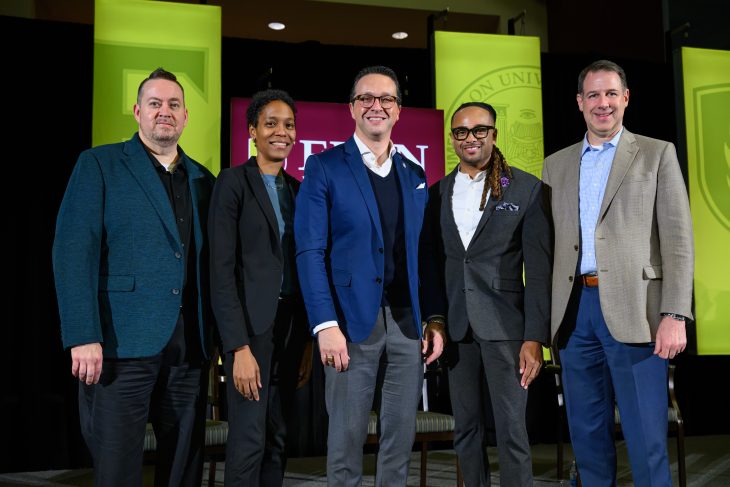
While the morning plenary grounded the day in values of mentorship and student-centered leadership, the afternoon session marked a rare moment for the profession, bringing together national leadership from the two leading comprehensive student affairs professional associations – ACPA – College Student Educators International and NASPA – Student Affairs Administrators in Higher Education – for a conversation about the future of student affairs.
Moderated by Dooley, panelists included Jonathan A. McElderry; 2025–26 ACPA president and dean of student inclusive excellence and assistant professor at Elon; Chris Moody, ACPA executive director; Michael N. Christakis, 2025-26 NASPA board chair and vice president for student affairs & enrollment at University at Albany; and Amelia Parnell, NASPA president.
Panelists explored themes of health and well-being for students and staff, mentoring and professional development, the role of technology in student affairs, and the future of student affairs in an era of significant changes in federal and state policy affecting higher education.
The conversation reinforced the broader importance of the collegiate experience and the value that student affairs contributes at a time of disruption and change inhigher education. Panelists emphasized that college, in all its forms, remains a transformative experience, shaped not only by academics but by the relationships and support systems that surround students. They noted that while the impact of student affairs people and programs is clear to those within the profession and to the students we serve, it is not always fully recognized, underscoring the need for stronger data and clearer storytelling to demonstrate the value of student affairs to student outcomes and post-college success.
Finding hope in community and collaboration
The discussion among the professional association leaders concluded with reflections on what continues to inspire hope for the profession’s future. Panelists pointed to the long history of higher education and student affairs, noting that the current moment represents just one chapter in an ongoing story shaped by resilience and progress.
They also emphasized the power of community and connection, highlighting how relationships among colleagues serve as a source of strength during ongoing challenges. Coming together, despite sources that aim to cause division, was framed as a reminder of the profession’s enduring purpose and the hope found in shared space, collaboration and collective commitment.
-
Jon Dooley
Vice President for Student Life and Associate Professor of Education
-
Peter Felten
Assistant Provost for Teaching and Learning, Executive Director of the Center for Engaged Learning, and Professor of History
-
Leo Lambert
President Emeritus and Professor of Education
-
Emily Krechel
Director of New Student Programs
-
Jonathan McElderry
Dean of Student Inclusive Excellence and Assistant Professor