


Elon University is helping prepare the next generation of college professors through the Preparing Future Faculty program to partner with graduate students at Duke University to serve as mentoring site for program.
The yearlong Preparing Future Faculty (PFF) program connects Duke University graduate students who aspire to be faculty with mentors at numerous institutions, including Elon University, to offer a look at the role faculty members have within a university. This year, eight Duke University graduate students chose Elon as their mentoring site.
At Elon, the eight graduate students are paired with faculty mentors across disciplines within Elon College, the College of Arts and Sciences. Throughout the academic year, the graduate students visit campus to observe classes, attend department and faculty meetings, and, in some cases, teach. The goal is to provide a comprehensive view of what it means to be a faculty member at a university like Elon.
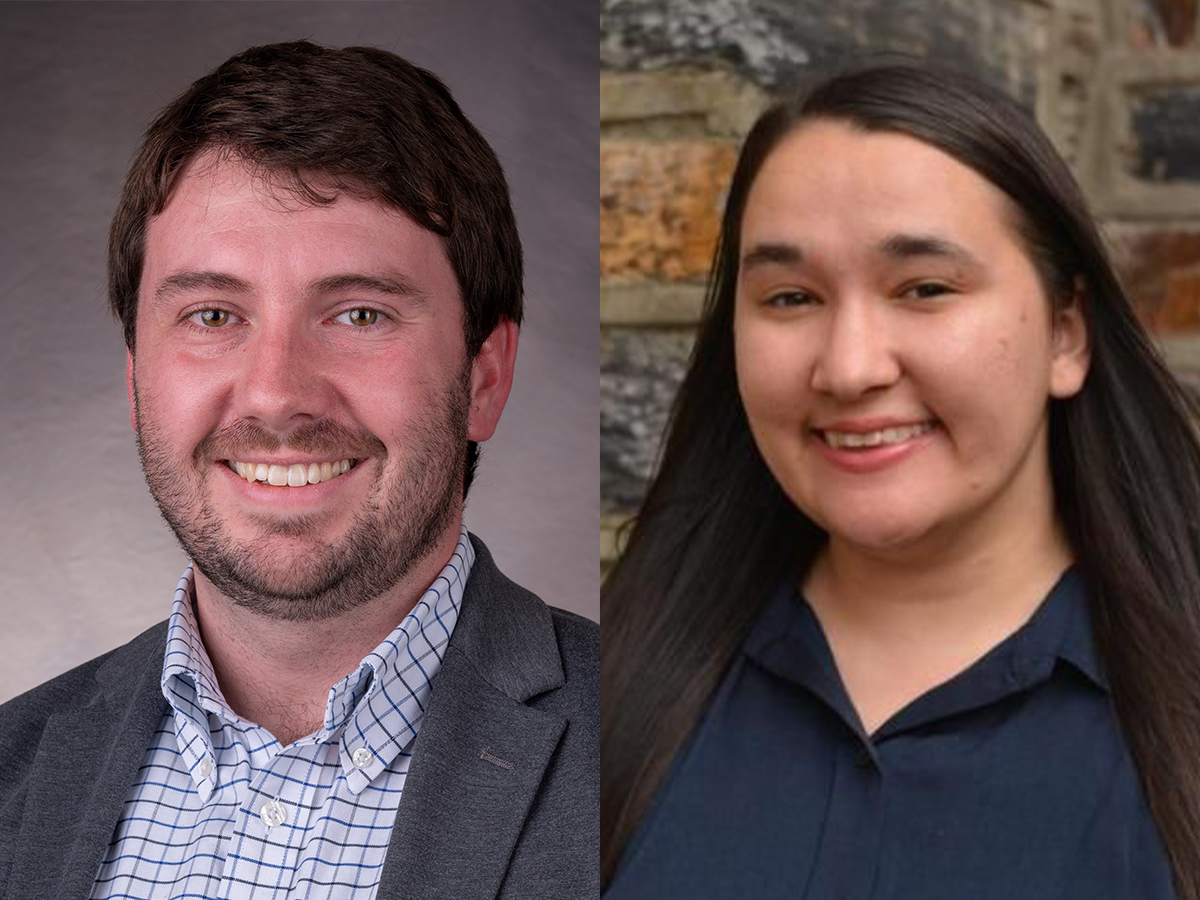
Tedd Wimperis, assistant professor of classical languages, is serving as a mentor to Tara Wells, a Duke University graduate student in classical studies.
“As the PFF program is intended to introduce graduate students into the many roles that faculty have within a university, I see my role as being a guide, a source of examples, and a point of contact for the mentee to experience faculty life at a liberal arts college,” Wimperis said.
Wimperis and Wells typically meet twice a month, sometimes informally over coffee and other times on campus for class visits or meetings. This is the third time Wimperis has served as a PFF mentor.
“I see it especially as a way of giving aspiring faculty a leg up in the transition from a graduate program to a faculty position,” Wimperis said. “I’m able to offer my mentee information and experience that I wish I had when I was in their position; knowing more about the job market, how to combine teaching and research productively, how universities work beyond the classroom and how to contribute to a thriving academic program.”
Preparing graduate students for a broader ecosystem is a central focus of the program. Wimperis hopes Wells leaves the experience with insight into teaching strategies, grant writing, the job market and work-life balance.
“As faculty, you’re responsible for a much wider array of responsibilities,” Wimperis said. “A big point, I think, is the importance of being part of a team. Becoming not only a great teacher, scholar, and mentor of students, but also a supportive colleague, is a recipe for success in the transition to faculty life.”
For Wells, the program has offered both professional insight and meaningful connections.
“The PFF program allows us to learn about what it’s like to be a faculty member at different types of institutions, such as small liberal arts colleges, large research-focused universities, state schools, community colleges and historically black colleges and universities,” Wells said. “Above all else, the most meaningful aspect of the program has been the opportunity to meet people from an unbelievable range of academic backgrounds and positions.”
Participants in the program attend visits to partner institutions, group meetings, a kickoff dinner with deans from participating schools and informal gatherings that allow the graduate students to reflect on their experiences together.
“I cherish the connections the program has made possible for me,” Wells said.
Her mentorship with Wimperis has been particularly impactful.
“Tedd has been great to work with,” Wells said. “He has shared interesting and useful information about his experiences being both part-time and full-time faculty. Tedd also takes particular care in ensuring that I am getting what I want and need as a mentee, which I greatly appreciate.”
Having a mentor in her discipline has allowed Wells to apply broader program lessons to the field of classical studies.
“It’s been nice to have a faculty mentor in my discipline, while also having the balance of meeting many people outside of my area of study,” Wells said.
During the campus visit to Elon, the graduate students were welcomed by Assistant Provost for Academic Excellence and Integrity Angela Lewellyn and participated in a junior faculty panel featuring faculty in their first or second year at Elon. The panelists offered advice about the job search process and the early years of faculty life. The graduate students also had the opportunity to meet with Elon students.
“Hearing directly from students of the same age and level that I would be working with in the next few years gives me a chance to understand their perspectives, which is invaluable for providing the best experience and support for them,” Wells said.
As Wells looks ahead to completing her doctorate in 2027 and entering the faculty job market, she said the program has helped her think intentionally about supporting students, general advice and preparing for interviews.
“My biggest goal in life is to help others,” she said. “I am looking forward to making a difference in my students’ lives.”