


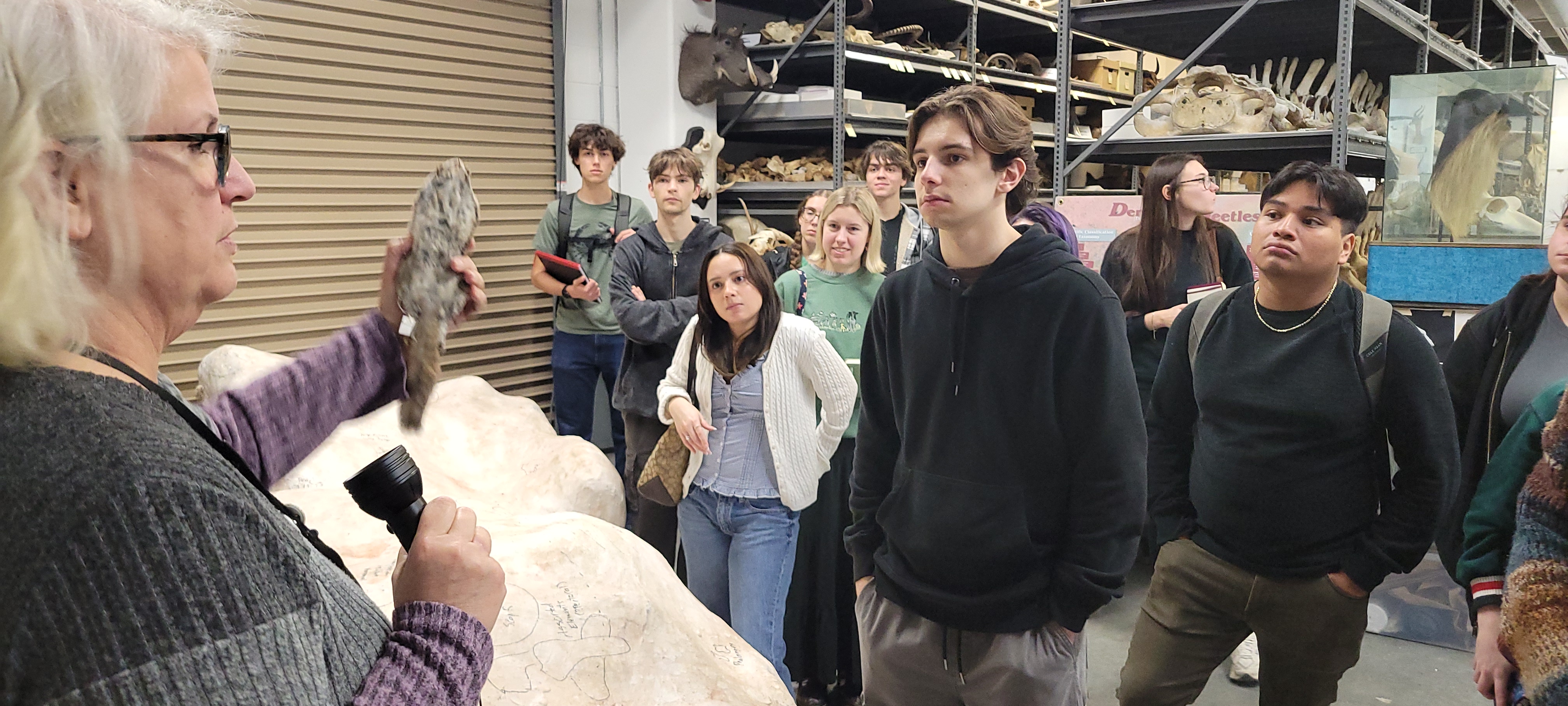
Students gain hands-on experience in conservation and biodiversity beyond campus through field trips in an environmental studies course led by Associate Professor Amanda Chunco.
Students in the sophomore-level Diversity of Life course taught by Amanda Chunco, associate professor of environmental studies, will step outside of the classroom this semester to experience ecology and conservation firsthand. Through three immersive field trips, the class will explore biodiversity hands-on while connecting with environmental professionals in North Carolina.
The course examines the basic concepts of biological form and function through evolutionary relationships and diversity. Students investigate the natural history of local species and their role in community dynamics.
“Getting outside the classroom lets students connect with professionals in a wide variety of fields, which can introduce students to career options many have never realized existed before,” Chunco said. “It’s also a great way to see a variety of different habitats that we don’t have on campus.”
The first trip in February took the class to the North Carolina Museum of Natural Sciences. There, students took a private tour of the research collections and research laboratories. The class met with Brian O’Shea, collections manager of ornithology and Lisa Gartens, collections manager of mammalogy, who showed specimens of extinct species, demonstrated principles of geographic variation in color and body size, and discussed how museums play a critical role in understanding environmental change. Roland Kays, head of the biodiversity research lab, shared his work using technology, from radio telemetry to artificial intelligence, to conserve biodiversity across the planet.
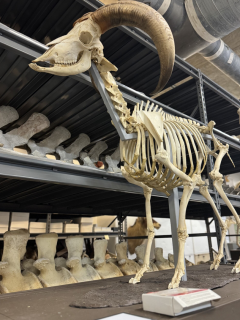
“Roland Kays also gave students advice on finding internships and careers in conservation biology,” Chunco said.
In March, students will visit the University of North Carolina Botanical Garden, where they will observe how prescribed burns help promote biodiversity. During the trip, students will see a wide variety of native plants growing in a natural setting that they previously studied in class.
The final field trip in April will take students to the Duke Lemur Center. There, students will hear from curators about the threats to biodiversity facing lemurs and other island species. They also will practice observing and studying animal behavior among these species.
“Watching lemurs in the woods or seeing green frogs calling is way more impactful than just reading about these species in a textbook,” Chunco said. “When students meet other professionals, it gives them a broader exposure to topics from the leading experts in the field.”
Throughout this course, students learn the ecological and evolutionary principles essential for future environmental professionals, with a strong focus on conservation biology and habitat restoration.
“I think field trips are an essential and fun part of learning,” Chunco said.