


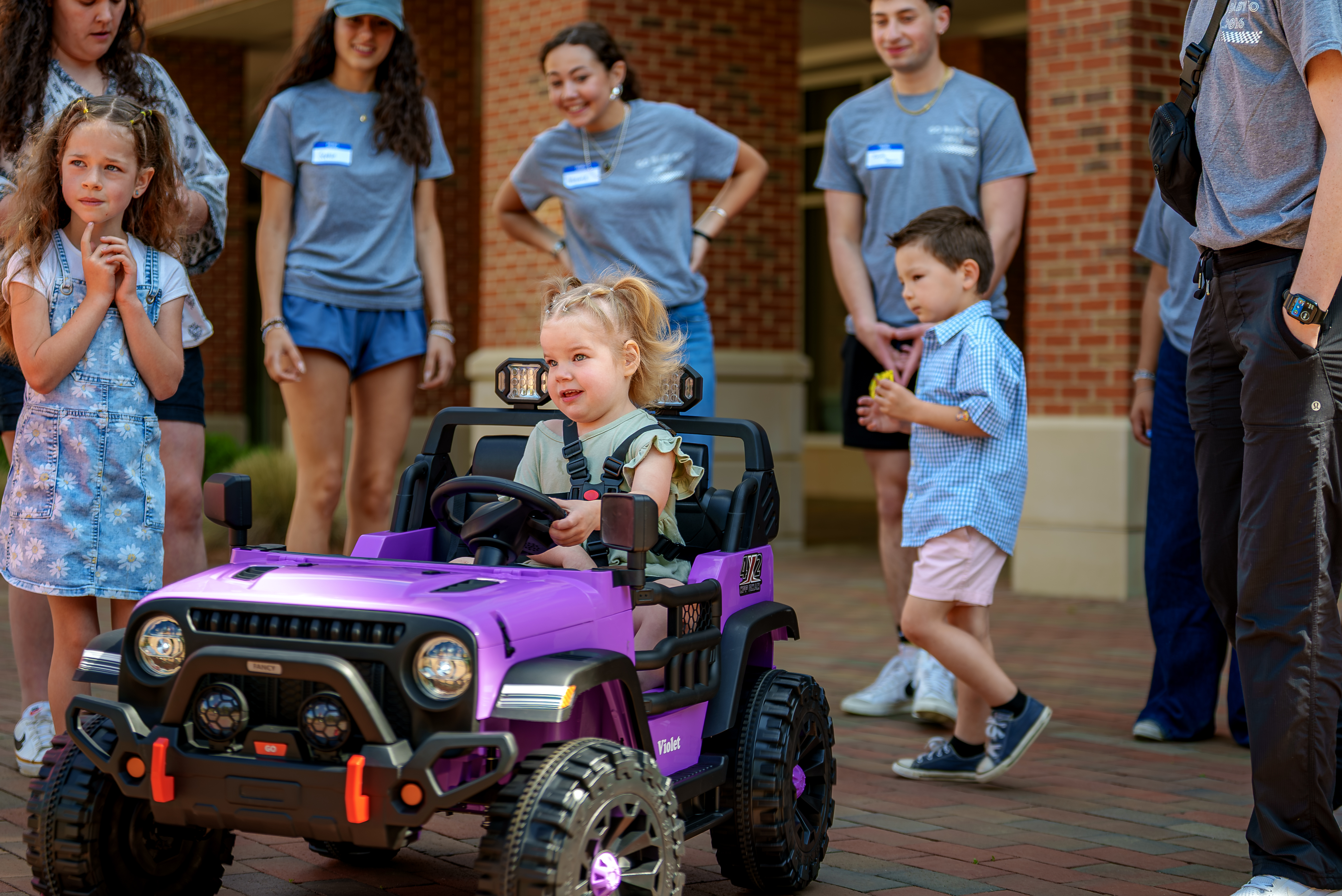
For the first time, Elon students brought the Go Baby Go initiative to campus, adapting ride-on toy cars for children with mobility challenges.
It was business as usual inside Innovation Hall on Saturday, April 4: engineering students focused, tools in hand, projects underway. But just beyond its doors, something far less ordinary was unfolding.
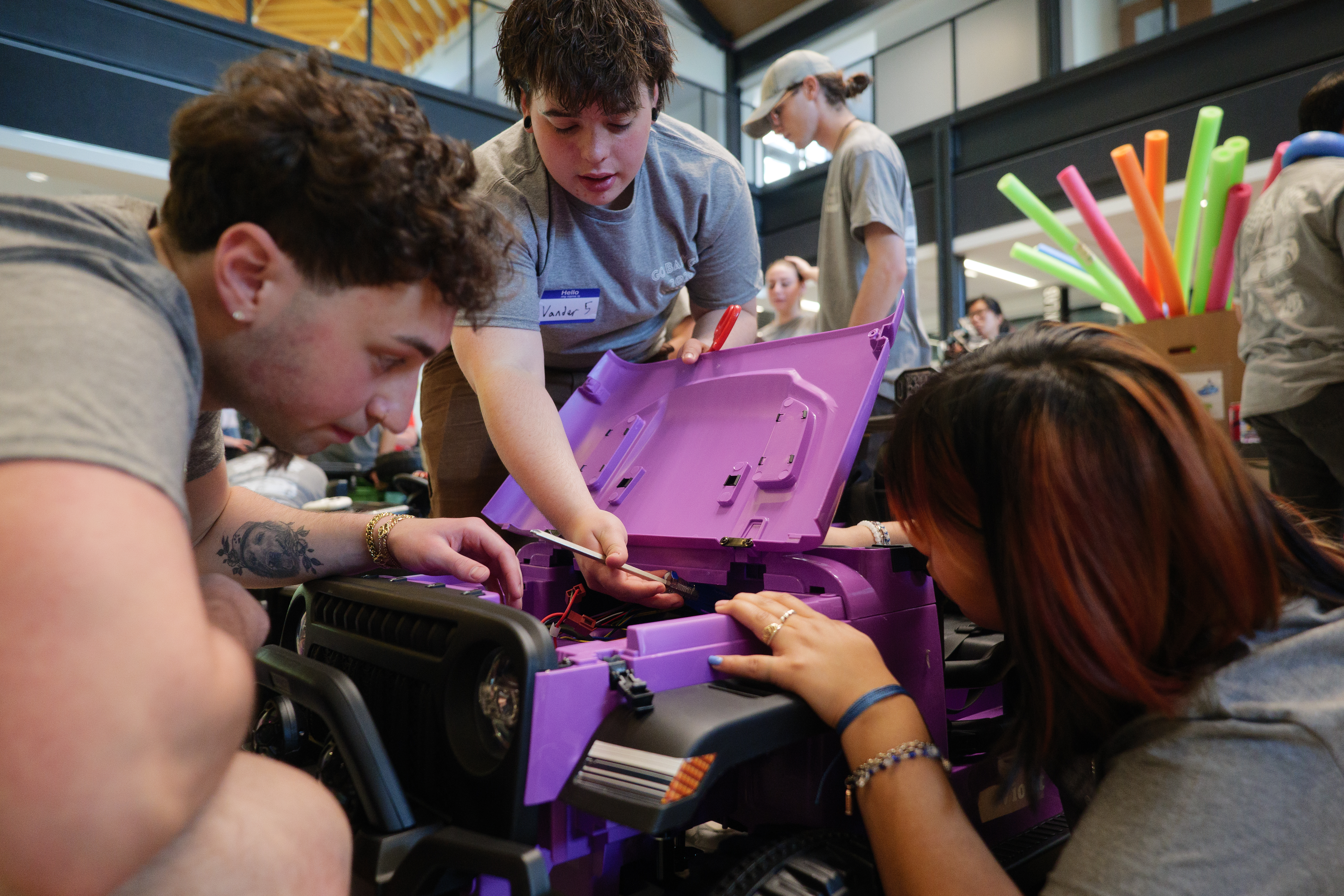
Six young children zipped across the pavement in brightly colored toy cars, laughter trailing behind them. These weren’t ordinary rides; they had been carefully reimagined by those same students inside, transformed into custom vehicles designed just for the kids who drove them.
The collaborative effort between the Elon Engineering Club, Phoenix Racing and the Department of Physical Therapy brought the Go Baby Go Initiative to Elon’s campus for the first time. Founded in 2012 at the University of Delaware, Go Bo Baby is a national initiative that modifies ride-on toy cars to meet the individual physical needs of young children who experience mobility challenges.
Julianna Millett ’26 spearheaded Elon’s effort with fellow engineering majors Diego Hernandez ’26 and Abigail Johnson ’27, after learning about the program through their Tikkun Olam Makers Fellowship. The TOM Fellowship Program is a nine-month international program that supports campus leaders, students and faculty in leading “communities” of students who use their engineering and design skills to co-create TOM Solutions for problems faced by people with disabilities, the elderly and the poor.
“For a lot of children, this is their first mobility device. Insurance isn’t going to cover a mobility aid because kids grow so fast,” said Millett. “With this car, it’s giving them almost a first experience of having some autonomy over their movement.”
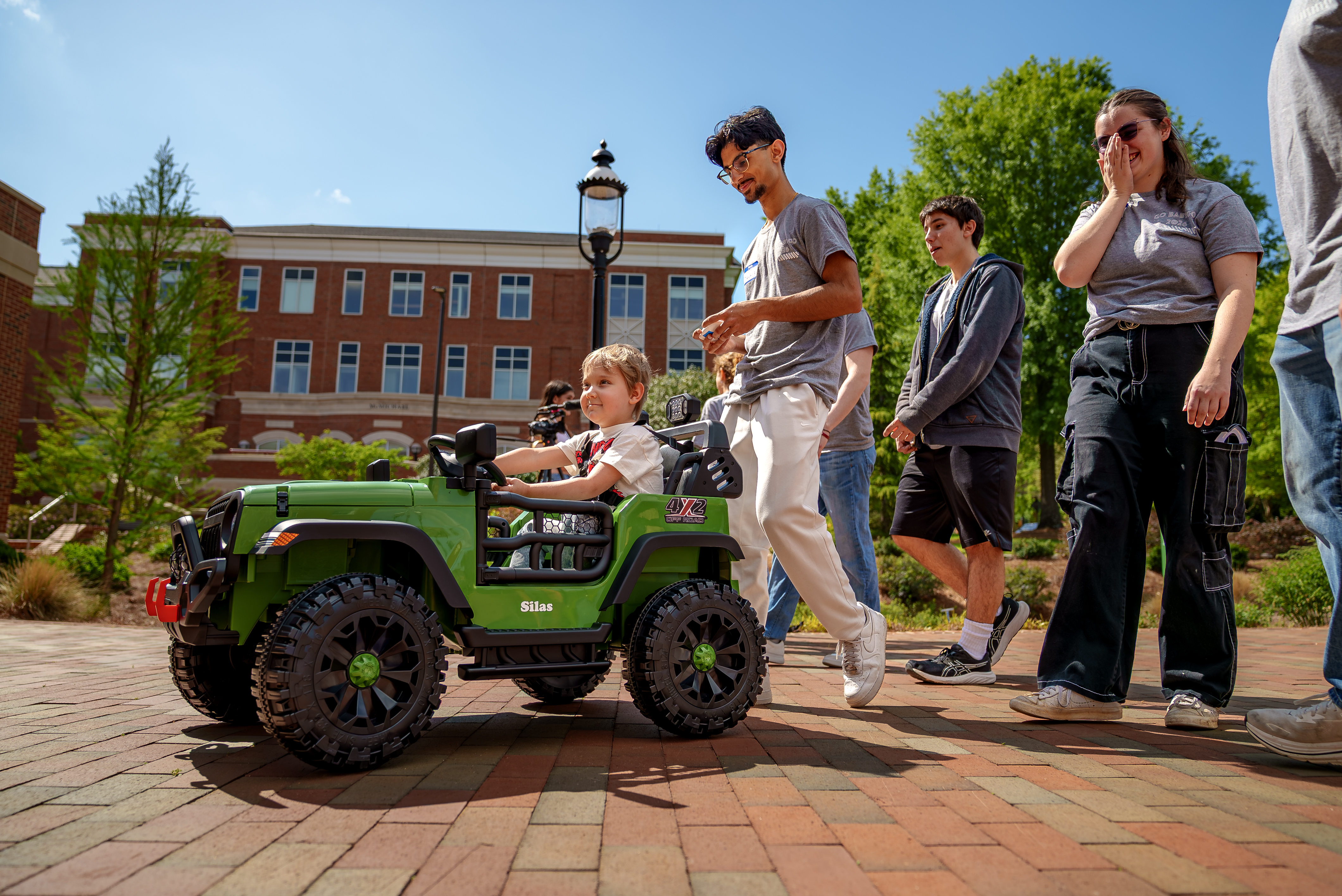
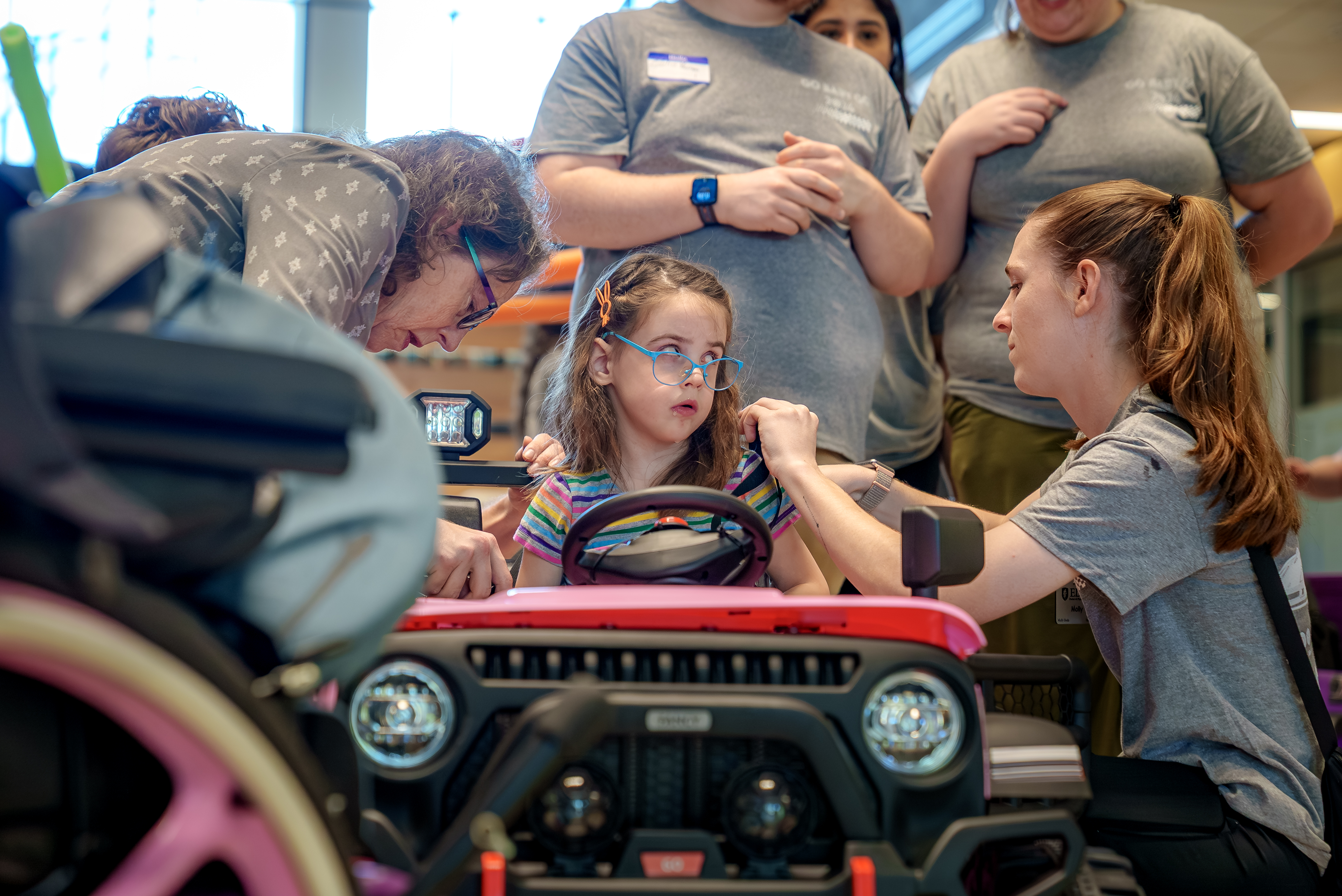
On Saturday, engineering students adapted the car’s gas pedal to be a button on the steering wheel so the children could drive the car more efficiently, and physical therapy students helped adjust five-point harnesses so the children could also ride comfortably.
Sirena Hargrove-Leak, professor of engineering, views this work as an extension of Elon’s Engineering Design for Service course, where students work in small teams to design devices for systems that aid a local community client.
“Now it becomes an extracurricular engagement for students who are really motivated by that type of work to be able to continue it, and it connects them to a much larger organization,” said Hargrove-Leak. “It’s international and several other institutions of higher education are part of this, so just having that connectivity with other people who are doing similar work and moving it into the extracurricular space broadens and deepens that experience.”
Rebekka Manning’s 4-year-old son, Henry has cerebral palsy and works regularly with the Department of Physical Therapy. Manning says Henry has not been able to play like other children his age due to his condition.
“A lot of options are not open to him. Even the rides at the city park are not adaptable and accessible,” she said. “It’s discouraging to try to be the mother and father of a child who wants to play, and he can’t.”
Henry was fitted into his car on Saturday while his father controlled the driving through a remote control, and Henry was also able to use the steering wheel button to drive.
“It is a dream come true because it’s something that we realized that we couldn’t do with Henry unless we had help,” said Manning. “When he got in, he got a little bit nervous, and everybody was watching, but then after a few laps here, did you see his smile grow? And he started interacting more. So, it is definitely a confidence builder.”
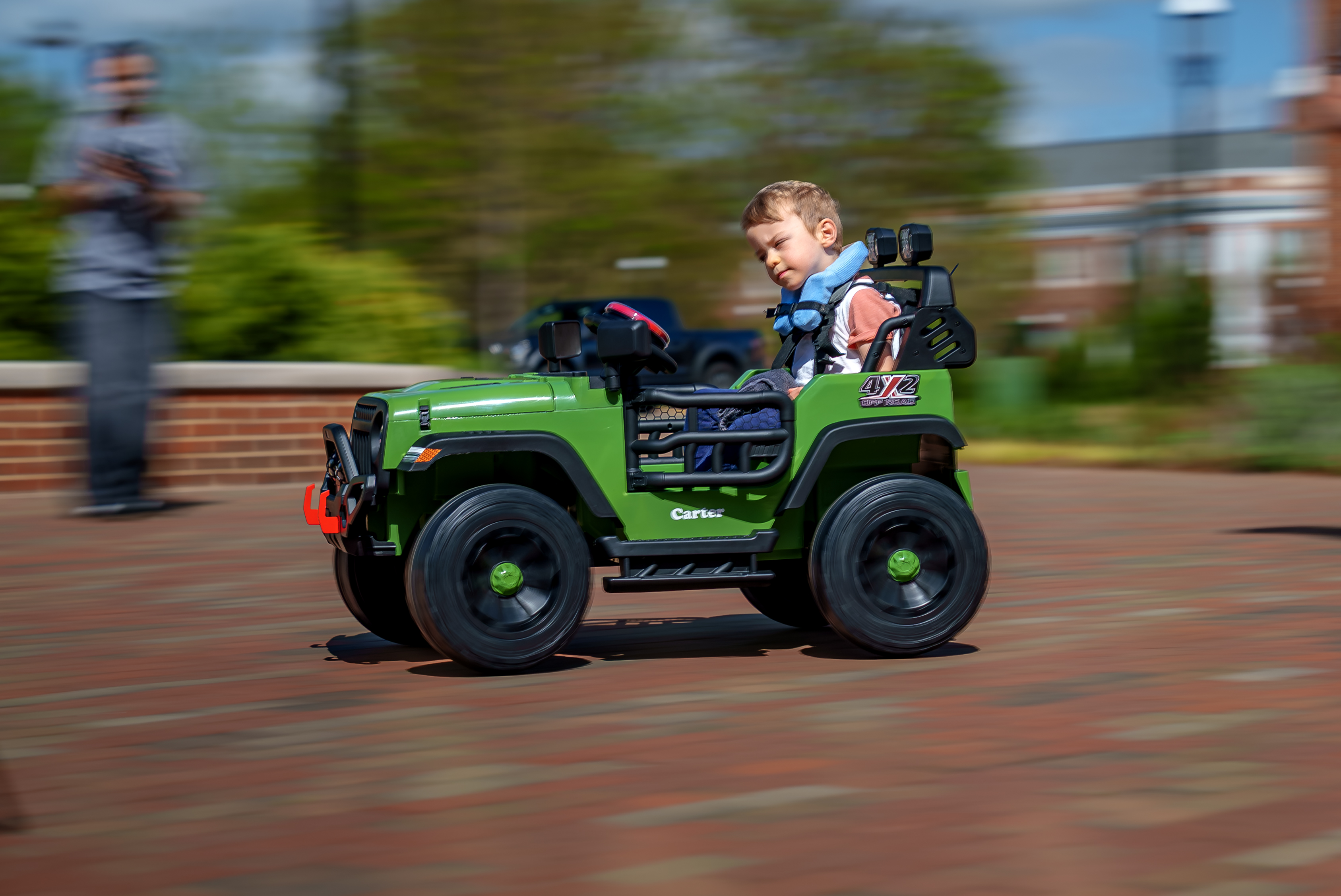
Carrie McCollum heard about the Go Baby Go program through their family’s physical therapist at Cone Health, who is an Elon alum. McCollum’s daughter BillieAnn has cerebral palsy, and while her older brother had driven her in his toy car, McCollum says it’s safer and better for BillieAnn to now drive her own.
“I hope to see her getting outside more often,” said McCollum. “We live on a farm, we have plenty of open space for her to move around on, but the wheelchair does not go well on gravel or rough terrain. I hope that this will be a way for her to drive around and see things out in our yard and on our farm.”
Hargrove-Leak says while this experience has been beneficial for the families involved, the students and her find it rewarding as well.
“It is so fulfilling to be able to serve as a mentor for these students,” said Hargrove-Leak. “I have just enjoyed watching them grow as servant leaders, using their knowledge and skills to help other people. That’s always been my dream as an engineering educator, to try to encourage students to use what they’re learning for good in the world.”