


The 12-day residential journalism workshop introduces rising high school seniors to careers in journalism and communications.
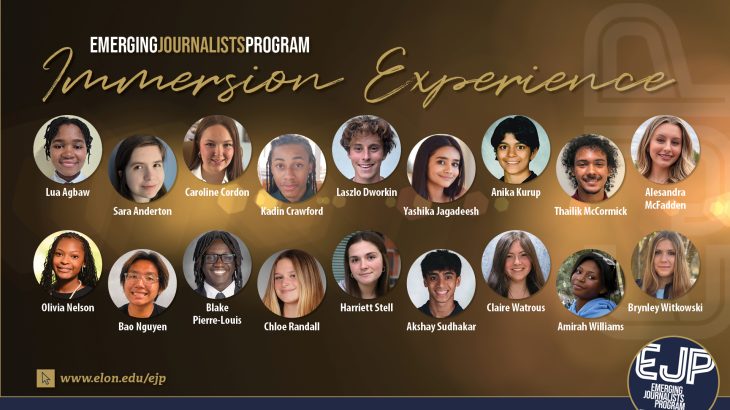
Elon University and the School of Communications will welcome its fifth Emerging Journalists Program Immersion cohort to campus on Monday, June 15, to kick off 12 days of hands-on journalism instruction. The 18 high school students will arrive to Elon from eight states.
“At a moment when trust, information and news literacy feel more important than ever, it’s encouraging to spend time with students who care deeply about reporting and serving their communities,” said Kelly Furnas, EJP curriculum coordinator and associate teaching professor of journalism. “Every year, this program leaves me optimistic about the future of journalism.”
The university is funding the program, allowing another group of students to develop and enhance their skills in reporting, writing, multimedia storytelling, leadership and media management. Beyond instruction, the students will collaborate as members of a working newsroom, producing professional web content, a newspaper and a television news broadcast, as well as tracking audience engagement metrics.
The Immersion experience also features several off-campus activities. The students’ schedule includes media tours of WUNC News and WTVD-TV in Durham. They will meet with state Rep. Jay Jeffers at the North Carolina State Capitol, visit the International Civil Rights Center & Museum in Greensboro, and enjoy a Winston-Salem Dash baseball game.
“One of the most encouraging parts of leading the Emerging Journalists Program is getting to work with students who care deeply about thoughtful and ethical storytelling,” said Colin Donohue, EJP program director and an assistant professor of journalism. “It’s rewarding to watch them grow as journalists and collaborators, and their enthusiasm reminds me why this work matters.”
Students will earn four hours of college credit for completing the Immersion experience and be paired with an Elon student mentor, who will offer guidance and assistance as students work on their own projects back home and prepare their college applications.
The program, established in 2021, is designed to educate high school students who are interested in pursuing careers in journalism and the media industry. This year, 192 high schoolers from across the country applied to the program – a record number – and all were invited to participate in the virtual Exposure experience in the spring.
“The students who apply to EJP are already asking thoughtful questions about journalism and impact,” Furnas said. “Our goal is to give them the foundational tools, mentorship and newsroom experience to start answering those questions in their own work.”