


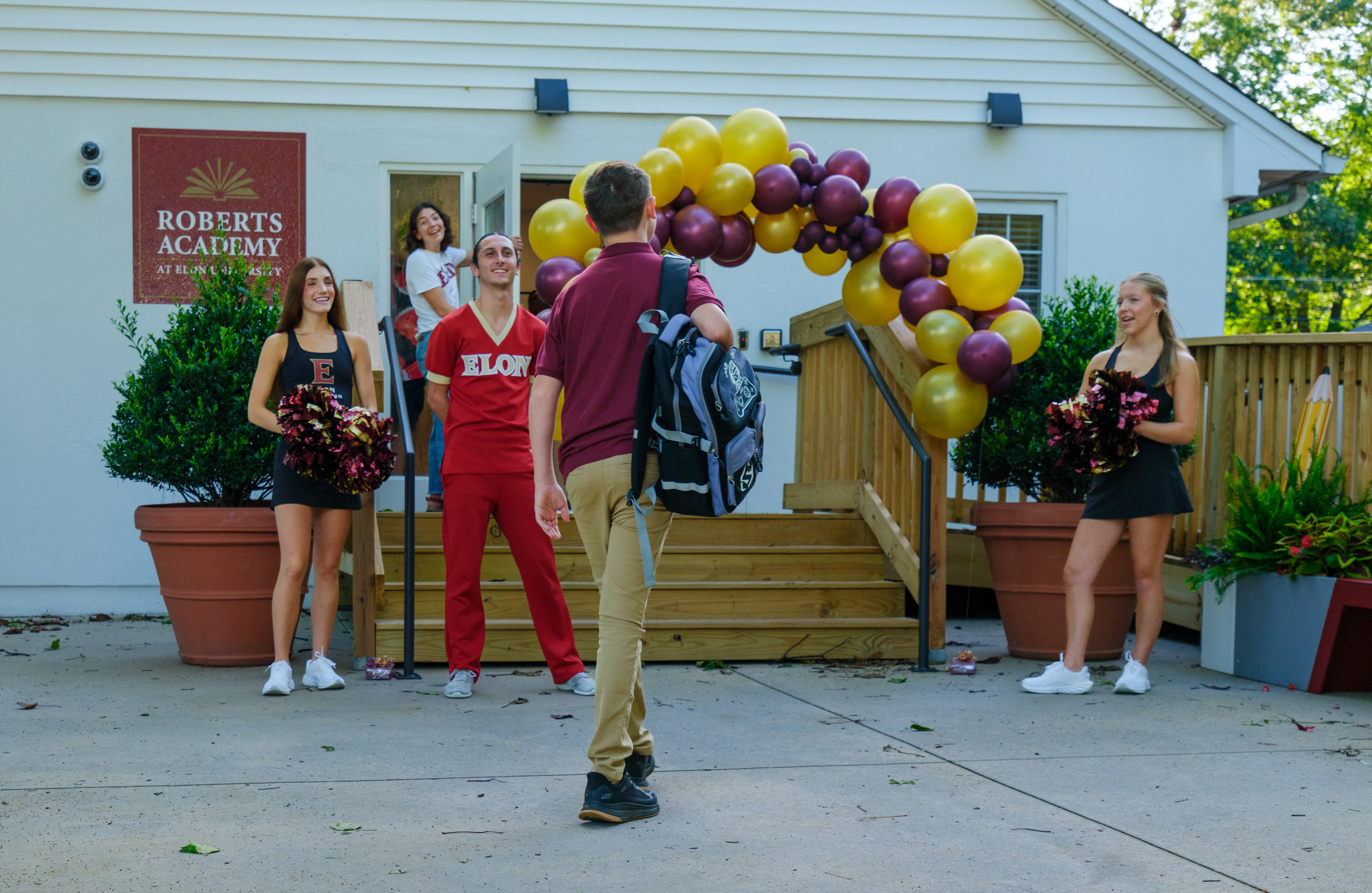
The school, which opened on Aug. 18, is North Carolina's only university-based private school for children with dyslexia.
The Roberts Academy at Elon University, North Carolina’s first and only university-based private school for children with dyslexia, opened its doors to its inaugural class on Tuesday, Aug. 18, marking a milestone in Elon’s efforts to transform literacy education.
The school, established through the philanthropic vision of Marjorie and Hal Roberts, will serve as a statewide and national model for structured literacy education. The Robertses have witnessed firsthand the transformative power a multisensory approach to reading education can have for children with dyslexia.
“Opening Roberts Academy is more than the start of a new school year — it is the realization of a vision rooted in possibility,” said Alicia Tate, acting director of Roberts Academy at Elon University. “We are honored to welcome our inaugural class and are excited to build a community where every student is known, challenged, encouraged and given the opportunity to thrive. This is only the beginning, and we cannot wait to see where this journey leads our students and their families.”
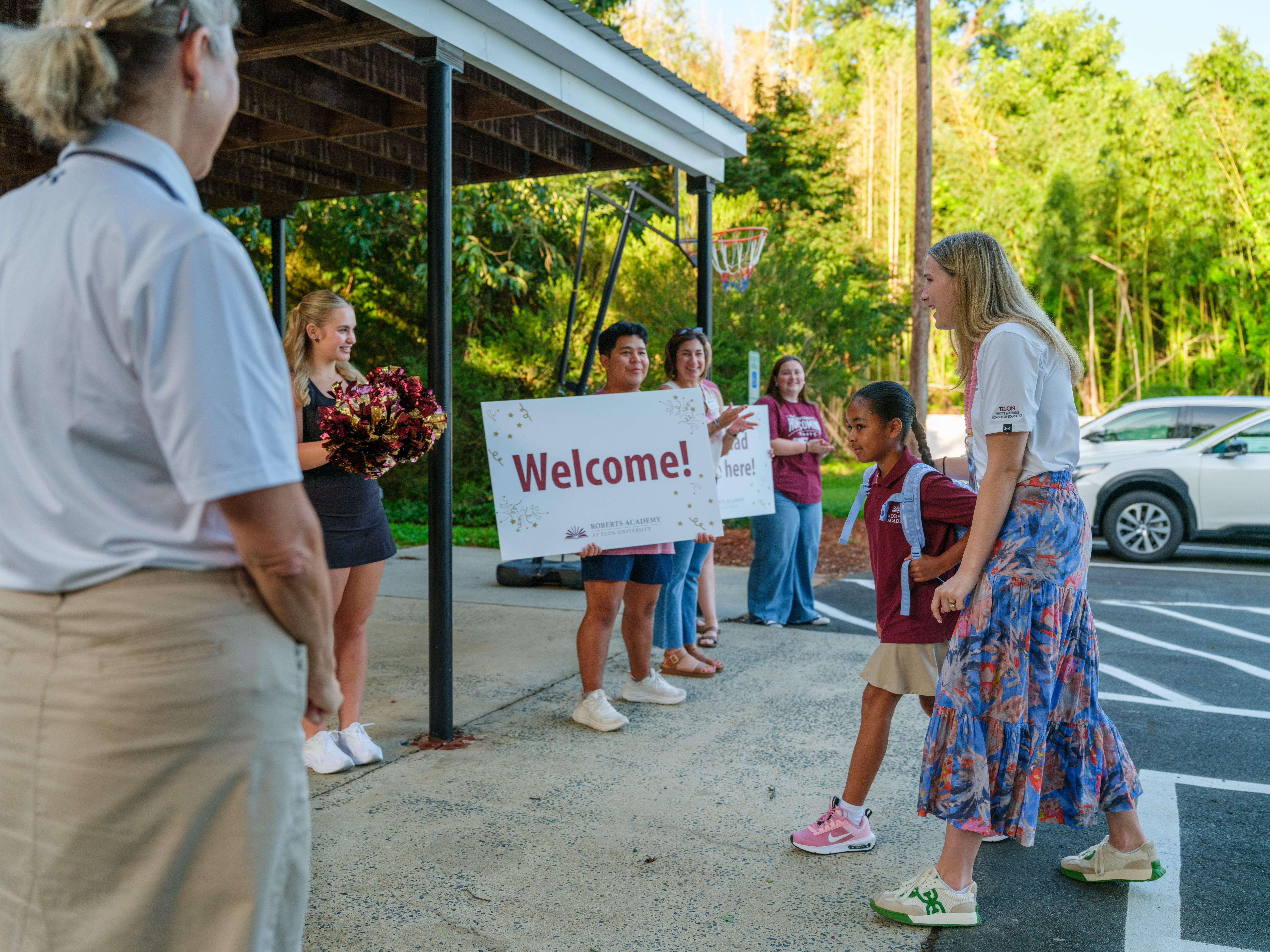
Students arriving Tuesday were greeted by faculty from the Dr. Jo Watts Williams School of Education, Elon staff members and members of the university’s dance and cheer teams, creating a celebratory welcome for the academy’s first students.
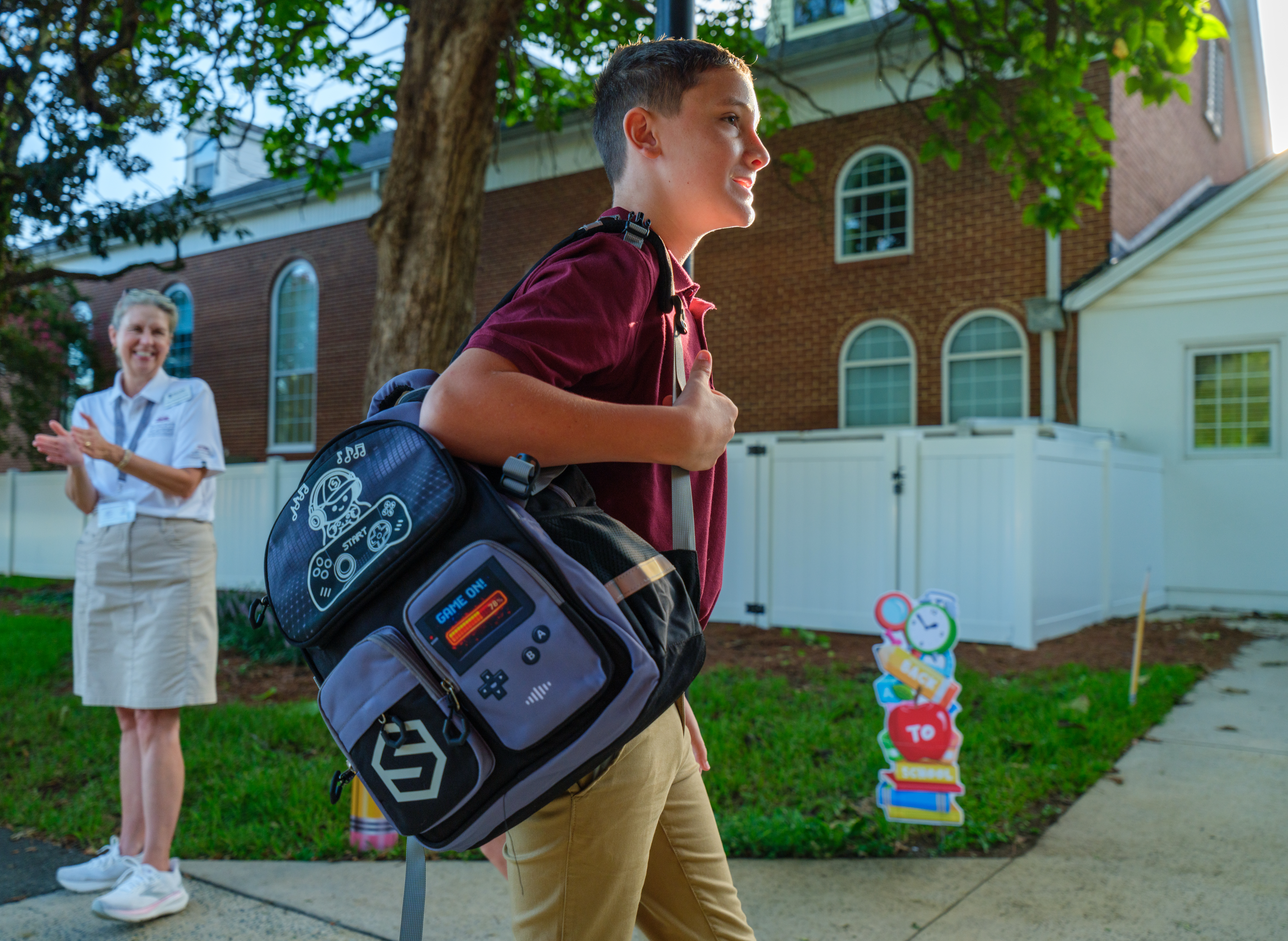
“I’m most excited to know about my school and the chance to have a brand-new start,” one Roberts Academy student said.
Discover a love of learning
Roberts Academy is initially welcoming students in third and fourth grades at its temporary home on West Trollinger Avenue in Elon. The academy will eventually expand to serve students in grades one through six in a state-of-the-art facility planned for East Haggard Avenue, scheduled to open in fall 2028.
Designed as a transitional school, Roberts Academy will typically serve students for one to three years before they return to their community schools with the skills and confidence to succeed as scholars, entrepreneurs and civic leaders.
Teachers will use the Orton-Gillingham approach, a structured, multisensory method of literacy instruction designed to help students with dyslexia develop stronger reading and language skills.
For Bella Martino ’26, a Roberts Academy teacher who graduated from Elon with dual licensure in K-6 general education and special education, the school offers an opportunity to help students develop not only their reading skills but also their enthusiasm for learning.
“I really want to see them enjoy school. I want them to enjoy this as a place. I want them to like learning,” Martino said. “I’m just really looking forward to seeing them grow as learners, especially provided that all of our students are going to have some level of learning difficulties as it relates to reading. I’m really looking forward to helping them rediscover a love of reading.”
That hope is shared by the parents who brought their children to Roberts Academy for the first day.
“The most exciting thing about it is for my son to be excited about school, about learning, about feeling confident, about realizing that it’s OK the way his brain is wired and he’s going to learn how that works, and then he’s going to be able to soar,” one parent said.
Investing in a child’s future
For Donnielle Rome-Martin, finding Roberts Academy followed a long search for the right educational environment for her daughter, whose goal is to become a “bookworm.”
Rome-Martin said she struggled to find the support her daughter needed, with other programs focused on accommodating her dyslexia rather than helping her develop the skills to overcome the challenges she was experiencing.
“My heart breaks when she tells me she’s stupid. She’s not stupid,” Rome-Martin said. “The idea that a young little girl at this small age could think that she’s stupid made me so scared for what the future is going to look like. This cannot happen.”
When Rome-Martin toured Roberts Academy, she said she immediately noticed a different approach, one focused on her daughter’s potential rather than her limitations.
“What I fell in love with was the way the staff spoke about dyslexia and the way they spoke about her future,” Rome-Martin said. “This was a passion, and they were invested in this from day one. That’s all I ever wanted, was someone to invest in my daughter like I do.”
That commitment led Rome-Martin to make a significant commitment of her own. She will travel nearly two hours each way to bring her daughter to Roberts Academy each day, a decision she said was affirmed when she watched her daughter walk into school on the first morning.
“What amazed me is we were walking into the parking lot, and we walked up, and she didn’t look back,” Rome-Martin said. “That made me feel really good that she didn’t look back as she walked off because I think she knows that she is going to be OK.”