


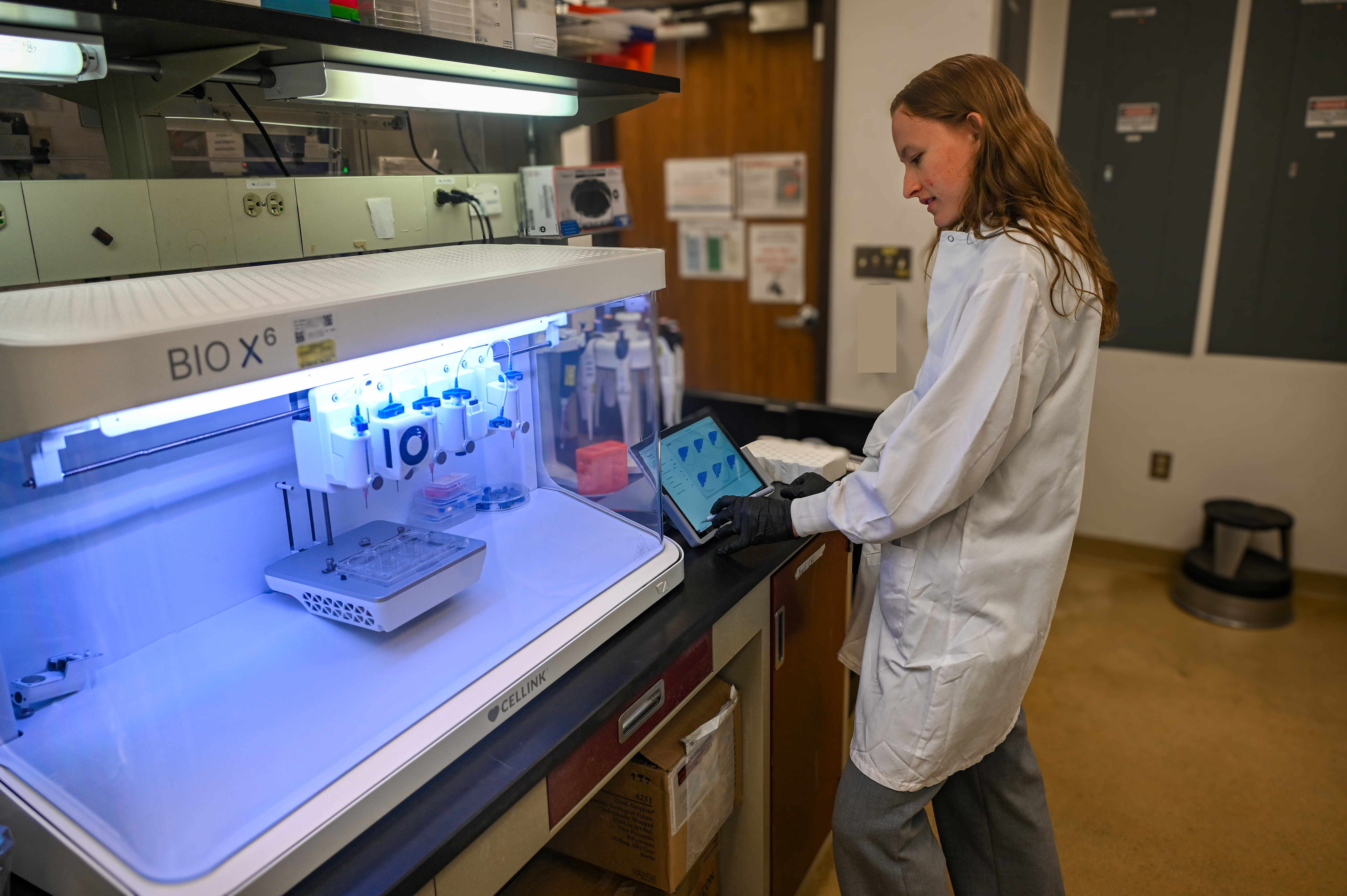
Eastment, a biomedical engineering major, spent her summer working for an Army medical research facility.
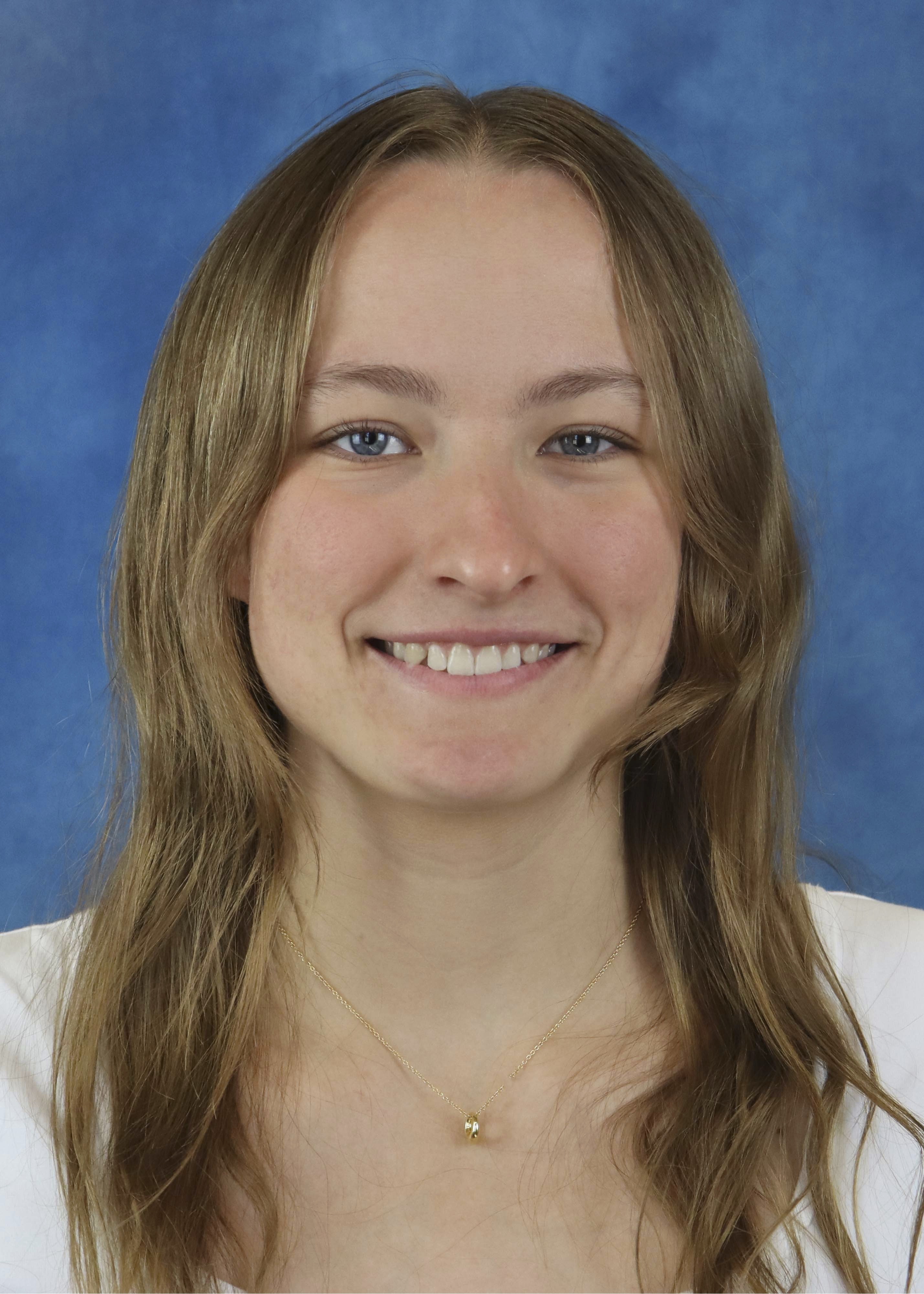
Elsa Eastment ’27 spent her summer combining engineering, biology and infectious disease research during an internship at the United States Army Medical Research Institute of Infectious Diseases at Fort Detrick, Maryland.
A biomedical engineering major from Chevy Chase, Maryland, Eastment worked in the institute’s molecular biology division, where she used bioprinting technology to create three-dimensional living liver tissue. Her project involved working with two types of cells — HepG2 cells, which model liver cells, and iPSC-derived endothelial cells, which model the cells that line blood vessels.
“I was working with a bioprinter to print bioinks containing the two cell types. I then infected the live tissue that I printed with two different viruses to test how well the cells were remodeling the matrix,” Eastment said.
Eastment’s goal was to determine which cell ratio would optimize matrix remodeling in 3D printed liver tissue. The experience brought together interests Eastment developed after arriving at Elon. She initially expected to pursue economics or finance but changed course during her sophomore year after taking a human physiology class.
“The course sparked my interest in biology,” Eastment said. “So when I was looking at summer internships, I was not just looking at engineering, but I was also looking at biology-focused opportunities.”
Beyond the technical experience she gained, Eastment says one of her most significant takeaways was seeing the collaborative nature of research at a large facility. Rather than projects remaining within individual teams, researchers across multiple divisions contributed their expertise.
“At USAMRIID, projects travelled between different divisions, rather than staying in just one. This collaboration allowed projects to benefit from a broader range of expertise, which I think improves project quality and productivity,” Eastment said.
The experience has already influenced how Eastment approaches her research at Elon. While much of her work has centered on engineering, she said the internship encouraged her to seek perspectives from other disciplines.
“This opportunity inspired me to do more outreach and talk to people from different departments about my projects,” Eastment said. “I think hearing their expertise could really elevate my projects.”
Eastment credits Elon with giving her the flexibility to discover her interest in engineering and quickly gain hands-on research experience after changing her academic path. She said that after switching majors, she was connected with an adviser, enrolled in the courses she needed and began pursuing research opportunities.
“Elon has made gaining research experience super easy, which I really appreciate,” Eastment said. “I feel encouraged and excited to pursue my ideas because starting a project is so easy. All you have to do is ask.”
Scott Wolter, Eastment’s mentor at Elon, has played an important role in that experience by helping connect her with faculty members whose expertise aligns with her research interests.
“Dr. Wolter has been very instrumental to my experience in Elon Engineering,” Eastment said. “He’s not only interested in my projects and me doing the best that I can here, but he’s also been very invested in my career afterwards and helping me figure out what I want to do after Elon.”