


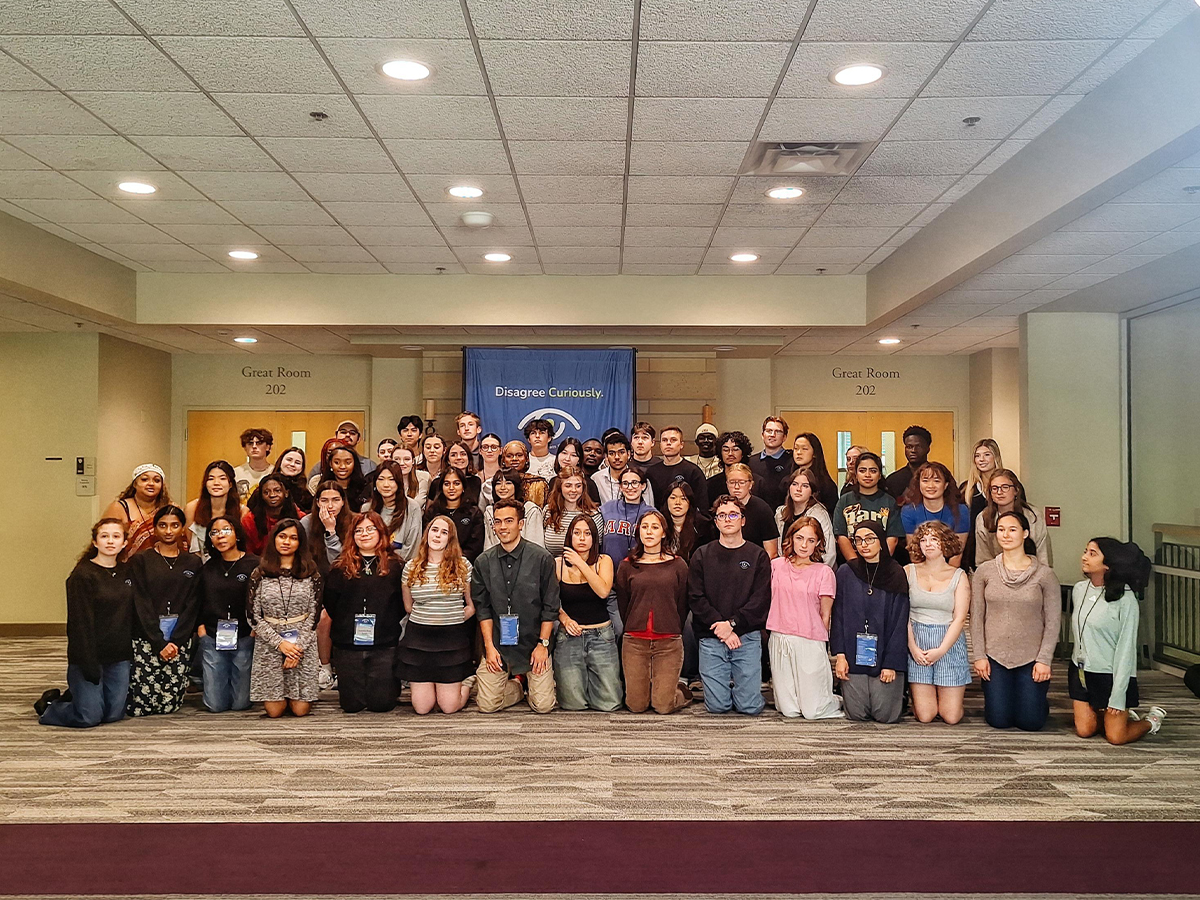
Student leaders joined seven other campuses to engage in experiential learning around dialogue.
What happens when student leaders learn to approach disagreement with curiosity? For seven Elon University students, the answer began in Minneapolis, where they joined student leaders and peer mentors from six other colleges and universities for the 2026 Viewpoints Fellowship Retreat at the University of St. Thomas.
Over the course of the retreat, fellows practiced listening across difference, questioning their assumptions and engaging perspectives that challenged their own. The goal was not to make disagreement disappear. Students explored how curiosity can create space for people to stay engaged when they see an issue differently.
For Elon fellow Audrey Schultz, Elon’s Better Together Coordinator, that is one of the most important lessons she is bringing home.
“One thing I plan to bring to Elon from the Viewpoints Fellowship Retreat is the promotion and facilitation of dialogue and curious disagreement in spaces that don’t typically focus on them,” Schultz said. “Leaders, in any capacity, can learn these skills and should understand their significance.”
Through structured exercises, case studies, and facilitated dialogue, fellows had opportunities to practice those skills in real time. They considered how assumptions shape conversations, how people respond when they feel challenged, and how curiosity can open the door to perspectives that might otherwise be dismissed.
Sanai Crosby of Alpha Kappa Alpha Sorority found the experience particularly useful for thinking about how to remain engaged across disagreement.
“I learned how to create curious and intentional dialogue, share my perspective, and respectfully disagree with others while still working toward understanding,” Crosby said.
That learning extended beyond the retreat sessions themselves. Fellows met students from universities around the world and encountered experiences and perspectives different from their own.
For Crosby, the experience reinforced an important principle about dialogue: understanding can exist even when people disagree.
“It challenged me to learn from perspectives and experiences different from my own. “The retreat reminded me that meaningful conversations do not require agreement,” Crosby said. “But they require openness, curiosity and a willingness to understand.”
For Hillary Zaken, director of multifaith engagement at Elon’s Truitt Center for Religious and Spiritual Life, who serves as campus advisor to the cohort, that willingness to remain in conversation represents an important shift in campus culture.
“We want to help shape a campus culture where students feel empowered to come to the table, even when they know they may disagree,” Zaken said. “Curiosity gives students a way to stay engaged with one another, ask questions, and consider perspectives they may not share using the techniques of active empathetic listening. That space is where meaningful learning and personal leadership development happens.”
That approach to dialogue is central to the work of the Viewpoints Project, a nonprofit that empowers young people to approach disagreement with curiosity. Through the Viewpoints Fellowship, students develop practices for navigating difficult conversations and bring those practices back to the communities where they lead.
The partnership also reflects the Truitt Center’s commitment to helping Elon students engage meaningfully across difference. By connecting student leadership development with dialogue education, the program allows fellows to practice these skills within the organizations and communities they already serve.
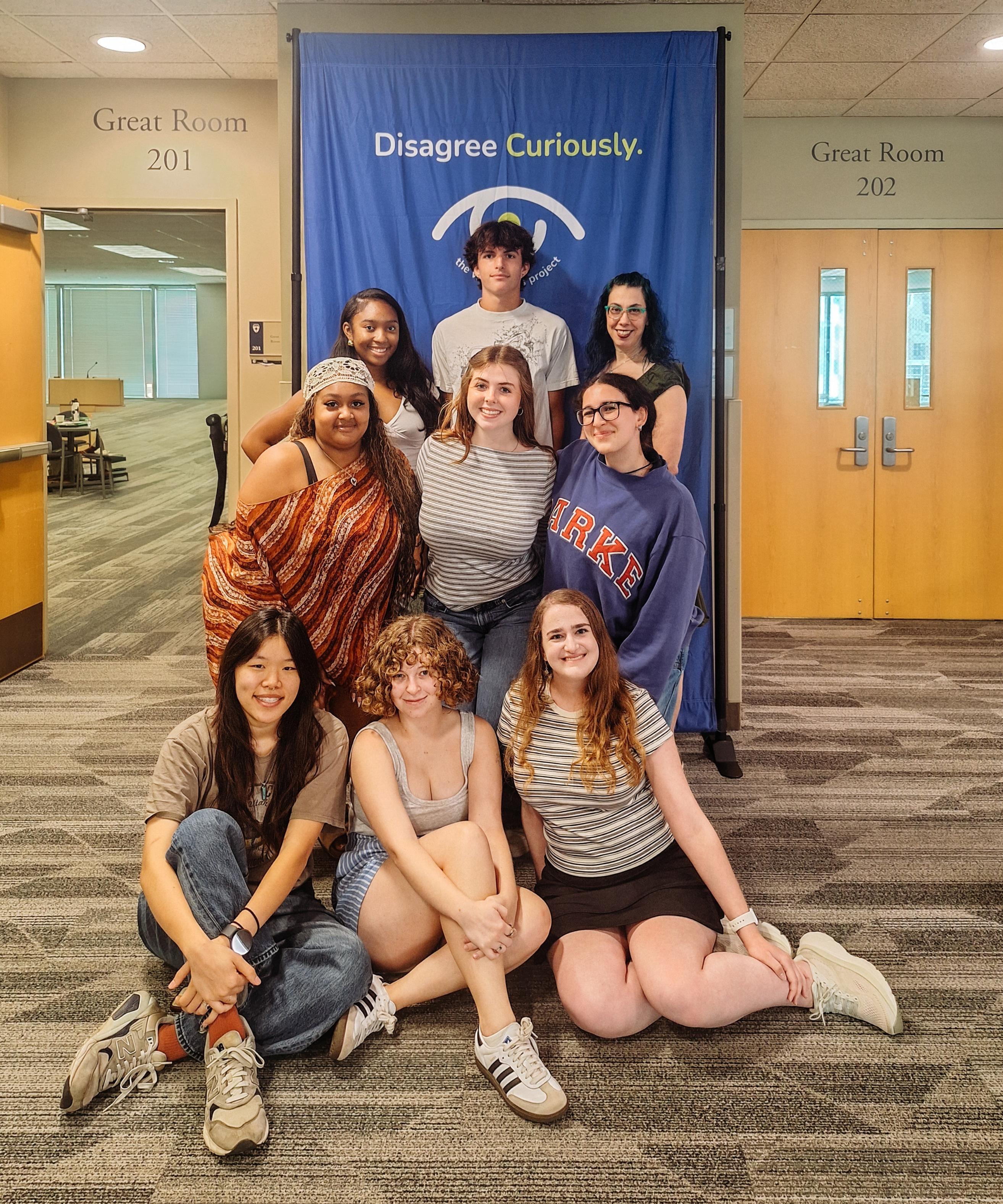
Elon’s 2026-27 Viewpoints Fellows are Brayden Morrison, Club Ultimate Frisbee; Audrey Schultz, Better Together; Emily Wright, Asian Pacific Student Association; Addison Anderson, Leaders in Interfaith team; Rachel Bermont, Hillel; Skylar Winter, Student Government Association; and Sanai Crosby, Alpha Kappa Alpha.
Sasha Stanley, a 2025-26 Fellow, has returned to the Viewpoints Fellowship as a Peer Mentor, helping fellows on campuses across the country engage in curious disagreement.
Their work at Elon will continue throughout the academic year as they bring ideas from Minneapolis into the clubs and organizations they lead. The fellowship culminates with a campus-wide capstone project in the spring.
For the Truitt Center, the retreat represents an ongoing investment in students as facilitators and leaders who can help create space for meaningful engagement across difference. The experience in Minneapolis gives these seven students a shared set of practices to draw on as they continue that work at Elon.