


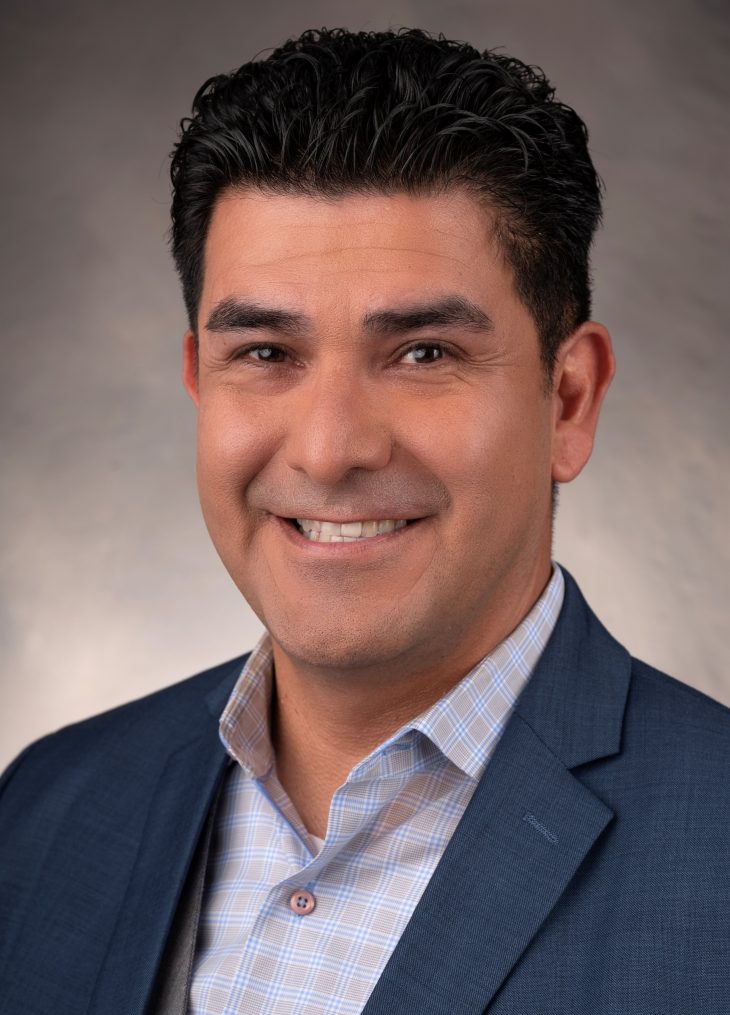
In this editorial, distributed by the Elon University Writers Syndicate, Israel Balderas, assistant professor of journalism, writes about President Donald Trump banning several media outlets from the White House. It has been published in The Reflector, The Daily Advance and the Rocky Mount Telegram.
You already know what gas costs. You watch that number tick up on the drive to work every morning. Right now, it’s somewhere around $4.48 a gallon, give or take. That’s roughly a dollar and a half more than you were paying before February. If you farm or haul or drive an 18-wheeler, you know what diesel costs, and it’s worse.
Nobody needs CNN or other news organizations to tell them what’s observable. You can read a sign. What you might need a reporter for is the next part: why.
In late February, this country went to war with Iran. President Donald Trump said it would be over quickly. It is now month seven. The Strait of Hormuz, a channel in the Middle East through which a fifth of the world’s oil moves, has been contested since spring. When the Bureau of Labor Statistics reported that gasoline jumped again in August, economists, market analysts and financial news outlets widely agreed that the war in the Middle East is the primary reason behind the price hike.
At least 18 American servicemembers are dead across the wider regional conflict, six of them in a drone strike on a base in Kuwait. The Pentagon has extended deployments into 2027 after telling families it wouldn’t. Ammunition stockpiles are thin enough that senior commanders have raised it with the Defense Secretary.
That is the reporting being done at CNN, MS NOW and Politico. It isn’t commentary, and it certainly isn’t somebody’s opinion about the president’s temperament. That is what the White House press corps has been filing for six months.
And it is that reporting the president continues to attack.
In March, when CNN reported that his national security team had not planned for Iran closing Hormuz, his press secretary declared the story fake news. This month, when outlets reported the ammunition shortages, he called the coverage treasonous. When the Defense Secretary was asked about coverage of dead American troops, he suggested it existed to make the president look bad.
Then on Sept. 18, the president announced that CNN, MS NOW and Politico were banned from the White House. On Sept. 19, their reporters were turned away at the gate and their passes taken. On Sept. 21, they sued.
Here is the part worth sitting with. In his social media post announcing the ban, and in everything he has said since, the president has not identified a single story that was wrong. Not one article, not one error, not one correction demanded. When he was asked directly whether he was trying to intimidate the press, he said the outlets write negative news to “diminish the Republicans.”
That is not a complaint about accuracy. That is a statement about an election.
And that’s what makes this different from the usual fight between a president and reporters who annoy him. Every president has hated his coverage. Trump claiming negative coverage is fake is not new. What is new is that he now readily admits coverage about the Middle East and consumer prices hurts Republicans six weeks before an election. And that’s the point of banning reporters from the White House.
So, ask yourself the practical question, the one that actually touches your life. What is it he doesn’t want you to see or hear before November?
It’s not the high prices, because Trump can’t hide that truth. It’s on a sign at eye level in every town in America, and he knows it. What Trump can do is interrupt the explanation. You are going to feel this war either way. The only question is whether you know that’s what you’re feeling, or whether you spend the next six weeks being told it’s somebody else’s fault: Ukraine, the Federal Reserve, Joe Biden, the oil companies, whoever’s available.
Trump is not protecting you from lies. He is betting that you can feel the pain of higher bills and not connect it to his choices.
That is a bet about you. Honestly, I’d take it personally if I were you.
And notice you don’t have to take a single news network’s word for any of it. Republican Sen. Thom Tillis called for the Defense Secretary to be fired and said he had never seen more inept management of American servicemembers. The Army Secretary has resigned. The Navy’s top admiral and the commanders responsible for Europe, Asia and Latin America told the Secretary of Defense directly that the deployment could not be sustained. It’s the reporters who wrote it down. And now, they’re the ones who are out.
I know it’s easy to distrust information or news that conflicts with your beliefs. But there’s a difference between a press you distrust and a press the government gets to edit. The difference shows up exactly here: when the reporting is inconvenient, on a subject that costs you money, with a vote now five weeks away.
Verify every word they write. It’s not only your right but your obligation to hold the press accountable, as it holds the government accountable.
“The press was to serve the governed,” wrote Supreme Court Associate Justice Hugo Black in the Pentagon Papers case, “not the governors.” The First Amendment forbids “the Government’s power to censor the press” so that “the press would remain forever free to censure the Government.”
It is the duty of the press to “prevent any part of the government from deceiving” you. Just make sure you’re the one deciding what accurate information reaches you. Because right now Trump is making that call, and he’s making it on the theory that you’d change your mind if you knew.