


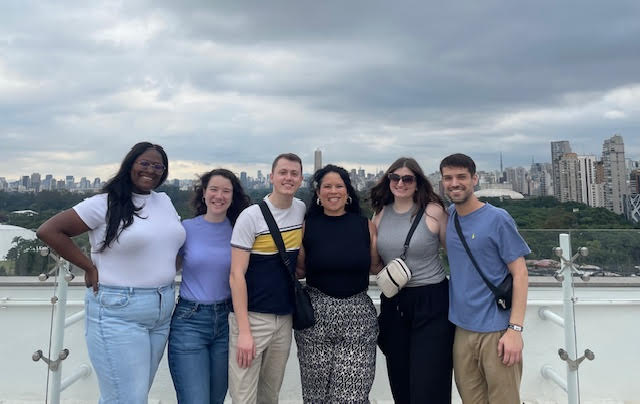
During Winter Term 2025, members of the Master of Arts in Higher Education community traveled to São Paulo, Brazil to learn more about higher education in Brazil and how to create collaborative, reciprocal, and genuine relationships with international institutions and organizations.
Members of the Master of Arts in Higher Education program at Elon University, along with Stephanie Hernandez Rivera, assistant professor of education and Jonathan McElderry, dean of student inclusive excellence and assistant professor, traveled to São Paulo, Brazil during Winter Term 2025.
The goal of the trip was to explore comprehensive internationalization and higher education in the Brazilian context, with a special focus on how students can form collaborative and reciprocal relationships with organizations and institutions.
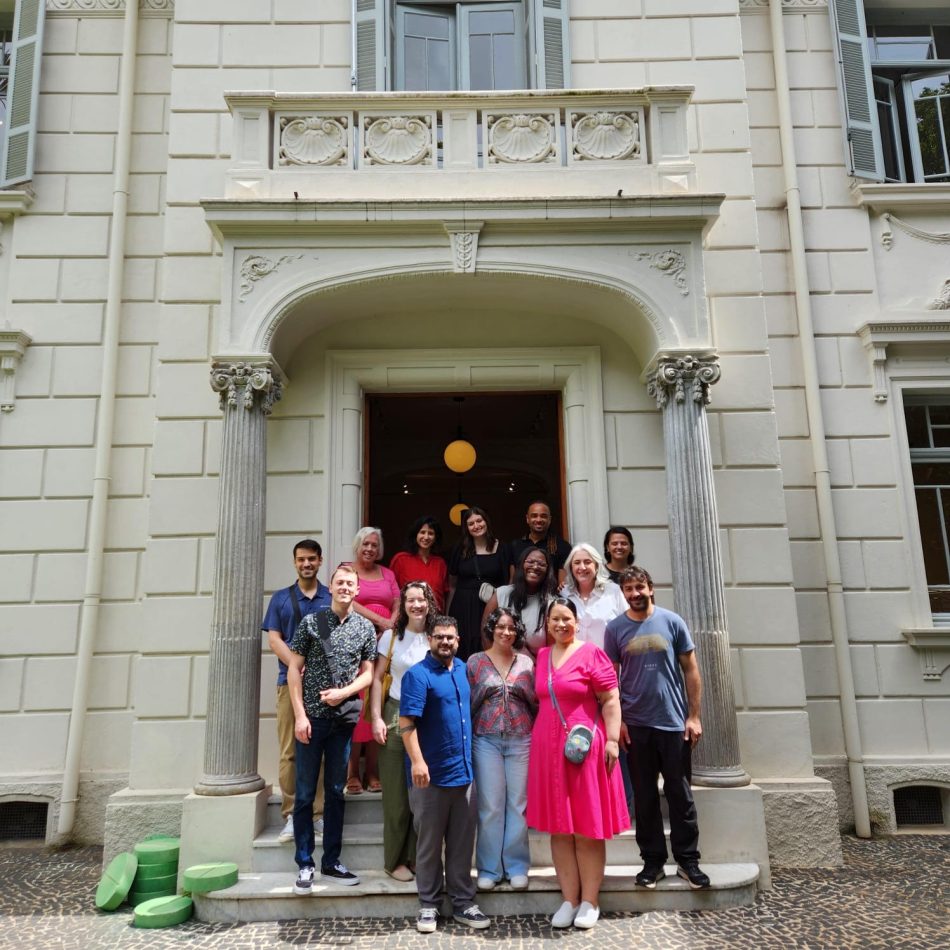
Their trip, coordinated with CET Academic Programs, included visits to universities such as, Fundação Escola de Sociologia e Política de São Paulo, Universidade de São Paulo and Escola Superior de Propaganda e Marketing. Students also visited the Museu da Língua Poruguesa to learn more about the complexities of Portuguese in Brasil, which included understanding how the African diaspora and Arabic culture has influenced Portuguese language, as well as organizations like Casa Sueli Carneiro which uplifts the legacy of activists Sueli Carneiro and the experiences of Black Brazilians.
Cass North, the graduate apprentice in the Global Education Center, shared that many of the organizations they visited in Brazil “work to increase educational access and opportunities to underrepresented people” while also “preserving and uplifting Black memory that has been globally silenced.” The most impactful part of the experience for North was when she was able to connect with students and staff from EDUCAFRO, an organization that works to increase access to education for Black Brazilian students.
Seth Lasher, a student in the Master of Arts in Higher Education program who is the graduate apprentice in the Student Professional Development Center, said that exploring São Paulo, Brazil, and building connections with the communities he interacted with allowed him to learn more about how higher education institutions and organizations in Brazil “navigate issues of access, equity and governance” and “address diversity, inclusion, and systemic challenges.” Lasher shared that seeing these efforts in practice allowed him to think more critically about how different issues and policies shape higher education outcomes globally.
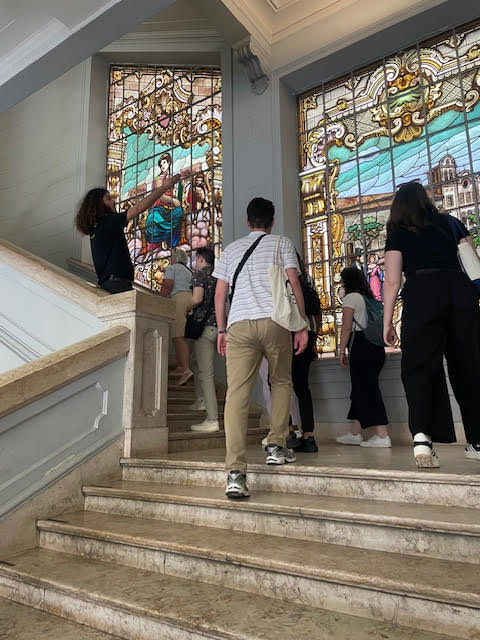
Students also reflected on how they would take what they learned during their trip and integrate it into their work in the United States. Rebecca Osborne, graduate apprentice in New Student Programs, shared that as she was thinking critically, she was “drawing connections between our experiences, the history we are learning, and how broader social systems of oppression.”
Students were further able to draw on the new knowledge and insights gained through their final assignment for the course, a grant proposal focused on collaborative initiatives that facilitate capacity-building and reciprocity between an organization/institution visited in São Paulo.
Students presented these proposal ideas to faculty and peers at the Master of Arts in Higher Education Colloquium. Colloquium is a time when Master of Arts in Higher Education students and faculty gather to discuss current issues, trends and best practices in higher education. Within Colloquium, students were able to share about the importance of decolonization in our internationalization efforts, the importance of capacity-building in international partnerships and how to facilitate collaborations that are mutually beneficial. Peers who have yet to partake in the study away experience were able to gain a basic understanding of internationalization and consider how they might build on the knowledge their peers’ shared as they prepare for the Theory and Practice of Global Education course this coming fall.