


"Talking Across Difference: An In-the-Moment Dialogue" allowed students, faculty and staff to engage in roundtable discussions around America, politics and polarization.
Elon University’s Council on Civic Engagement hosted a community dialogue on Monday, Sept. 15, that encouraged students, faculty and staff to “talk across difference without deepening divides.”
The event, Talking Across Difference: An In-the-Moment Dialogue, brought participants together in McKinnon Hall for roundtable discussions focused on questions about America, politics and polarization. Each group began by agreeing to a set of ground rules designed to foster respectful conversation.
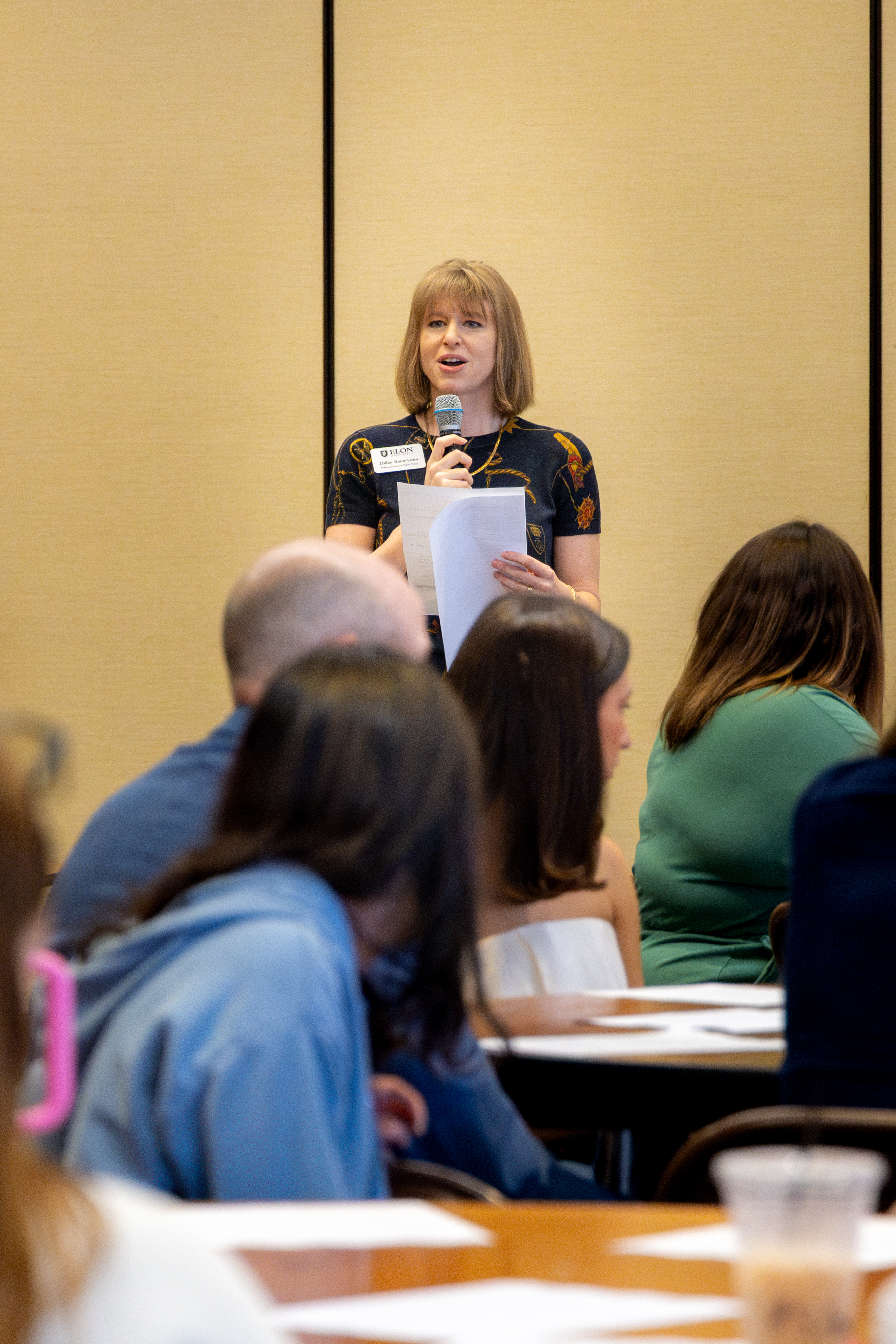
“The challenges of the world around us inevitably reach our campus, highlighting the importance of how we engage with one another,” said Dillan Bono-Lunn, assistant professor of political science and public policy and the faculty fellow for civic engagement. “Higher education should prepare students not only for careers but for citizenship, equipping us for dialogue, not division, and building the habits of listening and understanding that make democracy stronger. Events like this dialogue give our community a chance to practice those habits together.”
The dialogue took place against the backdrop of recent political violence, including the killing of Charlie Kirk on the Utah Valley University campus.
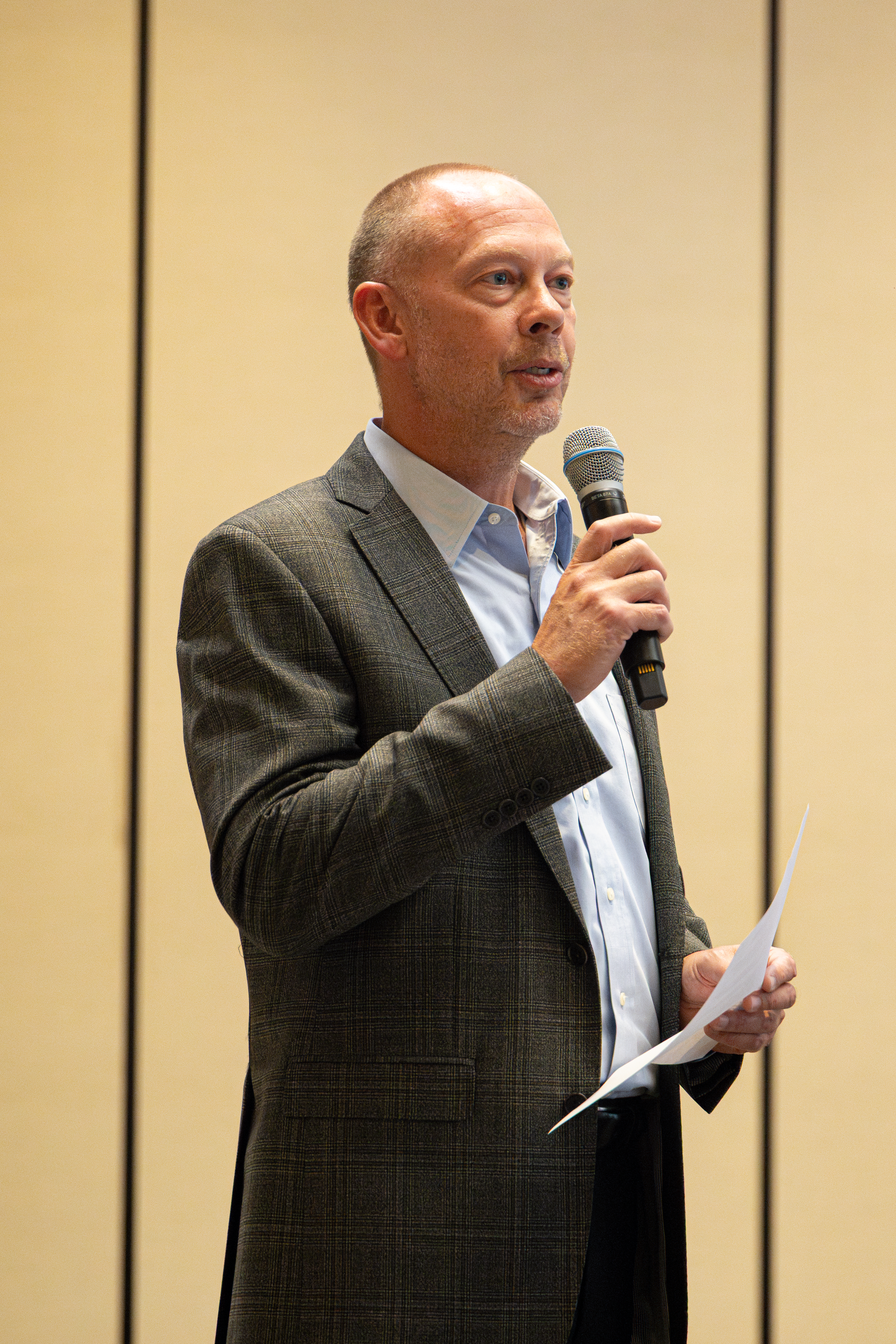
“We are currently living in a divided nation and need to find a way to use dialogue instead of violence when we encounter difference,” said Bob Frigo, assistant dean and director of the Kernodle Center for Civic Life. “Higher education has a role to play in preparing students to engage in collaborative action with individuals with whom they disagree to advance the common good — our democracy depends on it.”
For some Elon students, the event was their first opportunity to engage in this kind of structured dialogue
“I hope to just hear different perspectives about the tensions we hear in society today, especially with politics and how our views differ and how we can disagree respectfully,” said Zach Feldman ’29, a political science major. “Especially with regards to the Charlie Kirk killing, how we can honor a person who has divisive views but also honor his legacy of protecting the First Amendment and debating and having dialogue.”
Madeline Mitchener ’26, a double major in public health and public policy, attended with her professor and Periclean Scholars cohort.
“It was really great to have a lot of difficult talking points of how to disagree curiously, how to walk away when someone’s not creating a space where you can say things and disagree,” said Mitchener.
Others reflected on the sense of connection that dialogue events help create across campus.
“I really love the sense of community these dialogues bring forth and it’s interesting to have so many different individuals and different opinions in the same room,” said Olivia Peterson ’26, a history major. “I think engagement with everyone in the Elon community is very important and I think these dialogues open up a floor for everyone to come closer together in times like these.”
Bono-Lunn and Frigo, co-chairs of the Council on Civic Engagement, encourage also encourage those who did not attend the dialogue to use the discussion questions and ground rules to facilitate their own formal and informal conversations.
Discussion Questions
- When you think about living in America, what do you believe divides us? What unites us?
- Polls show that the vast majority of Americans are tired of polarization and division. What can we do to decrease divisiveness in our nation?
- What can we do to better understand those who think differently than we do? Why is it important to understand points of view that differ from your own?
- Why do some people choose to resort to violence instead of using words? What actions can we take to reduce the use of violence and encourage dialogue?
- What is one thing that you can do this fall to learn about a perspective different from your own?
Ground Rules
- Listen actively
- Participants are equal, regardless of status
- Respect one another’s views
- Seek to understand rather than persuade
- Speak from your own experiences instead of generalizing
- Respectfully challenge one another by asking questions
- Approach positions you disagree with through a lens of curiosity, not hostility
- Critique ideas, not individuals
- Speak to each other, not just the moderator
- Give permission to allow everyone to “speak in draft” (working ideas versus fully formed thoughts)
- Participate to the fullest of your ability