


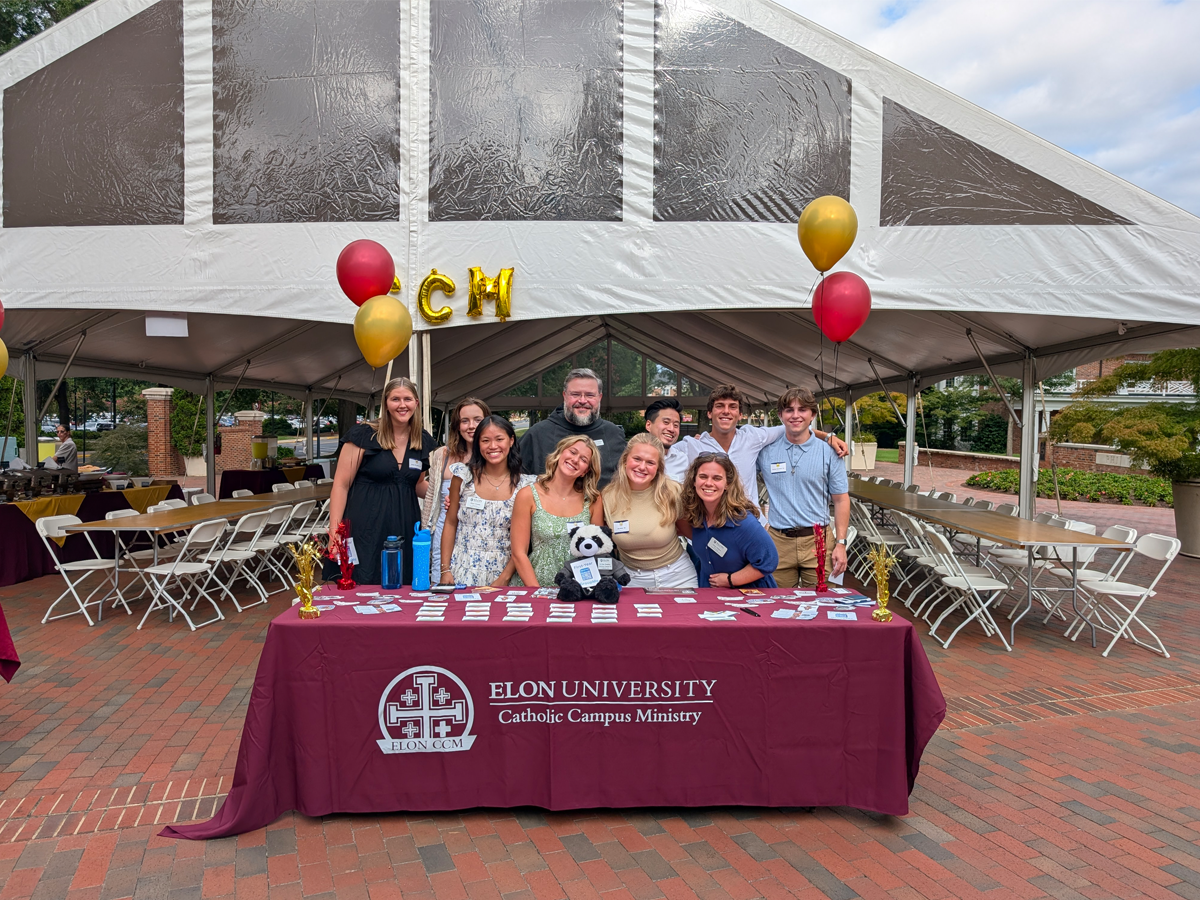
The Truitt Center for Religious and Spiritual Life hosts welcome dinners and multifaith gatherings that help new students feel a sense of belonging and build lasting connections during their first weeks on campus.
Starting college is exciting—but it can also feel overwhelming. New students step onto campus with questions about where they’ll fit in and who they’ll meet. For many, the Truitt Center for Religious and Spiritual Life becomes one of the first places where those answers begin to take shape. Through welcome dinners, Shabbat service and multifaith gatherings, students find community, mentorship, and a sense of belonging.
Each faith community—Catholic Life, Jewish Life, Muslim Life, and Protestant Life—hosts its own welcome dinner, inviting incoming students and their families to share a meal, meet upperclassmen, and learn about opportunities for involvement.
A spirit of hospitality
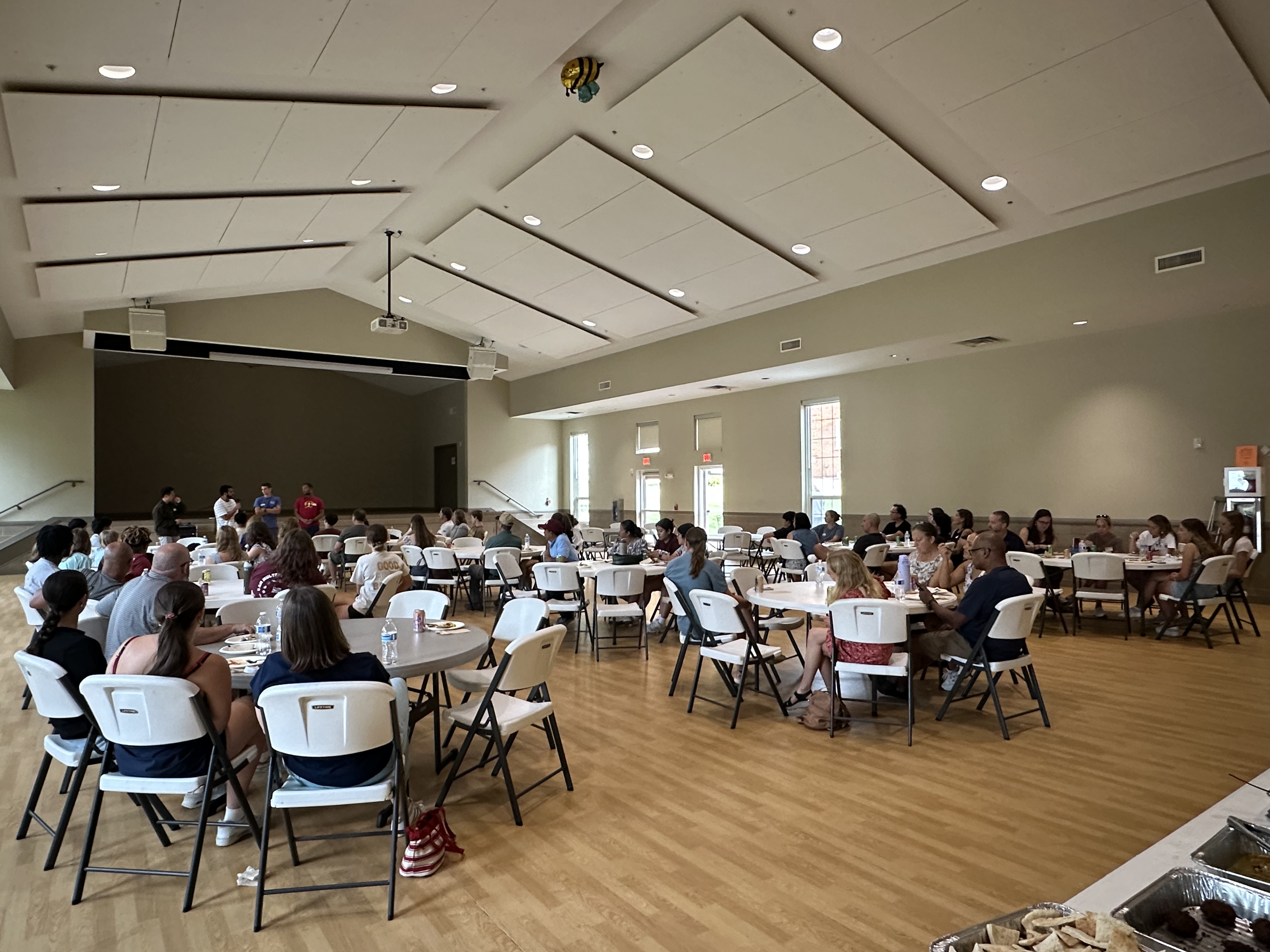
What began as a tradition hosted by just one or two communities has grown into a hallmark for the Truitt Center as a whole.
“These dinners have become such an important way for us to say from the very beginning: ‘you belong here. Your story matters. And your community is waiting for you’,” said Hillary Zaken, director of multifaith programming and engagement at the Truitt Center.
That message of belonging is reflected not just in words, but in the atmosphere the Truitt Center intentionally creates.
“Over the years, we’ve just come to emphasize that it’s casual, that we don’t want anyone to feel like they have to get dressed up, that we know it’s been a big day. It’s just really meant to be comforting and welcoming,” said Betsy Polk Joseph, senior director of Jewish Life.
One of the most tangible ways that welcome comes to life is through shared meals. These events serve as a stable to create spaces where new students connect with upperclassmen and learn about opportunities for involvement.
“Gathering around a meal is a core tenet of the Christian faith, and people need to eat after a long move-in day, so hosting a dinner is a practical way to extend hospitality to new families while also living out our faith,” Julie Tonnesen, associate university chaplain, said.
Echoing Tonnesen, T. Huynh-Duc, director of Catholic Life, states that hospitality is at the root of many faith traditions.
“Most faith traditions are about creating a hospitable atmosphere where people know they can come and feel welcome, not judged—just greeted with warmth, hospitality, and smiling faces,” he said.
At the Truitt Center, the spirit of hospitality comes to life through its various initiatives, including programming, chaplaincy, resources and events. As Imam Shane Atkinson explained, “A big part of chaplaincy is hospitality. It helps the parents feel at ease and helps students begin to build a sense of community”.
Faith as a place of belonging
That sense of welcome continues to draw more students and families each year. As the gatherings expand across each faith community, their impact grows even deeper for those who attend.
Rachel Bermont ‘29 reflected on how meaningful it was to attend her first Shabbat after move-in this year.
“It was just nice to be surrounded by people who wanted to be there to meet people and be engaged in Jewish life,” she said.
Gatherings like these are simple yet impactful, allowing students to connect with peers who share their faith, and envision what their faith and spiritual journey could look like at Elon.
For Sophie Bohrer ‘27, a transfer student, the welcome events offered both comfort and a reminder that she wasn’t starting over alone.
“I felt a sense of belonging during the meal. It felt sort of like I was home again with my family, and we were just together,” she said. “It was like Thanksgiving, but in a different way.”
Meeting new friends at Jewish Life events gave Bohrer the encouragement she needed to settle into a new university and see that her Elon experience could be rich with connections.
Muslim students have also found the Truitt Center’s welcome gatherings to be transformative. Adil Qadeer ‘27 is a student leader within Elon Muslim Society. His involvement with the organization was influenced by attending the Muslim Life welcome dinner during his first year, which was attended by only a handful of Muslim students on campus. Instead of feeling discouraged, he saw an opportunity.
“I decided that I wanted to be part of that change and build my own community, rather than just be a part of someone else’s,” Qadeer said. By creating his own community and attending events like the welcome dinner, he found mentors and peers who would shape his journey at Elon.
“I was very happy meeting Imam Shane and Dr. Sandy Marshall (associate professor of geography). Those two have been key figures to my Elon experience,” he said.
Connections that last
Students attending the welcome events during their first year have a lasting impact throughout their Elon community. Qadeer shared how that experience has helped his community grow and inspired him to get involved. He now helps host events like “Chat and Chai,” which bring together students from all backgrounds to share food and conversation. He wants other students to feel encouraged to get involved and find their place in the community.

“Do not be afraid, because there is a community here, and you could be part of what really establishes it for other students who will come in the future,” he said.
That sense of community is something first-year students are already beginning to experience. Even in her first year, Bermont has discovered the power of connection. “It was just nice to be surrounded by people who wanted to be there to meet people and be engaged in Jewish life,” she said.
Welcoming gatherings, such as the Shabbat dinner, felt like the beginning of friendships and traditions that would shape her Elon journey. Her experience reflects what many students find through the Truitt Center’s events—small moments of welcome that grow into lasting memories and relationships.
“Belonging isn’t just a feeling, it’s the foundation for how students thrive at Elon,” Zaken said. “The welcome dinners give students that first glimpse of what it looks like to bring their whole selves into this community.”
For Bermont, Bohrer, Qadeer, and many others, these small moments of welcome become lasting memories and relationships. They are reminders that from the very first week, Elon is a place where students can feel at home, connect deeply with others and begin their journey to find community.