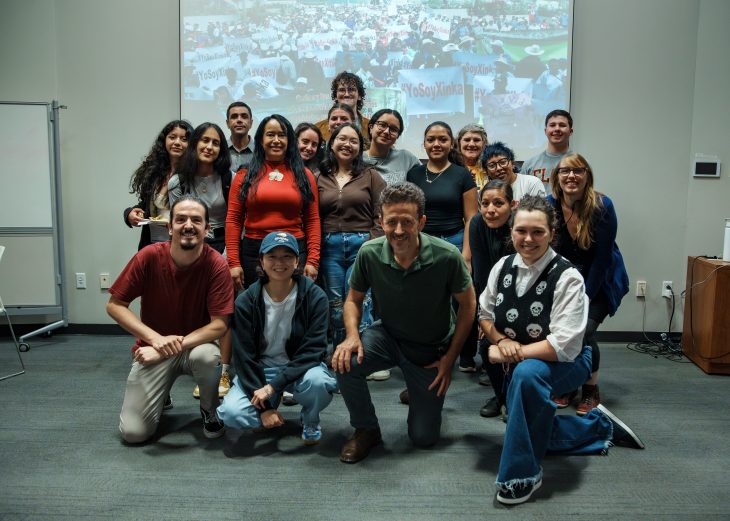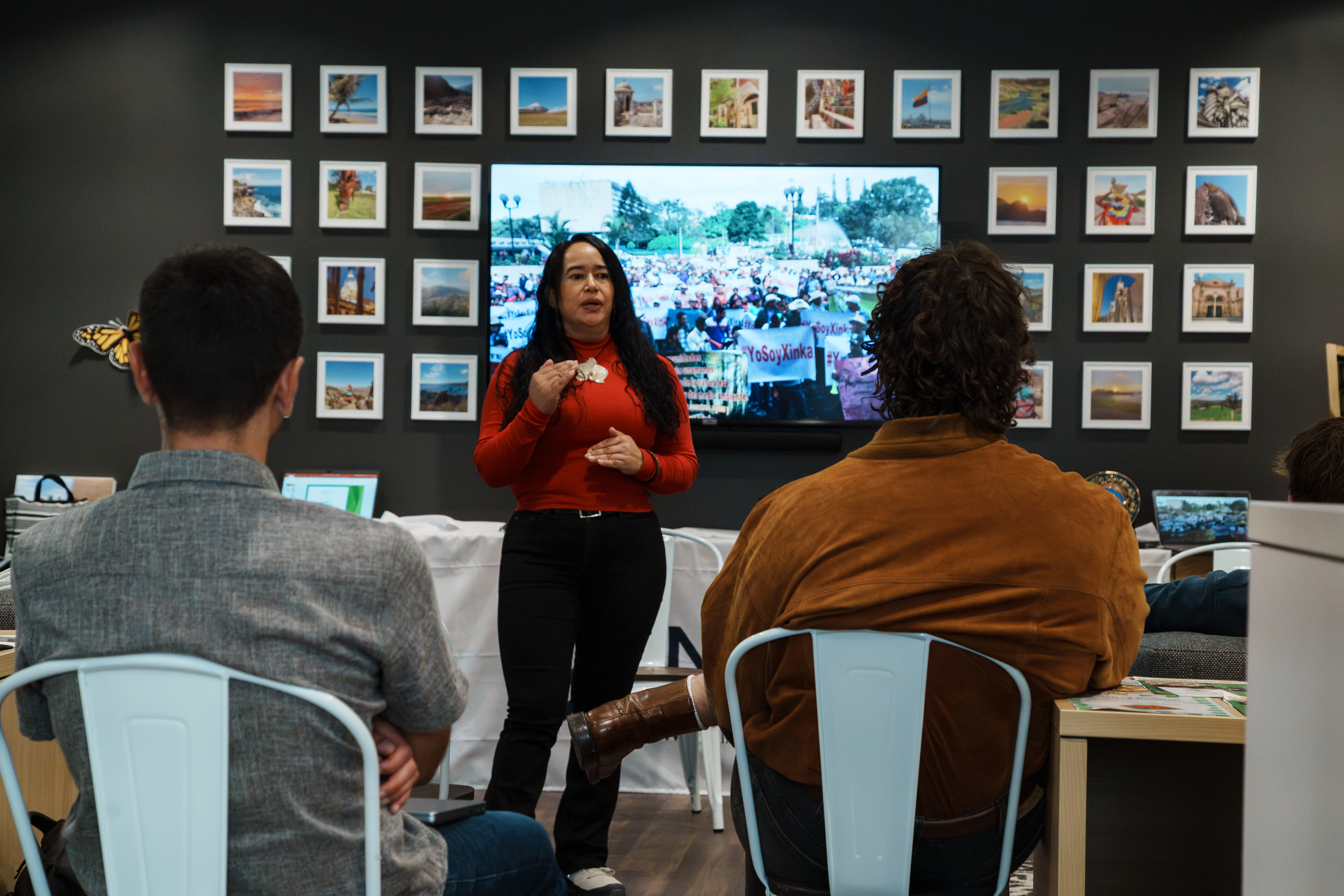
Human rights advocate and leader of the Xinka Indigenous people from Guatemala, Sheny Lemus, along with other activists, visited Elon as part of a North Carolina tour hosted by US-based organizations Witness for Peace Southeast, the Iximché Media, and the Network in Solidarity with the People of Guatemala.
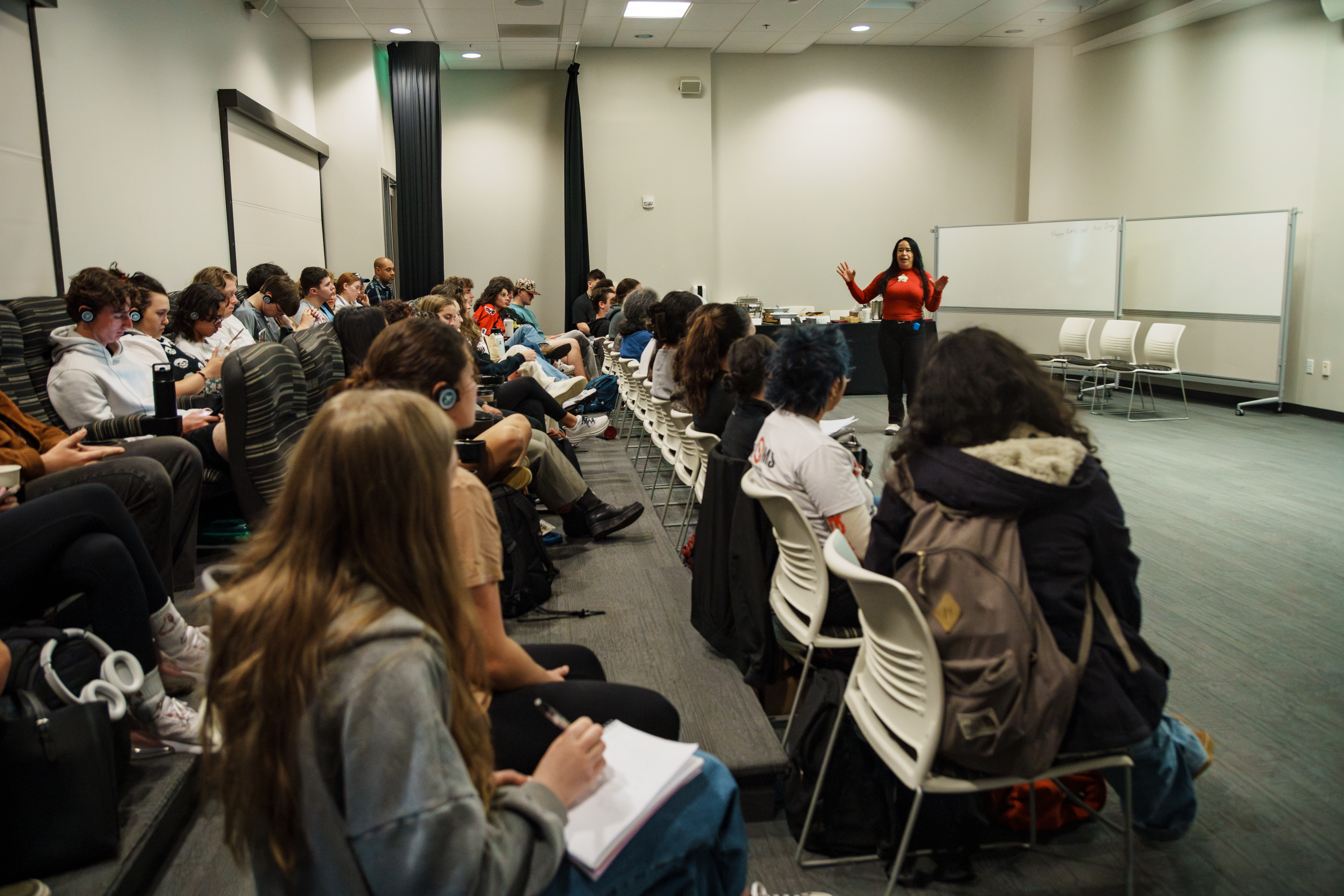
On Tuesday, Oct. 21, Shenny Lemus gave a keynote conference entitled “Intergenerational Empowerment: Xinka Indigenous People Defending the Earth in Guatemala” at Elon University.
She presented the work of the Diocesan Commission for the Defense of Nature (CODIDENA), an organization that advocates for the restoration of the identity and spirituality of the Xinka Indigenous people of Central America while protecting nature against extractivist mega-projects. Lemus talked in detail about the case of the peaceful resistance to the Escobal mining project, and their everyday struggles against the government and the mining corporations.
During the talk, she shared the values of her community to protect the earth and how they recognize themselves as Xinka by recovering their language and their culture. She also expressed the difficult reality faced by her community in rural areas as well as the challenges faced by organizers advocating for the Xinka land rights. The talk explored how they were able to stop the development of the mining project after three years of struggle, based on the Indigenous and Tribal People Convention, an international agreement acknowledged by the International Labour Organization, in which indigenous people must be consulted in case of any project affecting their population. In this case, after consulting with the Xinka people, they decided to reject the mining project given the multiple threats to their health and the environment.
Lemus also showed her grassroots initiative with young scientists in the Xinka community to address water contamination issues provoked by mining operations. This project not only capacitates the new generations, but also advocates for an intergenerational collective growth of the whole Xinka people. As a result of this initiative, community members created a system for measuring the degree of contamination in the water, empowering communities to defend themselves in their fight for environmental justice.
Over 50people attended the event. Students from peace and conflict studies, Latin American studies, as well as from different Spanish courses, the Core Curriculum, and philosophy classes learned about the complexity of current environmental struggles in Guatemala. After the talk, students asked several questions regarding the role of the Guatemalan government in this conflict and the recognition of the Xinka identity, engaging in a very fruitful dialogue about the importance of advocating for indigenous rights and environmental justice in peaceful demonstrations. The conference was conducted in Spanish with interpretation performed by Emily Rhyne from the organization Witness for Peace.
Lemus also participated in a roundtable discussion in Spanish with other human rights activists at El Centro. The roundtable focused on Guatemalan history and cultural diversity, generating a constructive dialogue among students learning about Latin American indigenous identities. The speakers talked about the work of their organizations at the local, national and global level, emphasizing the need to construct strong networks of solidarity. Students from the Spanish program engaged in a vivid conversation during the event, learning about the intercultural richness of Central America and the political relevance of the region in relation with the U.S. government today.
This visit was co-organized by the Peace and Conflict Studies program and the Latin American Studies program, and it was sponsored by the Department of World Languages and Cultures; El Centro; the Center for the Advancement of Teaching and Learning; International and Global Studies; Isabella Cannon Global Education Center; Women’s, Gender, and Sexualities Studies; the Department of Philosophy; and the Department of Sociology and Anthropology.