


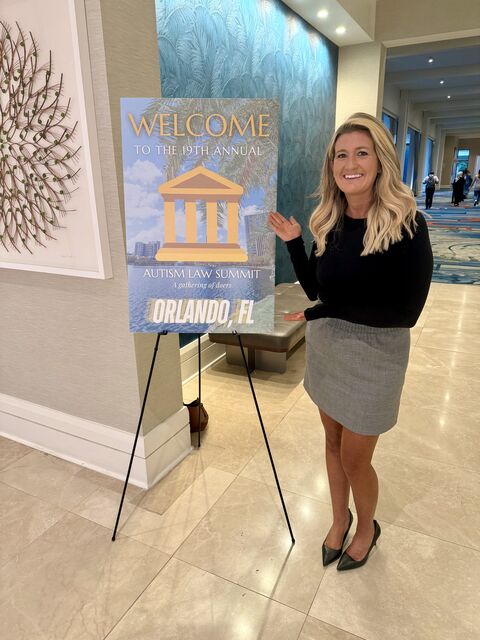
Elon Law student questions sentencing factors at Autism Law Summit.
At the 2025 Autism Law Summit, Elon Law’s Tarrah Casey L’26 presented her research on how the criminal justice system interprets remorse as a sentencing factor and the challenge posed by such interpretation for defendants diagnosed with Autism Spectrum Disorder (ASD).
“Rethinking Remorse” explored how traditional sentencing frameworks often misjudge autistic traits—such as flat affect or atypical emotional expression—as signs of indifference or lack of remorse. This misinterpretation can lead to harsher sentencing and diminished access to rehabilitative justice, and consequently makes these defendants victims of systematic misunderstanding.
Tarrah advocated for therapeutic jurisprudence, creation of mental health courts, and greater inclusion of comprehensive corroborating sources to help courts better understand Autism Spectrum Disorder and consider treatment-based sentencing alternatives. Questioning the reliability of remorse as a sentencing factor, particularly for autistic defendants, the presentation questions the reliability and measurability of remorse in sentencing.