


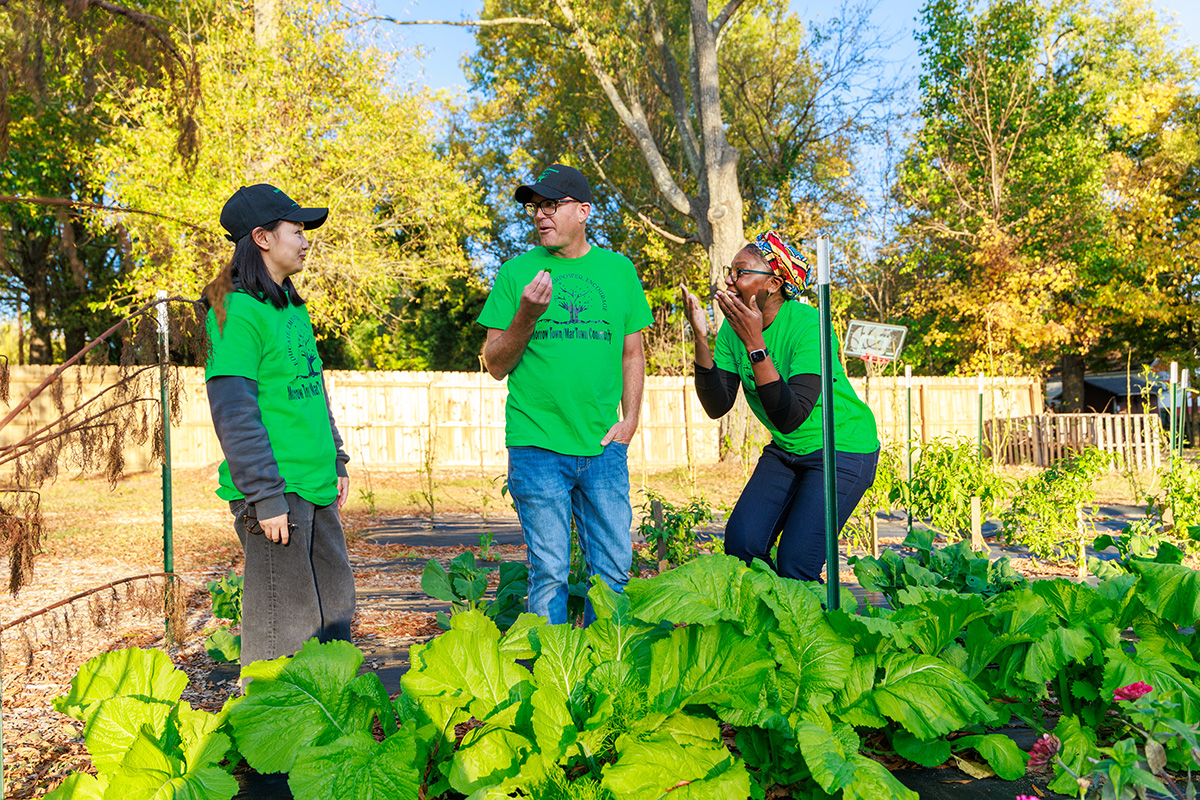
How a student and a professor are partnering with a local neighborhood to help its community garden flourish
At the beginning of her Elon journey, Emily Ecker ’26 thought her path was clear. As part of the Teaching Fellows Program, she planned to major in elementary education and become a teacher. But one course, Introduction to Public Health, changed everything.
“After taking my first intro to public health class, I was like, ‘This is it!’” Ecker says. “Education doesn’t stop in a classroom. [Public health] touches so many parts of your life.”
That realization led her to join the Periclean Scholars program and travel to Denmark, India and Sri Lanka, transformative experiences that informed her view on global public health. Yet it was a local opportunity that offered her the most meaningful lesson in community involvement.
The Morrowtown Mission
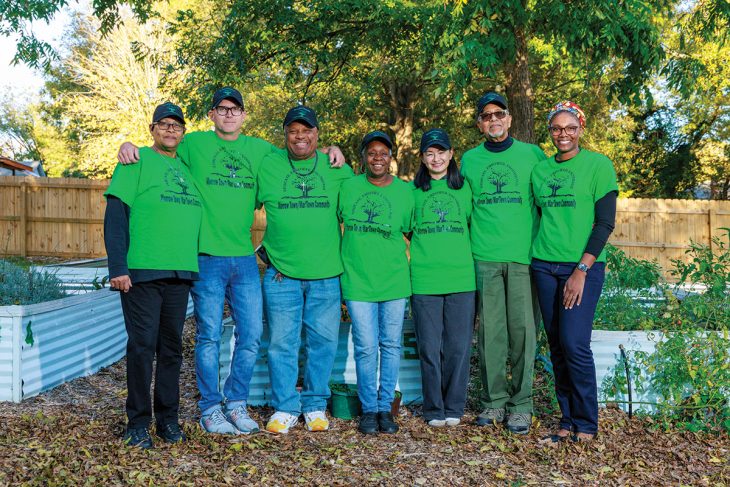
Ecker wanted to conduct research early, and her public health professors connected her with Professor of Education Scott Morrison. He had been working with the Morrowtown Community Group, a grassroots organization in a historically Black Burlington neighborhood. Founded in 2017 by Lydia Jones and Joyce Moore, MCG’s mission is “to educate, empower and encourage individuals through acts of service and giving.”
Professor of Religious Studies Rebecca Todd Peters had previously helped MCG establish a community land trust and secure the land for a community garden. When efforts to sustain the garden fizzled out, Jones reached out to Morrison for help. He began taking students from his Teaching Garden-
Based Learning course a couple times throughout the semester to assist.
By 2021, Morrison’s students were regular volunteers. A chance meeting with Ashlie Thomas, a local gardener, author and food scientist, sparked a lasting partnership, and they began working at the Morrowtown Community Garden together. When Ecker approached Morrison in 2023 about research opportunities, he introduced her to Thomas and MCG.
“I told him about my interests in community gardens, public health and community-based work,” Ecker says, adding that MCG resident leaders Lydia Jones and Roscoe Alston were excited by the idea of working together to build up the garden.
At first, Ecker assumed the garden existed mainly to address food insecurity. Ultimately, what she found was deeper. MCG envisioned the garden as a gathering space, a place that could strengthen relationships, particularly among families and youth. Listening to the residents’ needs became central to her research collaboration.
Putting the “co” in community collaboration
Ecker, Morrison and Thomas grounded their work in Community-Based Participatory Action Research (CBPAR), an approach that makes community members equal partners in the research process. The team wanted to avoid establishing a non-reciprocal relationship with Morrowtown, where their research overshadowed the needs and wants of the community members.
“Emily and I had a lot of conversations about ‘are we “co” enough?’” Morrison says. “Because it’s not just about us, it’s about them and what they’re doing.”
Ecker spent that summer attending community meetings, volunteering at the garden and building deeper connections and trust with community members. Establishing those relationships was key when it was time to conduct the survey about resident perceptions of the community garden. That survey would ultimately shape the resources and support that Ecker, Morrison, Thomas and others would seek to provide Morrowtown moving forward.
Fifteen in-depth interviews at the garden with resident leaders evolved into 30 resident surveys. Two major needs emerged: increasing resident participation in the garden and more activities for community youth to promote educational support. “It’s so important to know that [these] were resident-identified needs and not just us coming in and saying we wanted to do this program,” Ecker says.
Rooted Together
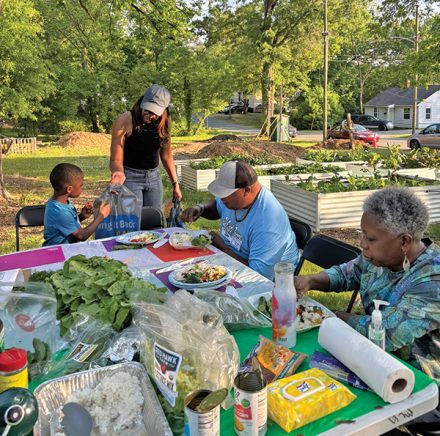
To address those needs, the team created Rooted Together, an eight-week program that combined gardening, literacy, math and nutrition lessons for local children. Five to 10 kids, ages 3 to 8, attended weekly sessions in spring 2025, learning about plant cycles, exploring gardening tools and preparing meals. Recipes and handouts were also translated into Spanish to make the program more accessible.
The program was free for participants thanks to the Elon Student Government Association’s Acorn Fund. Ecker received a $5,000 grant to buy the ingredients, utensils, gloves and other supplies.
“We would buy enough groceries to be able to give a bag of food that we just made to [each child], so they could take them home to their families with the recipes,” Ecker says. “That way, what we were doing went beyond the garden and into their homes.”
As new community feedback emerged, such as changing start and end times to better suit participants’ schedules, the group adapted the program. Children returned every week, and other community members began helping set up tables and chairs for sessions. Almost 40 people across generations attended the final event, a testament to the trust the program engendered in the community.
“Scott and Emily have accelerated the educational and learning programs at the Morrowtown garden,” Alston says. “They have increased the harvest from the garden. They have beautified the garden.”
Connecting Beyond the Classroom
Survey results also showed concern about the garden’s infrastructure, such as rain water pooling on top of garden beds. Ecker and Morrison knew others at Elon could help.
Ecker reached out to Assistant Professor of Engineering Will Pluer, who brought his Introduction to Environmental Engineering class to the garden. After conducting an assessment, the students designed a rain garden — a sloped area at the end of the community garden with plants that absorb and drain rain water. Assistant Teaching Professor of Environmental Studies Jacob Rutz and students in his Sustainable Food Production class built it and prepped the community garden for summer planting.
“They didn’t know me,” Ecker says of Pluer and Rutz, “but their excitement and their openness to working with me and trying to figure this all out together was great.”
I think in a culture that often celebrates individual achievements, it’s harder to pitch a collaborative effort. — Scott Morrison
The garden was also in need of a sturdier meeting and storage shed. Yet another class, Design for Service, surveyed the site and drew up design options. Once the team and the Morrowtown community members settled on a design, Ecker secured an Elon Innovation Grant to help fund the project. Plans for the shed are currently underway and it is expected to be completed by the end of the year.
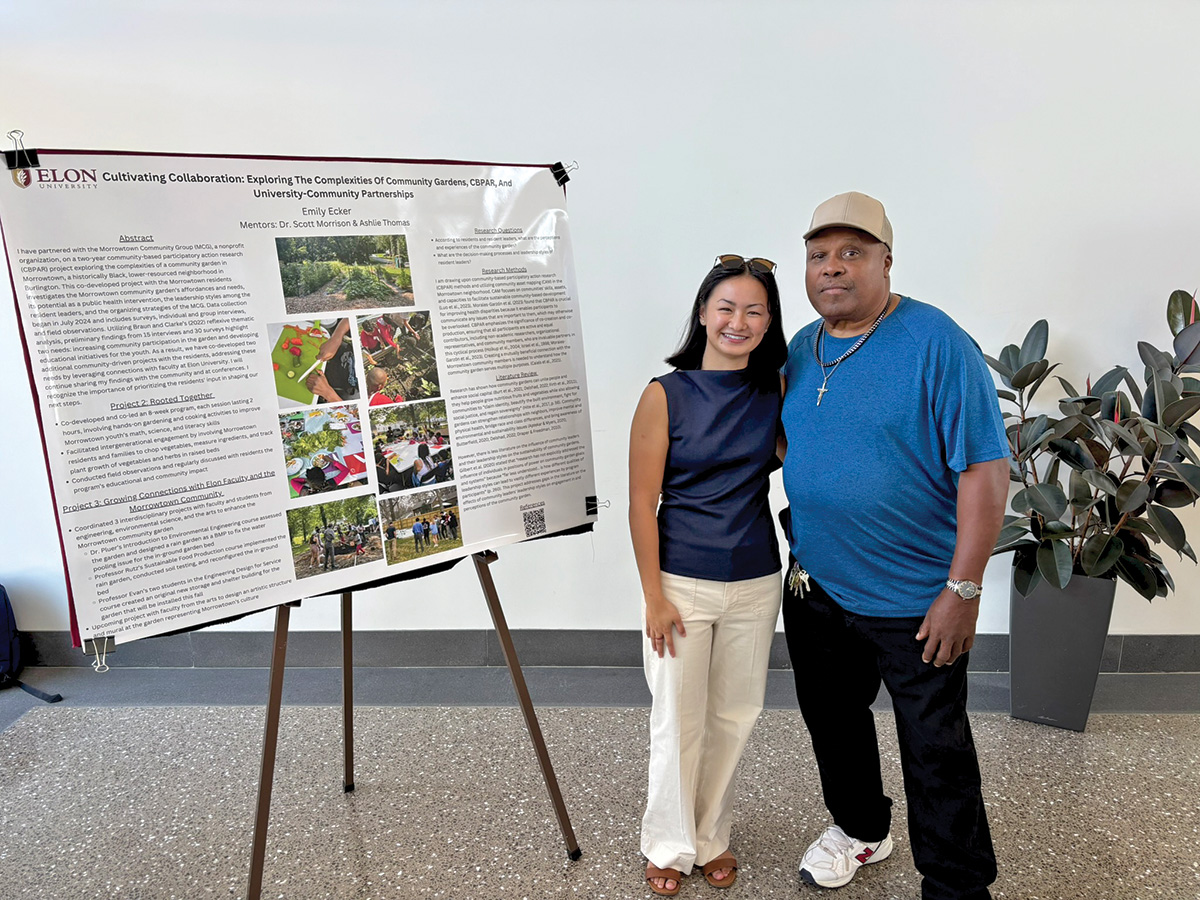
In November, Ecker, Morrison and Thomas presented their findings at the American Public Health Association’s Annual Meeting and Expo, where Ecker earned a student award for a poster presentation — one of only a few undergraduate students to achieve the honor.
Lasting Impact
Now a double major in public health and international and global studies, Ecker graduates in the spring, leaving behind strong programs and relationships in Morrowtown. She credits Morrison with helping her develop those connections in meaningful ways.
“He has really guided me on how to show up,” Ecker says. “It has really helped me to know how to form relationships and how to enter into a space that you’re not part of or you start out as an outsider. I think that’s going to be really helpful for when I continue my public health journey or career in general.”
Morrison noticed early on that Ecker’s ability to connect with others and the intentionality behind those connections would make her a good fit for the work and relationships with Morrowtown community members. He is most proud of the spirit of collaboration she has developed.
“I think in a culture that often celebrates individual achievements, it’s harder to pitch a collaborative effort,” Morrison says. “I think that’s what Emily is really good at.”
Ecker hopes more Elon classes will volunteer and establish reciprocal relationships with Morrowtown as the community’s needs change over time. One thing she knows for sure: Morrison’s continued leadership and guidance will remain.
“I really care about the longevity of my commitment with the Morrowtown community,” Morrison says. “This has not been just a one-time project. It has evolved.”
The trust he, Ecker and other Elon partners have built with Morrowtown, he says, is their most important harvest yet.